 Society

Tax authorities must respond to business dissolution notices within two working days
1.
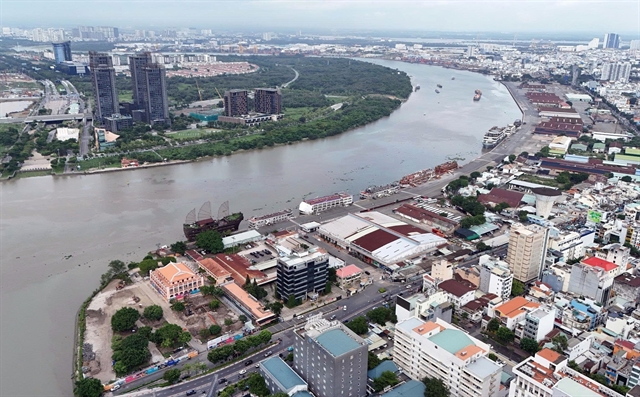 |
| The Bến Nhà Rồng – Khánh Hội port area located along the Sài Gòn River in HCM City. — VNA/VNS Photo Hồng Đạt |
HÀ NỘI — Việt Nam's draft Law on Urban Development introduces a stronger decentralisation framework, granting greater autonomy and creating a more enabling institutional environment for special urban centres like HCM City as well as special economic zones.
However, to truly fulfil its role as a special urban area, HCM City should be guided by a clear development philosophy that places people at the centre, recognises culture as the foundation of sustainable growth and measures success by the quality of life and happiness of its residents.
Dr Trần Ngọc Thêm, a professor at Hùng Vương University in HCM City, said that a special urban area requires not only specialised institutions, but also a distinctive vision that prioritises human development and cultural identity.
In line with the Politburo’s Resolution 80-NQ/TW, which identifies culture and people as key drivers of sustainable national development, the draft law should explicitly require all urban planning and development strategies to promote human well-being while preserving historical, cultural and local values.
For HCM City, this means safeguarding the cultural identity of Sài Gòn–Gia Định–HCM City, fostering a civilised urban lifestyle, promoting responsible digital citizenship and strengthening civic education.
The city should also adopt policies to honour cultural creators, invest in public arts to enhance its attractiveness as a tourism destination and support creative industries through dedicated innovation funds and preferential policies.
Urban heritage should likewise be recognised as a strategic development resource, with particular attention given to conserving HCM City's unique river-based landscape.
The Sài Gòn-Đồng Nai river system and the Cần Giờ mangrove forest are invaluable environmental and cultural assets that should be protected and developed sustainably. The draft law should therefore include principles safeguarding waterways, ecological corridors and natural water surfaces, while encouraging waterway transport and riverside public spaces.
Its emphasis on decentralisation has also been welcomed. The professor argued that meaningful autonomy should also extend to wards and communes, particularly in strategically important areas.
Alongside greater decentralisation, the draft law should strengthen mechanisms for meaningful public participation in urban governance.
Mandatory community consultations for major projects, digital access to planning data and public feedback on planning adjustments, large-scale resettlement and the use of public spaces would help ensure greater transparency and accountability.
Ultimately, the true measure of a special city lies not in its skyline or economic growth figures, but in its ability to improve people's lives.
Residents’ happiness and well-being should remain both the starting point and the ultimate goal of urban development, serving as the highest benchmark for effective governance and sustainable progress, Thêm said. — VNA/VNS
Society
 Society
 Society
 Society
 Society
 Society
 Society
 Society
 Society
 Society
 Society
 Society
 Society
 Society
 Society