 Life & Style
Việt Nam, Russia step up cooperation in criminal sentence enforcement
1.
|
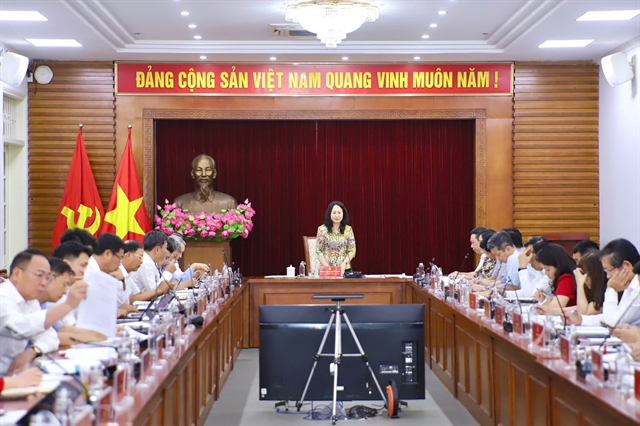
| Participants at a recent meeting held by the MoCST discussed building a scenario for cultural industry development. — Photos bvhttdl.gov.vn |
HÀ NỘI — The Ministry of Culture, Sports and Tourism (MoCST) is working to build a scenario for cultural industrial development aligning with the national goal of double-digit growth.
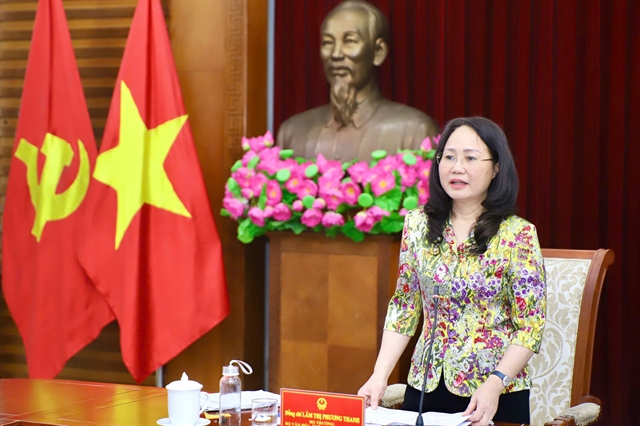
Speaking at a recent meeting held by the culture ministry, member of the Party Central Committee and Minister of Culture, Sports and Tourism Lâm Thị Phương Thanh said authorities and units have mostly reached consensus on the scenario-building methodology.
The meeting took place in Hà Nội between high-ranking officials, including deputy ministers and leaders of departments, divisions and functional units under the MoCST.
It focused on discussing and analysing important issues related to building a development plan for the cultural industry linked to double-digit growth targets.
Thanh, who also chaired the meeting, gave instructions after hearing a report on the plan to build the scenario and following discussions from participants.
According to the culture minister, the scenario must be based on a clear data system, specifically identifying data sources, calculation methods and the basis for proposing goals and targets. It must also fully reflect all aspects of cultural industries following the Cultural Industry Development Strategy and ensure a unified method for calculating and evaluating the sector's contribution to GDP.
She said that the scenario must adhere closely to the Cultural Industry Development Strategy, connect with socio-economic development goals and be based on the country's current development conditions, with reference to international experience.
It should also outline any anticipated difficulties and bottlenecks so that appropriate solutions can be proposed.
|
| Minister of Culture, Sports and Tourism Lâm Thị Phương Thanh at the meeting. |
Thanh requested a thorough study of the conditions affecting development of the cultural industry, including institutions, mechanisms and policies; financial resources from the State, society and the world; digital and data infrastructure; relevant copyrights; domestic and international markets; businesses; and personnel.
Of these conditions, international resources, data infrastructure and copyright are crucial factors that need to be exploited and improved to create a foundation for sustainable development, she said.
The minister also stressed the need to focus on researching solutions for each area, especially those with advantages and potential; identifying key areas at both national and local levels; and ensuring links between them and consistency between data, objectives and solution groups.
Development scenarios must clearly define objectives, products and corresponding solutions, avoiding a focus solely on growth indicators, Thanh said.

|
| Director of the MoCST's Copyright Office Trần Hoàng, shares his opinions at the meeting. — Photo baovanhoa.vn |
According to the minister, the scenario should include only two options: achieving the goals set out in the Cultural Industry Development Strategy and socio-economic development goals, and exceeding the goals based on favourable conditions and breakthrough solutions.
She assigned the Việt Nam Institute of Culture, Arts, Sports and Tourism to gather research results and opinions to prepare for the rapid issuance of the scenario.
Thanh also asked relevant units to continue working to finalise the scenario and build the Law on Cultural Industry Development, ensuring consistency and uniformity in policymaking.
At the meeting, participants contributed opinions on development orientations, methods for building plans, indicators, resources, data and solutions to promote the development of cultural industries in the next few years.
Presenting a summary of solutions for double-digit growth in the cultural industry, director of the Copyright Office Trần Hoàng said that after a period of decline due to the COVID-19 pandemic, cultural industries have recovered since 2022 and maintained positive growth since 2024, contributing approximately 5 per cent of GDP, with a growth rate of about 7-8 per cent per year.
Hoàng said six key areas – cinema, performing arts, video games, cultural tourism, advertising and handicrafts are the main growth engines, accounting for over 70 per cent of the total revenue of the entire cultural industry.
Based on this information, different development scenarios can be considered, including one that guarantees that the cultural industry will contribute approximately 7 per cent of GDP by 2030. Another scenario exceeds the target, contributing approximately 8 per cent of GDP.
MoCST Deputy Minister Phan Tâm said the scenario should be based on market analysis, domestic and international demand, investment resources and the calculation of retained added value to accurately assess the industry's contribution to GDP.
The development of targets should be consistent, prioritising the added value index rather than solely relying on revenue, Tâm added.
Meanwhile, Deputy Minister Tạ Quang Đông said one of the major obstacles in building a scenario for the cultural industry is statistics, as many sectors lack comprehensive data systems. Đông suggested focusing on building data on businesses and growth indicators as a basis for assessing development potential.
According to Đông, the scenario should clarify the current conditions of each field, from infrastructure, personnel and capital to other related factors. At the same time, it should correctly define the essence of cultural industries, emphasising creative elements.
He suggested simplifying development scenarios and clearly identifying the current situation and growth targets to be achieved, instead of building many different ones.
In particular, selecting key areas with the potential to create added value and promote exports will be crucial, he said. — VNS
Life & Style
 Life & Style
 Life & Style
 Life & Style
 Life & Style
 Life & Style
 Life & Style
 Life & Style
 Life & Style
 Life & Style
 Life & Style
 Life & Style
 Life & Style
 Life & Style
 Life & Style