 Life & Style
NA President meets with Chinese Premier in Beijing
1.
|
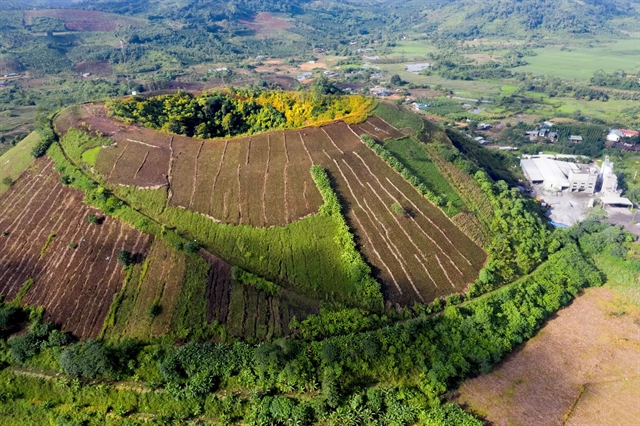
| The aerial view of a volcanic crater within Đắk Nông UNESCO Global Geopark. — Photo dulich.daknong.gov.vn |
LÂM ĐỒNG — Đắk Nông UNESCO Global Geopark in the central province of Lâm Đồng is preparing for its revalidation mission, which is scheduled to take place in July 2027.
The revalidation marks a crucial milestone in retaining the prestigious international designation while continuing to promote the geopark's geological, cultural and biodiversity heritage in support of sustainable tourism development.
Open-air museum
Covering nearly 4,760sq.km across 22 communes and wards in the western part of Lâm Đồng Province, the Đắk Nông UNESCO Global Geopark was shaped over millions of years by tectonic activity and successive volcanic eruptions.
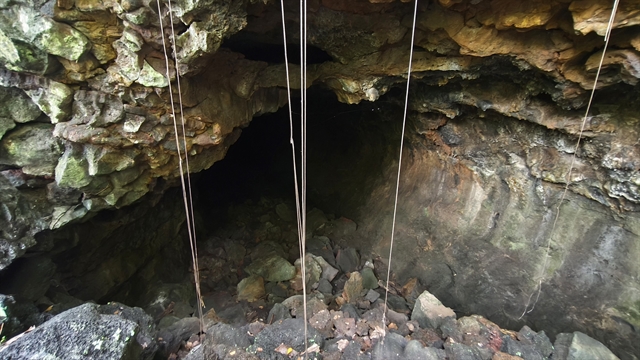
The process created a unique network of volcanic caves formed in basalt, recognised as one of the most outstanding lava tube systems in Southeast Asia.
To date, nearly 50 volcanic caves with a combined length of more than 10km have been identified in the geopark, alongside around 65 geological and geomorphological heritage sites.
Scattered among volcanic craters, waterfalls and tropical forests are numerous sites of significant scientific value, offering insights into the region's geological history, archaeology and rich biodiversity.
The caves are particularly remarkable for preserving evidence of the Earth's geological evolution, traces of prehistoric human habitation, diverse mineral assemblages, fossils and endemic ecosystems. These discoveries suggest that the area was once part of an ancient sea millions of years ago.
Associate Professor Dr Trần Tân Văn, Chairman of the UNESCO Global Geoparks Network of Việt Nam, said the Đắk Nông Geopark possesses outstanding values that distinguish it from other geoparks in the country.
The area experienced intense and relatively recent volcanic activity, with six volcanic craters identified alongside a unique network of lava tubes. To date, around 50 volcanic caves have been surveyed and mapped, with conservation measures being implemented to protect and promote their outstanding value.
The Đắk Nông Geopark is also home to a number of spectacular and well-known waterfalls, including Liêng Nung, Gia Long and Trinh Nữ, natural attractions that further distinguish it from many other geoparks.
Beyond its exceptional geological heritage, the park is also home to the Central Highlands Gong Culture Space, the Special National Relic Hồ Chí Minh Trail, and the rich cultural traditions of more than 40 ethnic groups living in the area.
Epic tales, traditional crafts, folk festivals and a wealth of indigenous cultural practices have been preserved and passed down through generations.
The harmonious blend of nature and culture has shaped the geopark's identity as the "Land of Melodies", one of the three signature visitor experience themes of Đắk Nông UNESCO Global Geopark.
It was also a key focus of UNESCO experts during their field mission from June 8 to 11, conducted as part of preparation for the geopark's 2027 revalidation.
|
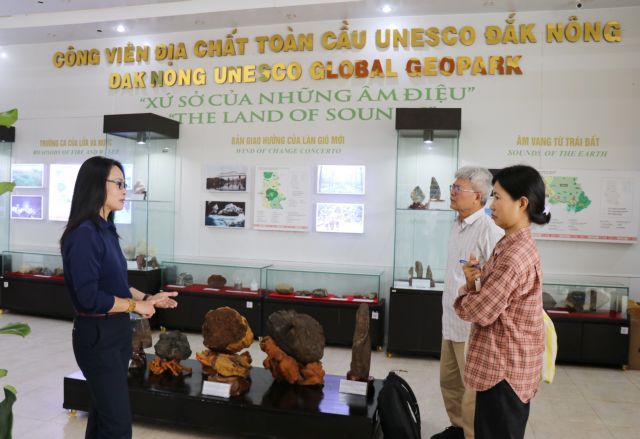
| Experts from the UNESCO Global Geoparks Network of Việt Nam visit the Information Centre of the Đắk Nông UNESCO Global Geopark in Đông Gia Nghĩa Ward, Lâm Đồng Province. — VNA/VNS Photo |
"The geopark's cultural heritage is equally rich and distinctive," Associate Professor Dr Trần Tân Văn, Chairman of the UNESCO Global Geoparks Network of Việt Nam, said.
"It is home to the Mạ, Ê Đê and M'nông peoples, along with dozens of other ethnic groups from across Việt Nam, creating a unique and diverse cultural landscape.
"That is why experts and those involved in developing the geopark chose a particularly evocative name for it, arguably the most beautiful among Việt Nam's geoparks: the 'Land of Melodies'."
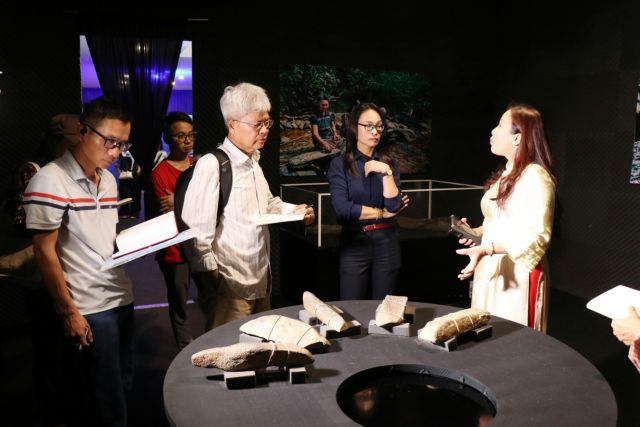
After visiting a range of geosites and evaluating measures to conserve and enhance their value, the UNESCO experts put forward a number of recommendations to support further improvements in the geopark's management and long-term sustainable development.
Addressing UNESCO's recommendations
|
| The UNESCO experts put forward a number of recommendations to support further improvements in the geopark's management and long-term sustainable development. — VNA/VNS Photo |
Based on the expert mission's recommendations, the Lâm Đồng People's Committee has adopted a comprehensive action plan to prepare for the geopark's 2027 revalidation.
The plan focuses on implementing UNESCO's seven key recommendations, including strengthening the conservation and interpretation of geological heritage, improving the geopark's visual identity system, upgrading infrastructure, promoting geotourism, enhancing management capacity and staffing, expanding partnerships, and deepening engagement with the UNESCO Global Geoparks Network.
Under the plan, the provincial Department of Culture, Sports and Tourism has been designated as the lead agency responsible for coordinating preparations for the revalidation. It will guide, monitor and oversee the implementation of tasks by relevant departments, agencies and local authorities, while reviewing all three visitor experience routes, 41 heritage sites and other tourist attractions to make necessary updates and improvements.
The department will also standardise the geopark's visual identity system, signage, interpretive materials, databases and digital platforms, and complete the revalidation dossier for submission to UNESCO by January 31, 2027.
|
| The lava tube system within the Đắk Nông UNESCO Global Geopark in Nam Đà Commune, Lâm Đồng Province. — VNA/VNS Photo |
In addition to completing the revalidation dossier, the province plans to reinforce the geopark's management framework, build a broad network of domestic and international experts and partners, and deepen collaboration with universities, research institutions and geoparks across the Việt Nam, Asia-Pacific and UNESCO Global Geoparks networks.
Lâm Đồng Vice Chairman Nguyễn Ngọc Phúc said the province had directed the 22 communes and wards within the geopark to draw up detailed implementation plans, enhance the management, protection and effective use of heritage sites, and review infrastructure, wayfinding signage, rest stops and other visitor facilities in preparation for the 2027 revalidation.
Under the plan, all key tasks are to be completed before the UNESCO expert mission returns for the geopark's revalidation in July 2027.
This will provide a crucial foundation for the Đắk Nông UNESCO Global Geopark to retain its designation, while helping to safeguard its geological, natural and cultural heritage, promote sustainable tourism and drive socio-economic development in the western part of Lâm Đồng Province. — VNS
Life & Style
 Life & Style
 Life & Style
 Life & Style
 Life & Style
 Life & Style
 Life & Style
 Life & Style
 Life & Style
 Life & Style
 Life & Style
 Life & Style
 Life & Style
 Life & Style
 Life & Style