 Society

Việt Nam, Denmark issue joint statement on establishment of Comprehensive Strategic Partnership
1.
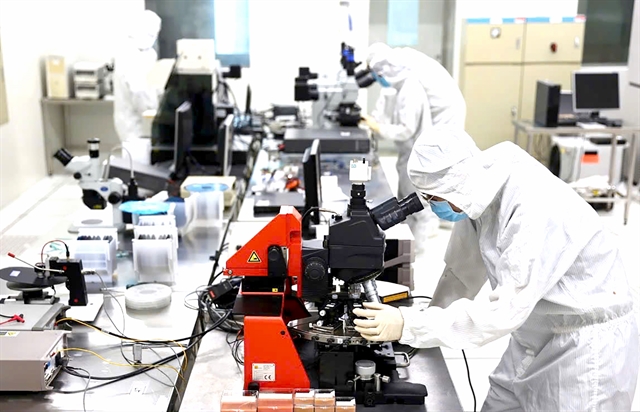 |
| A semiconductor laboratory at the Research and Development Centre, HCM City Hi-Tech Park. — VNA/VNS Photos |
HÀ NỘI — Despite a significantly liberalised legal framework for science, technology and innovation, many Vietnamese scientists remain cautious, risk-averse and drawn to safe research topics, limiting the nation’s potential for breakthrough discoveries.
The lingering fear of making mistakes has become an invisible barrier to ambitious research, prompting management agencies to shift from passive policy-making to actively creating mechanisms, environments and incentives strong enough to draw scientists out of their comfort zones.
While a record number of legal documents governing science, technology and innovation have been issued, many researchers are still reluctant to pursue genuinely disruptive projects. This hesitation stems not only from limited awareness of new regulations but also from concerns over legal exposure, financial risk and personal accountability.
As a result, numerous scientists choose predictable projects with assured outcomes rather than exploring novel directions that carry higher uncertainty, Tin tức và Dân tộc (News and Ethnic Affairs) newspaper reported.
Hoàng Anh Tú, deputy director of the Department of Science, Engineering and Technology under the Ministry of Science and Technology, said that a true safe zone in science would not mean eliminating risk.
He said scientific and technological risks should be accepted, while legal, financial and accountability risks needed to be reduced to a level approaching zero, warning that without such conditions, researchers would tend to limit their own creative boundaries.
In response to this psychological bottleneck in 2026, Tú pointed to current legal safeguards, notably Decree 267/2025/NĐ-CP, which clarifies risk governance in science, technology and innovation.
Under the decree, research projects that fail to meet initial objectives may still be evaluated without requiring funding reimbursement. Organisations leading science and technology missions are exempt from civil and criminal liability, provided procedures and regulations are followed. These provisions act as critical shock absorbers, helping scientists feel more secure when undertaking high-risk research.
To reinforce these guarantees in practice, the ministry has outlined four priority solution groups.
The first focuses on transparency, using digital platforms to manage science and technology tasks and digitise the entire process from registration and appraisal to final acceptance.
The second introduces continuous risk governance, requiring risks to be identified and addressed from the proposal stage, supported by ongoing oversight from management agencies.
The third involves piloting high-risk missions within strategic technology programmes, allowing scientists, universities and research institutes to better understand the boundaries of permissible experimentation.
The fourth centres on communication and training, with clearer explanations of legal provisions aimed at reshaping attitudes across the scientific community.
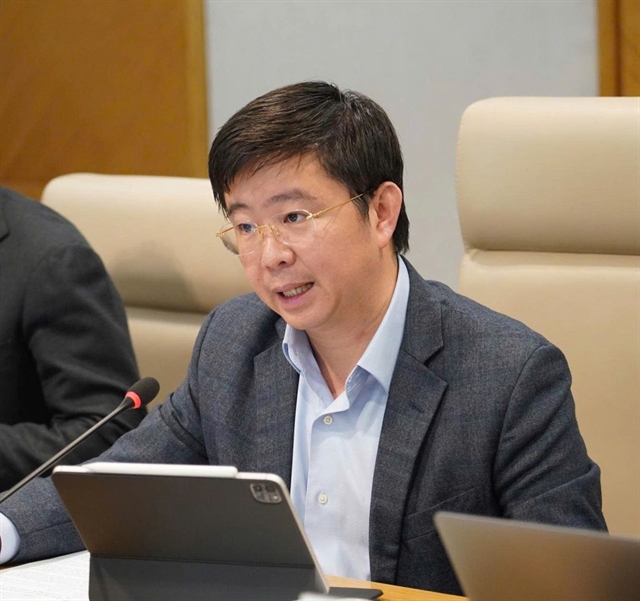 |
| Deputy Minister of Science and Technology Bùi Hoàng Phương. |
Deputy Minister of Science and Technology Bùi Hoàng Phương stressed that policy reform alone would be insufficient if it relies solely on scientists to change their behaviour.
“Waiting for scientists to step out of their comfort zones on their own is extremely difficult,” he said.
In response, the ministry is adopting a more proactive approach, according to Phương. It is proposing sandbox mechanisms for emerging technologies and working directly with local authorities and businesses to pilot institutional frameworks in real-world settings, creating space for experimentation while easing legal pressure on researchers.
The ministry has also overhauled its approach to sourcing ideas. Rather than passively waiting for proposals through rigid procedures, it is now partnering with media organisations and technology platforms to actively seek promising concepts. Breakthrough ideas, even at an early stage, may receive funding and support to refine products and complete administrative processes.
“We will not wait for scientists to knock on our door. We will open new fields together with them,” Phương said.
According to the ministry leader, an excessive focus on safety has deprived Vietnamese science of true game-changing projects. Many research topics are designed to ensure smooth approval and financial settlement, yet offer limited potential for meaningful socio-economic impact.
“If we only do what is guaranteed to succeed, that is no longer science in its true sense. Science is a journey into the unknown to discover new knowledge,” the deputy minister said.
He also highlighted a persistent gap between policy and practice, partly due to Vietnamese enterprises failing to proactively study newly issued science and technology regulations. In contrast, foreign-invested companies often engage from the draft stage.
Recent conferences and workshops have revealed that some Vietnamese firms proposed ideas later incorporated into policy, yet subsequently remained unaware of those very changes.
“Even the proposal for a chief engineer position has so far attracted no Vietnamese applicants,” he said.
With the State sharing risks and opening space for experimentation, Vietnamese science is expected to foster a new generation of researchers ready to move beyond comfort zones and pursue long-term breakthroughs. — VNS
Society
 Society
 Society
 Society
 Society
 Society
 Society
 Society
 Society
 Society
 Society
 Society
 Society
 Society
 Society