 Society

Shorter Trips, Familiar Ways to Pay: How Airpaz Supports Flexible Booking with 100+ Payment Methods
1.
|
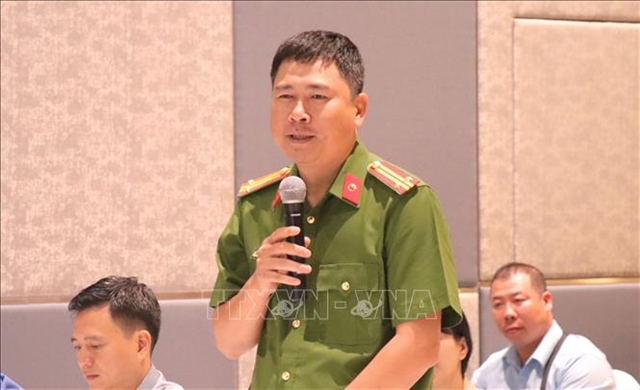
| Lieutenant Colonel Nguyễn Mạnh Hùng, deputy head of Bà Điểm Commune Police in HCM City, addresses challenges in preventing human trafficking at major transport hubs during the workshop in HCM City on December 18. — VNA/VNS Photo Thanh Vũ |
HCM CITY — Human trafficking in Việt Nam is no longer confined to women and children, as an increasing number of men are now becoming victims, particularly in major urban centres such as HCM City, officials warned.
The issue was highlighted at a workshop held on Wednesday (December 18) by the city’s Department of Health to assess public awareness and access to information on support policies for trafficking victims, as well as the evolving methods and tactics used by trafficking networks in the city.
Speaking at the event, Nguyễn Tuấn Anh, head of the Department of Social Evils Prevention and Control under the city Department of Health, said that over the past five years, the former HCM City recorded eight identified victims of human trafficking.
Of these victims, three were permanent residents of the city, while five came from other provinces and were transferred back to their localities for continued support.
Meanwhile, around 30 victims were recorded in the former Bà Rịa–Vũng Tàu Province, most of whom were from other localities, while the formerly Bình Dương Province reported one case. All identified victims have received support in line with existing policies.
However, the figures do not fully reflect the reality on the ground.
“Human trafficking is not only happening abroad but is taking place right here in HCM City and other major urban areas. Previously, victims were mainly women and children, but today the proportion of male victims is increasing,” he said.
One of the biggest challenges, according to Tuấn Anh, is that many male victims prefer to remain anonymous and avoid contact with authorities, making it difficult to verify cases and provide timely support.
Tuấn Anh also warned that when criminal networks are no longer able to exploit victims for labour, they may turn to more dangerous forms of trafficking, including illegal organ trading.
“This means anyone could potentially become a victim,” he said.
In response, the city has proactively developed its own support measures, even though there is no specific central-level mechanism in place.
“The city’s goal is not only to provide assistance after cases are detected, but to minimise the risk and ultimately prevent human trafficking altogether,” he said.
|
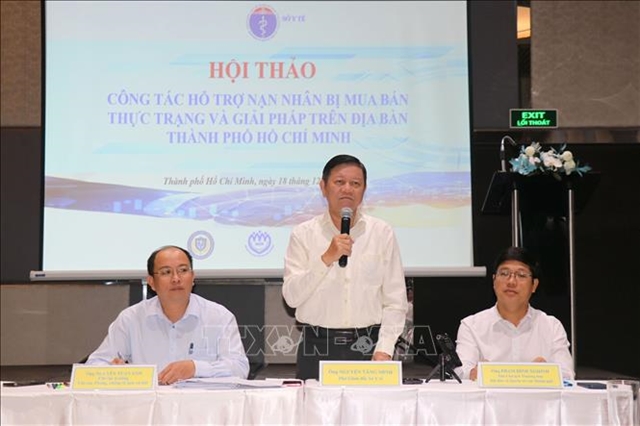
| Nguyễn Tăng Minh, deputy director of the HCM City Department of Health, speaks at a workshop on human trafficking prevention and victim support held on December 18. — VNA/VNS Photo Thanh Vũ |
Risks at major transport hubs
The workshop also highlighted heightened risks at major transport hubs.
Nguyễn Minh Tiến, deputy general director of the Western Bus Station Joint Stock Company, said identifying trafficking-related activities at bus stations remains challenging, as many cases initially appear to be kidnappings and cannot immediately be classified as human trafficking.
Nevertheless, through information provided by local authorities, public reports and surveillance camera systems, security staff have been able to coordinate with local police to handle suspicious situations.
Most recently, the city Police’s Criminal Investigation Division (PC02) worked with ward-level police to reconstruct the scene of a kidnapping incident near the Western Bus Station as part of an ongoing investigation.
Sharing similar concerns, Lieutenant Colonel Nguyễn Mạnh Hùng, deputy head of Bà Điểm Commune Police, said the presence of An Sương Bus Station in the area creates complex security challenges that require enhanced management and vigilance.
Although the number of detected cases remains limited, he noted that human trafficking crimes are particularly complex, as in some situations victims appear to cooperate with traffickers.
“There is a need to strengthen public awareness campaigns, especially targeted training for drivers to help them recognise suspicious signs and common trafficking tactics,” he said.
According to PC02 representatives, in 2025, the division uncovered seven human trafficking cases involving 24 suspects and is currently investigating five additional reports.
Victims of trafficking often experience severe psychological trauma after being deceived, exploited or forced into labour, and many suffer long-term mental health impacts.
When handling such cases, PC02 applies victim-centred approaches, including psychological support, legal assistance and conducting interviews in a safe and friendly environment, while coordinating closely with health and social services.
Nguyễn Tăng Minh, deputy director of the city’s Department of Health, said the city serves as a transit hub for many trafficking victims.
“Upon detection, the health sector works closely with relevant agencies to ensure victims’ rights, particularly access to medical and psychological care.”
The city operates a Social Work and Vocational Training Centre for Minors, which is implementing a “one-stop” model to support abused and trafficked women and children at several hospitals, including Children’s Hospital 1, Children’s Hospital of HCM City and the Orthopaedics and Rehabilitation Hospital.
Victims of violence, abuse or human trafficking who lack family or community care are referred to these facilities for comprehensive physical and mental health support, contributing to their recovery and reintegration into society. — VNS
Society
 Society
 Society
 Society
 Society
 Society
 Society
 Society
 Society
 Society
 Society
 Society
 Society
 Society
 Society