 Society
Top leader meets with Danish Parliament Speaker Henrik Frandsen in Copenhagen
1.
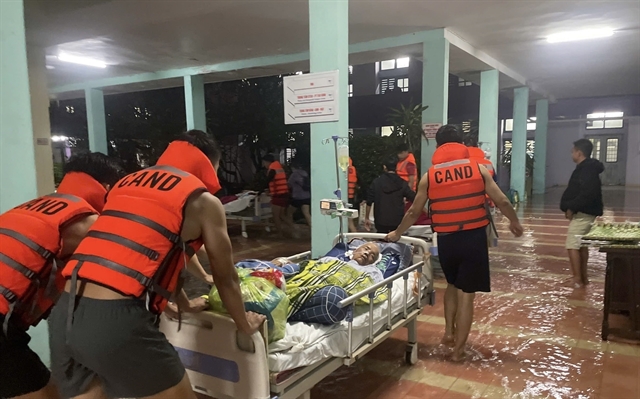 |
| The Huế Police support patients at the Huế Central Hospital. — VNA/VNS Photo Võ Văn Dũng |
HÀ NỘI — The Ministry of Health (MoH) has asked provinces and cities in the central region to proactively implement medical work to respond to Typhoon Kalmaegi expected to make landfall in Việt Nam overnight on Thursday and the morning of Friday.
In the official dispatch sent to localities on Wednesday, the MoH requested local departments of health in the central region and affiliated units to urgently and strictly conduct directives of the Prime Minister, the National Civil Defense Steering Committee, and the MoH in responding to the typhoon and subsequent flooding, ensuring the people’s safety.
Concerned units closely monitor the typhoon developments, rainfall and flood situations; review plans for flood response and implement measures appropriate to the natural disaster developments as well as local practical requirements.
They must work with the utmost determination, anticipating the worst-case scenarios, and realise the highest-level preventive measures to absolutely ensure the people's lives, avoiding passivity and surprises in all situations.
Medical units organise professional duty and all-day emergency duty, ready to admit, resuscitate and treat victims caused by rain and flooding; ensure sufficient essential medicines supply for the people.
They should replenish stocks of medicines, chemicals and supplies to be ready for use in case of emergency, deploy plans to protect medical facilities in areas at risk of being affected by rain, proactively evacuate and protect people and property in low-lying areas with risks of inundation, flash floods, landslides and mudslides.
Medical units closely monitor and respond to outbreaks of disease during floods and landslides; organise environmental sanitation, ensure clean water and food safety during and after the flood, absolutely preventing outbreaks of disease after the flood.
Besides, they must also arrange and stabilise medical facilities, ensuring medical examination and treatment for the people after the flood. — VNS
Society
 Society
 Society
 Society
 Society
 Society
 Society
 Society
 Society
.jpg) Society
Society
 Society
 Society
 Society
 Society
 Society