 Society
84 individuals investigated for transnational online frauds
1.
|
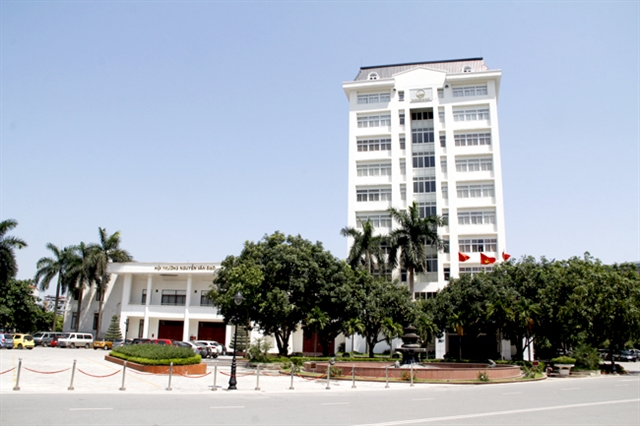
| Việt Nam National University–Hà Nội (VNU–Hà Nội) leads Vietnamese institutions in the QS Asia University Rankings 2026 at the 158th rank. —Photo vnu.edu.vn |
HÀ NỘI — Quacquarelli Symonds (QS) has released the QS Asia University Rankings 2026, with 25 Vietnamese higher education institutions listed, including eight first-time entrants.
Of those ranked previously, seven improved, one maintained its position, and nine dropped.
Việt Nam National University–Hà Nội (VNU–Hà Nội) leads Vietnamese institutions, ranked 158th, followed by Duy Tân University (165th), Việt Nam National University–HCM City (175th), Tôn Đức Thắng University (231st), and Văn Lang University (251st).
Other institutions include HCM City University of Technology (287th), Hà Nội University of Science and Technology (315th), University of Economics HCM City (318th), and Industrial University of HCM City (355th).
VNU–Hà Nội has continued a steady rise since 2019, improving key indicators. Its academic reputation rose 14 places to 122nd, and employer reputation climbed nine places to 128th, reflecting growing international recognition. It also entered the top 75 in Asia for research quality and capacity, highlighting global research collaboration.
VNU–Hà Nội's President Hoàng Minh Sơn said Vietnamese universities recognise that catching up with world-leading institutions requires continuous reform in governance, training quality, and international cooperation.
He emphasised that national policies such as resolutions 57-NQ/TW and 71-NQ/TW, along with directives from the Party General Secretary, provide strong momentum for Việt Nam’s higher education to integrate and assert its global standing.
Sơn added that rankings serve not as an end goal but as a benchmark for improvement, helping universities enhance quality and contribute effectively to human resource development, research, and policy consultation for sustainable national growth.
The QS AUR 2026 is the largest edition to date, ranking 1,529 universities from 25 countries and territories, including 558 new entrants.
Rankings were based on 11 criteria and analyses of 1.5 million academic votes, 520,000 employer votes, and over 200 million citations from 19.8 million research publications.
China and India lead the region with 394 and 294 ranked universities, respectively. — VNA/VNS
Society
 Society
 Society
 Society
 Society
 Society
 Society
 Society
 Society
 Society
 Society
 Society
 Society
 Society
 Society