 Opinion

Vietnamese Prime Minister meets Cambodian National Assembly President
1.
 |
| *Dr Angela Pratt, WHO Representative in Việt Nam. Photo Việt Linh |
*Dr Angela Pratt, WHO Representative in Việt Nam
World Health Day has always been a moment for the global community to reflect on progress in public health and recommit to the work still ahead. But in Việt Nam, 2026 marks a truly historic milestone. This year, World Health Day also becomes Việt Nam’s National Health Day, following the Politburo’s adoption of Resolution 72, an important recognition of health as a cornerstone of national development. Designating April 7 as a national day for health underscores Việt Nam’s deep commitment to the wellbeing of its people and its vision that a strong, healthy population is essential for a strong, prosperous nation.
The designation of this milestone day also reflects Việt Nam’s decisive national health leadership. The country’s focus on proactive disease prevention, for a healthier Việt Nam and healthy people, developed nation signals not just ambition but strategic clarity. It reflects an understanding that prevention, grounded in science, is the foundation upon which modern, resilient, equitable health systems and healthy populations are built.
The 2026 World Health Day theme Together for Health. Stand with science, emphasising lifesaving and life-enhancing science, could not be more timely. It aligns closely with Việt Nam’s own national priorities, particularly those expressed in Resolution 57, which identifies science, technology, innovation and digital transformation as the country’s most important strategic breakthroughs for the coming decades. These national directions mirror the World Health Organization’s (WHO) belief that science and evidence must remain at the centre of public health decision-making.
Over the past century, science has transformed health outcomes globally and here in Việt Nam. Countless lives have been saved and immeasurably improved thanks to advances in research, technology and medical innovation. Immunisation programmes have protected generations of children and eliminated diseases that once caused enormous suffering. The availability of antibiotics, vaccines, including COVID-19 vaccines, and new diagnostics and treatments for conditions such as diabetes and tuberculosis has given people longer, healthier lives. Just a few decades ago, an HIV diagnosis was an almost certain death sentence. Now, thanks to advances in medical science, HIV is a manageable chronic disease.
Science at the heart of Việt Nam’s prevention journey
Việt Nam’s shift from a treatment-focused system to one that prioritises proactive, life-course prevention, encapsulated in Resolution 72, is a profoundly important transformation that will shape the health system for decades to come. Again, science and evidence-based policymaking are already driving this shift.
Scientific approaches are helping Việt Nam detect and respond to disease outbreaks more rapidly; maintain and expand strong and trusted vaccination and immunisation programmes, including through the introduction of new vaccines; improve food safety systems; and address the growing threats from climate-related health risks. Scientific discovery is also vital not only in the development of new medicines but in tackling recent challenges such as antimicrobial resistance, ensuring that essential medicines remain effective for future generations.
Environmental health challenges, from air pollution to unsafe water, also require scientific solutions and cross-sector collaboration. The same is true for efforts to eliminate neglected tropical diseases such as rabies and liver fluke, which continue to affect some of the most vulnerable communities in Việt Nam.
Equally important is the role of science in supporting healthier lifestyles and preventing noncommunicable diseases, now among the leading causes of illness and death in Việt Nam, with more than half a million people dying each year from largely preventable diseases. Science has helped us to understand the extent of health harms from the consumption of dangerous products like tobacco and vapes, and to inform policy action to reduce these harms.
Remember, tobacco companies used to tell us that cigarettes were not harmful to health. With the help of science, we can rebut these and other dangerous falsehoods that are harmful to health. At the same time, science helps us to understand the benefits of pro-health behaviours, such as physical activity and balanced diets. When people understand the science behind disease prevention, they become empowered to make healthier choices and to protect not only themselves but their families and communities.
All these efforts reinforce Việt Nam’s long-standing commitment to Universal Health Coverage (UHC), which aspires to ensure every person can access affordable, quality care without financial hardship. Prevention and early detection are central to this goal, and science provides the tools necessary to achieve it.
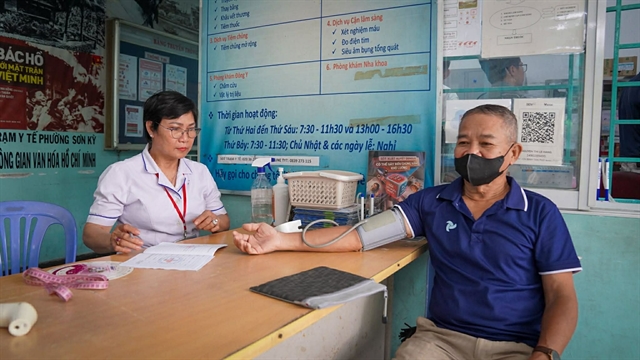 |
| Community based interventions, including routine check ups, are key to managing noncommunicable diseases and protecting health - today and over the life course. Photos courtesy of WHO Vietnam |
WHO’s commitment to a prevention first, science led future
At the WHO Việt Nam, we remain deeply committed to supporting the Government in advancing this prevention-first vision. We continue to work closely with the Ministry of Health to strengthen primary health care and preventive services, with a particular focus on early detection, screening and community-based interventions to manage noncommunicable diseases. This work is aligned with the ministry’s push to promote routine health check-ups and life-course health protection models that support people to stay healthy and, over the long term, reduce demand for hospital care.
Together with national and international partners, we are also expanding efforts to address climate and environmental health risks, focusing on clean air and climate-resilient health systems. At the same time, we are supporting Việt Nam’s ambitions in digital health by helping to strengthen data systems, build digital capacity and promote the use of high-quality evidence for health decision-making. These efforts reflect our shared belief that health progress in a modern, developed nation must be underpinned by strong, trusted science.
Protecting and improving health is shared work. It requires leadership from government, research institutions, health facilities and civil society, as well as active engagement from communities themselves. The Ministry of Health has rightly emphasised the importance of mobilising all ministries, sectors, mass organisations and localities to create an environment where health can flourish and where prevention becomes the norm rather than the exception.
On this first Việt Nam National Health Day, and on World Health Day 2026, I invite everyone in Việt Nam to renew their commitment to health. I encourage the public to embrace proactive prevention, lead healthy lifestyles and trust in science as a reliable guide. I urge policymakers to continue championing evidence-based policies and investing in prevention. And I call on partners across all sectors to join hands in advancing Việt Nam’s vision of health for all.
Science has shaped Việt Nam’s health achievements to date, and the WHO is honoured and committed to continuing its work with the Government and other partners to shape an even healthier, stronger and safer future for generations to come. Happy World Health Day and National Health Day! — VNS
Opinion
 Opinion
 Opinion
 Opinion
 Opinion
 Opinion
 Opinion
 Opinion
 Opinion
 Opinion
 Opinion
 Opinion
 Opinion
 Opinion
 Opinion