 Opinion

Viên dives again to popularise swimming passion
1.
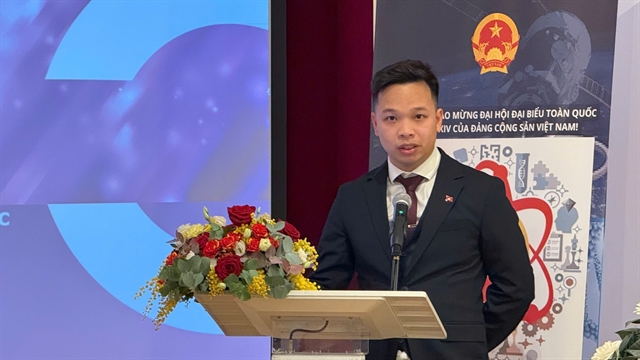 |
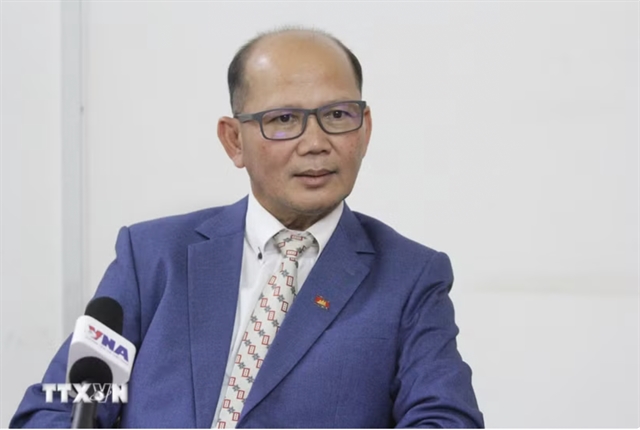
| Associate Professor Dr Trần Lê Hưng takes the floor at a scientific seminar hosted by the Vietnamese Embassy in France on January 31, highlighting the role of Vietnamese intellectuals in France in the development of science and technology, innovation and digital transformation in Việt Nam. Photo courtesy of Trần Lê Hưng |
The Politburo's Resolution No 57-NQ/TW, issued on December 22, 2024, regards science and technology, innovation and digital transformation as the prerequisite and best opportunity for Việt Nam to become a prosperous and powerful country in the new era – the era of the nation's rise. From the perspective of an overseas Vietnamese intellectual, Associate Professor Dr Trần Lê Hưng, a high-speed rail specialist at the Engineering School of Paris of Gustave Eiffel University in France shares his insights with Vietnam News Agency reporters Thanh Tuệ and Khánh Chi.
Resolution No 57-NQ/TW defines science – technology, innovation and digital transformation as the foundation for the new development era. Under that context, how do you view the mission and role of Vietnamese intellectuals overseas?
The Vietnamese at home and abroad alike warmly welcomed the Resolution No 57 soon after it was promulgated as it serves as a foundational and guiding framework for all national development activities in the time to come, specifically through science - technology, innovation and digital transformation.
In the current period, the overseas Vietnamese (OV) community serves as an internal strength of the nation. With an abundant force of intellectuals who have access to the pinnacle of global knowledge, they represent an indispensable resource in the process of national construction. This force plays a vital role not only in transferring knowledge and distilling human excellence to apply to Việt Nam’s development model but also in acting as a bridge to bring international experts to Việt Nam and to bring Việt Nam to the world.
The mission and role of overseas Vietnamese intellectuals in this new era are of paramount importance. Every overseas Vietnamese individual needs to be deeply aware of their political mission, contributing their thoughts and initiatives to drive the country toward rapid and sustainable development.
Perhaps the lyrics 'Ask not what your country can do for you, ask what you can do for your country today,' [in the song Youth Aspiration composed by musician Vũ Hoàng] serve as both a reminder and an awakening for every Vietnamese citizen, especially those abroad, who have always received the care and attention of the Party and State.
As far as you’re concerned, after 20 years implementing resolutions on OV affairs, which are the biggest obstacles preventing the intellectual resources of the diaspora from being utilised in a manner commensurate with the spirit of Resolution 57?
Over the past two decades since the Politburo’s Resolution No 36-NQ/TW came into being, the OV affairs have undergone notable changes. The Party and State have consistently upheld comprehensive policies that emphasise respect for, preservation of, and engagement with Vietnamese talents abroad. These policies reflect a strong expectation that overseas Vietnamese intellectuals will return and make significant contributions to the homeland’s development.
However, within our national context, concerns regarding whether Việt Nam’s environment at that time was adequate for growth, along with persistent worries over income and professional prospects, remained unresolved issues for the Vietnamese intelligentsia.
Given their unique nature, intellectuals require a competitive, fair, and transparent working environment with clear opportunities; they aspire to contribute to society and humanity and do not want their talents to stagnate. I believe these legitimate concerns represent the bottlenecks we face in attracting and retaining talent.
Nevertheless, highlights from Resolution No 57, such as the acceptance of risk in scientific research and the allocation of 3 per cent of the State budget to R&D are expected to create favourable conditions as the legal framework is finalised. These changes act as a 'breath of fresh air' for scientific research in Việt Nam, which will help attract overseas Vietnamese intellectuals to return and address domestic challenges.
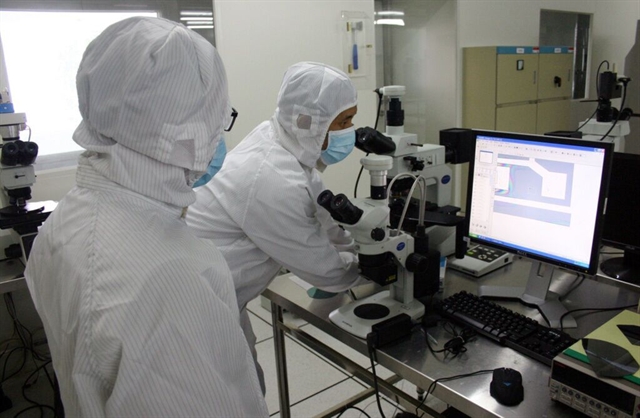 |
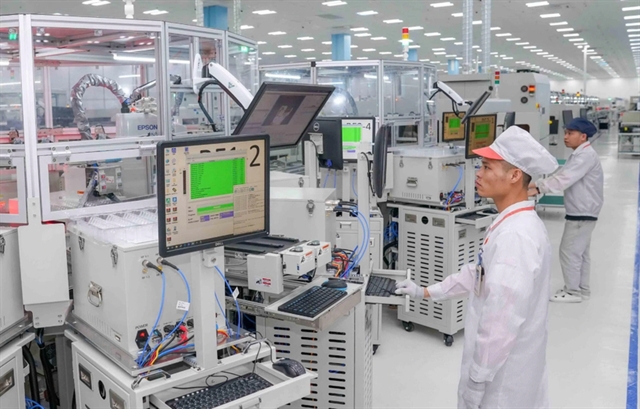
| Scientific research at the R&D Centre in Saigon Hi-Tech Park. VNA/VNS Photo Tiến Lực |
In your view, how should Resolution 57 be institutionalised to shift from an 'attraction and repatriation' mindset to one of 'brain circulation and knowledge sharing', in line with today’s globalised context?
The concept of 'brain circulation' is far more appropriate in today’s 'flat world', where knowledge is valued and flows across continents. This creates a foundation for balanced social development and helps nations stay rapidly and regularly updated on global scientific and technological advancements. This concept offers a more balanced approach than the traditional shifts of 'brain drain' and 'brain gain', which often imply a zero-sum game where one side wins and the other loses.
For our country, this is still a relatively new concept, and how to concretise it within the framework of Resolution No 57-NQ/TW remains a major question. One solution is to establish and operationalise Research and Development (R&D) centres within public institutions, State agencies and large corporations. These R&D centres would aim to resolve existing operational bottlenecks through the application of science and technology. By doing so, we can maximise domestically trained talent while attracting both overseas Vietnamese intellectuals and foreign experts to collaborate.
Whether through short-term or long-term engagements, the exchange, cooperation, and joint research conducted at these R&D centres will empower Vietnamese intellectuals to gradually achieve technological autonomy. It will build their self-confidence to create 'Make in Vietnam' products, ultimately improving labour productivity and ensuring our products are competitive on the international stage. Furthermore, the establishment and operation of these R&D centres will accelerate the practical implementation of Resolution No 57-NQ/TW into daily life.
To ensure that overseas Vietnamese intellectuals have full peace of mind in participating in key science and technology programmes under Resolution 57, what priority mechanisms regarding the working environment, finance, and the innovation ecosystem should Việt Nam focus on perfecting?
It is evident that from the central to local levels, ministries and agencies have been urgently taking action following the decisive and specific directives of General Secretary Tô Lâm regarding breakthroughs in science, technology, innovation, and national digital transformation. We are seeing many concrete programmes, such as the initiative to attract 100 leading experts to return to the country to work. Policy mechanisms have also been relaxed to better facilitate the return of overseas Vietnamese intellectuals.
For these efforts to be implemented effectively and synchronously, we must prioritise resources for spearhead industries and the backbone infrastructure projects that serve as the foundation for national development. Furthermore, we need to create a stable professional environment backed by a long-term strategy and vision, avoiding "patchwork" or temporary, stopgap solutions.
Additionally, building upon the 'Triple Helix' model mentioned in Resolution No 71-NQ/TW which consists of the State, Academia, and Enterprise, we need to perfect a 'Five-Pillar' ecosystem by adding Investors and Researchers.
Investors will provide the necessary capital to help ideas take flight and facilitate the commercialisation of science and technology products.
Researchers should be defined more broadly to include research institutes and R&D centres, rather than being confined strictly to the university model.
Once this ecosystem operates smoothly, we can take pride in the fact that Resolution No 57-NQ/TW has been substantively implemented. At that point, indicators such as Việt Nam’s Total Factor Productivity (TFP) will be competitive with regional peers and begin to approach those of the world's developed nations. — VNS
Opinion
 Opinion
 Opinion
 Opinion
 Opinion
 Opinion
 Opinion
 Opinion
 Opinion
 Opinion
 Opinion
 Opinion
 Opinion
 Opinion
 Opinion