 Opinion
Quy Nhơn Dialogue on Climate and Transition to provide platform for open discussion
1.
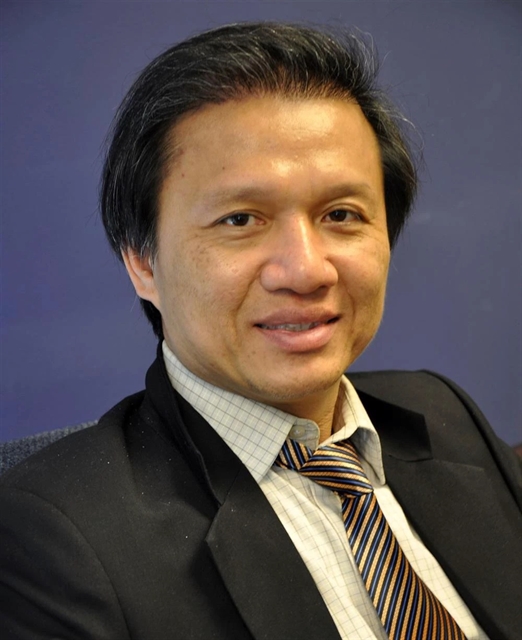 |
| Nguyễn Đình Thắng, a key figure in the terrorism-linked organisation 'Boat People SOS'. — Photo bocongan.gov.vn |
HÀ NỘI — Under the guise of 'assisting refugees', the terrorism-linked organisation 'Boat People SOS' (BPSOS) based in the US has recently continued to reveal its true nature of politicising humanitarian activities, exploiting the banner of human rights to interfere in and exert pressure on Việt Nam.
It is necessary to clearly identify and resolutely combat and refute these old tactics in new forms on theoretical and practical grounds, aiming to firmly safeguard national prestige and the objective truth about the human rights situation in Việt Nam.
Recently, BPSOS, led by Nguyễn Đình Thắng, drafted and circulated a so-called 'petition' addressed to the US Department of State, falsely accusing Việt Nam of human rights violations and calling for sanctions and urging the inclusion of Việt Nam on the list of 'Countries of Particular Concern' (CPC) regarding religious freedom.
Thắng claimed to have mobilised 18 international organisations and 30 individuals to sign the 'petition'. This is a 'familiar script' repeatedly used for many years by several overseas extremist organisations and individuals, including BPSOS, and intensified during periods when Việt Nam holds important political events such as elections, Party congresses, or important national holidays.
It can be seen that Thắng’s claim of gathering signatures from several organisations and individuals is essentially a tactic aimed at creating a 'fabricated legitimacy' to mislead international public opinion.
In reality, many scholars and experts specialising in international relations and human rights have pointed out that such petitions often lack verifiable foundations, relying on one-sided or even distorted information.
Dr Carlyle A. Thayer, a Việt Nam studies expert at the Australian Defence Force Academy under the University of New South Wales, once noted that human rights allegations against Việt Nam made by certain exile organisations fail to fully reflect Việt Nam’s historical, cultural, and developmental context, and therefore lack objectivity and scientific basis.
According to records of competent authorities, BPSOS has links with the organisation 'Montagnard Stand for Justice' (MSFJ), which was classified as a terrorist organisation by Việt Nam’s Ministry of Public Security following the serious incident that occurred in Đắk Lắk in June 2023.
This connection shows that exploiting the pretext of 'human rights' to cover up or abet subversive activities, even those linked to violence and terrorism, is no longer merely a matter of differing viewpoints or perceptions but constitutes serious violations of law and threatens security and social order.
However, it must be clearly recognised that all distorted allegations, regardless of the forms under which they are disguised, cannot negate Việt Nam’s achievements in ensuring and promoting human rights.
As early as 1919, at Versailles, France, Nguyễn Ái Quốc, on behalf of the Vietnamese people, presented the 'Demands of the Annamite People', directly addressing fundamental freedom and democratic rights. These ideas were later institutionalised in the 1945 Declaration of Independence and the 1946 Constitution – the first constitution of the Democratic Republic of Việt Nam – which clearly affirmed the principle that all power belongs to the people, without discrimination based on class, religion, or gender.
Throughout different historical periods, from the struggle for national liberation to national construction and defence, the consistent viewpoint of the Communist Party of Việt Nam and the State has been to place people at the centre of all development policies.
The documents of the 14th National Party Congress regarding the protection and implementation of human rights demonstrate the Party’s consistent policy that all guidelines and policies of the Party and State must genuinely originate from the demands, aspirations, legitimate rights and lawful interests of the people, taking respect for, assurance and protection of human rights and citizens’ rights, as well as the people’s happiness and satisfaction, serving as both the benchmark and the ultimate goal of governance.
More than 40 years of Đổi Mới (renewal) have provided vivid and convincing evidence that Việt Nam, once a poor country heavily devastated by war, has risen to become a middle-income nation with stable economic growth and steadily improving living standards.
According to the United Nations Development Programme (UNDP), Việt Nam’s Human Development Index (HDI) has continuously improved, reaching 0.766 and placing the country among those with high human development. The World Happiness Report 2025 also ranked Việt Nam 46th out of 143 countries, a significant rise compared to previous years.
Notably, Việt Nam’s election as a member of the United Nations Human Rights Council for the 2023–2025 term and its continued re-election for the 2026–2028 tenure with a high level of support (180 out of 190 votes) clearly demonstrates the trust of the international community.
This represents not only recognition of domestic efforts but also an assessment of Việt Nam’s role, responsibility, and active contributions to promoting human rights initiatives at the regional and global levels.
In the legal sphere, the 2013 Constitution and related laws have increasingly comprehensively specified civil, political, economic, cultural, and social rights, while also establishing more effective mechanisms for rights protection.
The national target programmes on sustainable poverty reduction, new-style rural development, social security, healthcare, education, and related areas all aim to improve people’s quality of life, ensuring that no one is left behind.
From an international perspective, Việt Nam is an active member of most core international conventions on human rights, while seriously fulfilling periodic reporting obligations and participating in the Universal Periodic Review (UPR) mechanism. Appropriate recommendations have been received and implemented responsibly, in line with the country’s practical conditions.
The arguments contained in the so-called 'petition' by Thắng and BPSOS not only lack practical foundation but also run counter to the current global trend of constructive cooperation and dialogue on human rights. Exploiting human rights issues to exert political pressure not only fails to produce effective outcomes but also undermines trust and hinders cooperative relations among nations.
In the context of deep international integration, Việt Nam consistently advocates open dialogue and cooperation based on mutual respect and non-interference in each other’s internal affairs.
Any differences should be addressed through frank exchanges grounded in understanding and respect for each country’s particular characteristics. This principle is also affirmed in the UN Charter and international norms.
Identifying and exposing the distortive tactics of BPSOS is therefore not only an immediate requirement but also a long-term task in safeguarding the Party’s ideological foundation, strengthening public trust, enhancing social consensus, and affirming Việt Nam’s position in the international arena. — VNA/VNS
Opinion
 Opinion
 Opinion
 Opinion
 Opinion
 Opinion
 Opinion
 Opinion
 Opinion
 Opinion
 Opinion
 Opinion
 Opinion
 Opinion
 Opinion