 Opinion

Vietnamese Prime Minister meets Cambodian National Assembly President
1.
 |
| Voters in a mountainous area of Đà Nẵng cast their ballots. — VNA/VNS Photo Trần Tĩnh |
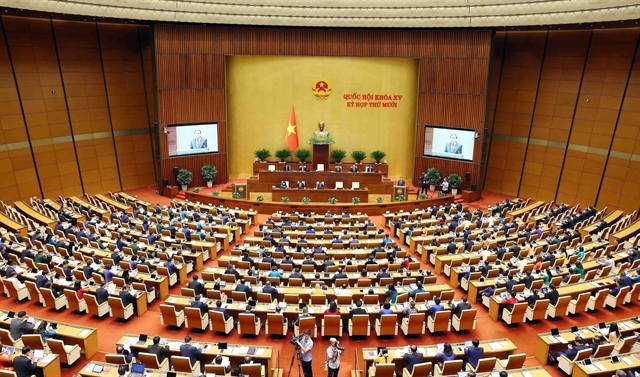
HÀ NỘI — A new legislature takes its seats with clear public demands to deepen ties with constituents, bring expert knowledge to lawmaking and turn everyday concerns into concrete policies.
Each National Assembly (NA) deputy now carries an urgent remit to hear the people's voices, contest ideas boldly, and turn debates into deeds that improve everyday life over the next five years.
“I feel the weight of every vote,” newly re-elected deputy for Hà Nội Bùi Hoài Sơn told the Voice of Vietnam.
“Each ballot is not only recognition, but a symbol of trust, expectation and the people’s concerns about the country’s future.”
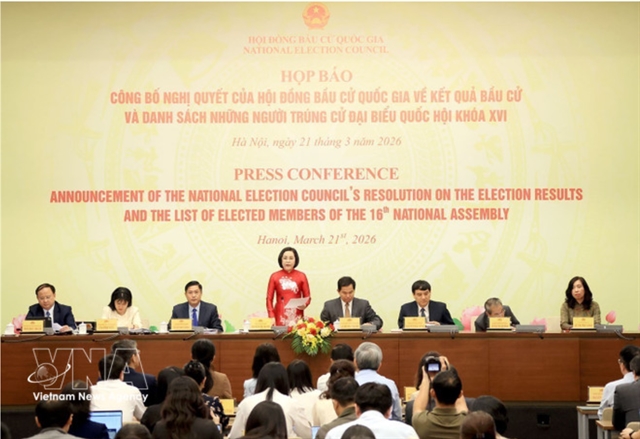
Duty and a determination to act were the common refrain among officials, scholars and voters after the March 15 vote that sent or returned 500 deputies to the 16th National Assembly.
Official results show the new NA meets statutory requirements for number, structure and quality. For the first time in 16 terms, centrally nominated candidates running in local constituencies won at an unusually high rate, with 214 of 216 full-time deputies accounting for a record 40 per cent of the assembly, up from 38.6 per cent in the previous term.
Women hold 30 per cent of the seats, and the NA has gained its first representative from the Ơ Đu ethnic group, a symbolic broadening of voices in the nation’s highest legislative body.
“Scientists and intellectuals bring evidence-based thinking rooted in practical reality,” said Professor Nguyễn Đình Đức of Vietnam National University.
“Their presence will make parliamentary work truer to the nation’s conditions and spur socio-economic development in line with objective laws.”
Many of the newly elected deputies are researchers and specialists whose careers were forged in laboratories, classrooms and fieldwork – voices officials say will help identify and remove barriers to innovation.
That focus on science and expertise dovetails with national strategy. The 14th Party Congress set Việt Nam on a course to become a high-income country by 2045, placing science and technology, digital transformation and skilled workers at the centre of development.
Associate Professor Nguyễn Thị Báo of the Hồ Chí Minh National Academy of Politics said that lawmaking is difficult because it creates rules for all of society.
"Lawmakers need exceptional political, legal, scientific and practical thinking and, crucially, a conscientious heart that asks whom any law will benefit.
"Learning from experts and international experience, and being driven by concern for the people and the nation, are essential to sound policy decisions," she said.
Voters expect deputies to be more accessible, work closely at the local level, and promptly bring pressing life issues to the NA for discussion and resolution. Deputies must dare to speak, debate and pursue issues to their conclusion in defence of citizens’ welfare and national development.
Former Central Theoretical Council member Professor Phan Xuân Sơn said deputies must understand their mission as guardians of the people’s will and possess the skills to fulfil it.
“Without a mission and the competence and ability to build consensus, a deputy cannot represent 100 million citizens,” he said.
Deputies must pair that mission with knowledge and skills in speaking, drafting laws, voting and coalition-building to effectively serve the nation.
In policy terms, upcoming agendas include implementing the 14th Party Congress resolutions and the 2026–2030 socio-economic plan, with ambitious growth targets, macroeconomic stability, controlled inflation and expanded social safety nets.
NA Chairman Trần Thanh Mẫn pressed deputies to shoulder responsibility for those aims, arguing that enhanced legislative quality and stronger parliamentary oversight are central to delivering on promises. — VNS
Opinion
 Opinion
 Opinion
 Opinion
 Opinion
 Opinion
 Opinion
 Opinion
 Opinion
 Opinion
 Opinion
 Opinion
 Opinion
 Opinion
 Opinion