 Opinion
Vietnamese community serves as important bridge in Việt Nam-India ties
1.
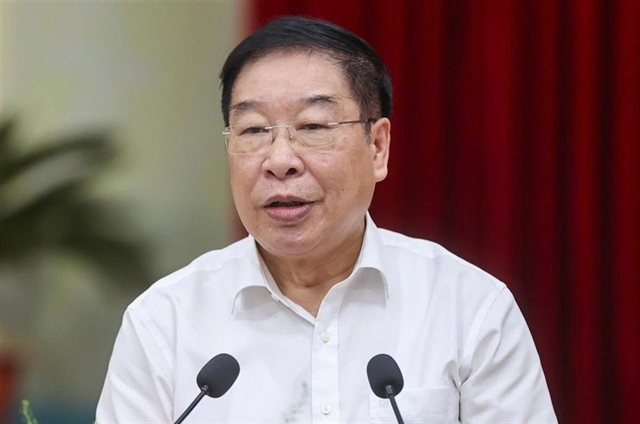 |
| Associate Professor Dr Lê Minh Thông, former Deputy Chairman of the National Assembly's Law Committee. |
The election of deputies to the 16th National Assembly and People's Councils at all levels for the 2026-31 term concluded successfully, marking a major political event that demonstrated the people's right to mastery and contributed to strengthening the State apparatus. On this occasion, State Organisation and Labour Magazine spoke with Associate Professor Dr Lê Minh Thông, former Deputy Chairman of the National Assembly's Law Committee, about the significance and outcomes of the election.
How do you assess the overall results of the recent election of deputies to the National Assembly and People's Councils at all levels?
The election of deputies to the 16th National Assembly and People's Councils at all levels for the 2026-31 term, held on March 15, was an outstanding success and truly a national festival. Its achievements can be seen across multiple dimensions, from organisation and procedures to substantive outcomes.
First, in terms of scale and public participation, this was an election of enormous scope, conducted simultaneously at 72,195 polling stations nationwide. More than 76.5 million voters were registered, and by 8pm on election day, voter turnout had reached 99.68 per cent. This is an exceptionally impressive figure.
In political science, voter participation is one of the most important indicators used to measure the democratic nature of an election. In Việt Nam, both previous elections and this year's vote have demonstrated this in a highly convincing manner.
Second, the exceptionally high turnout reflects strong public support for the 15th National Assembly's decision to shorten its term and hold the election earlier than usual. This adjustment was made to better align the timing of Party congresses and elections for the National Assembly and People's Councils.
The core objective was to shorten the gap between the 14th National Party Congress and the first session of the new National Assembly, thereby enabling the timely consolidation of senior leadership positions and ensuring greater coherence among key personnel across Party, State and socio-political institutions.
Third, high voter turnout was recorded across all localities and constituencies nationwide, demonstrating broad and consistent participation. What impressed me most was that not only urban and lowland areas, but also remote, border and island communities recorded remarkably high turnout rates.
Several provinces achieved near-universal participation, including Hà Tĩnh with 99.99 per cent, Lai Châu with 99.97 per cent, Tuyên Quang with 99.96 per cent and Điện Biên with 99.91 per cent. Notably, Lào Cai Province and Huế City were among 34 localities where voter turnout reached 100 per cent.
These figures demonstrate that Vietnamese citizens, whether living in urban centres, rural plains, mountainous regions or islands, share a strong sense of patriotism, national pride and trust in the Party and State. They also reflect a high level of political awareness regarding citizens' rights and responsibilities in building a socialist rule-of-law State of the people, by the people and for the people.
At the same time, the nationwide turnout rate of 99.68 per cent indicates that preparations, public communication and election organisation were carried out systematically, lawfully and consistently from the central to local levels.
Fourth, the election truly became a festival of the entire nation. It took place in an atmosphere of pride, enthusiasm and confidence among all sections of society. Across the country, streets and public spaces were filled with flags, flowers, banners and slogans celebrating this important occasion.
Voters of all generations, from centenarians and veteran revolutionaries to members of the armed forces, civil servants, workers, youth union members and first-time voters, participated with a strong sense of excitement and responsibility. Their engagement reflected a shared commitment to exercising both their democratic rights and civic duties in strengthening Việt Nam's socialist rule-of-law State.
This demonstrates that public trust and national unity continue to be strengthened, providing a solid foundation as the country enters a new era of development and strives towards the goal of becoming a prosperous and powerful nation.
In your view, what were the most notable features of this election compared with previous terms?
The election of deputies to the 16th National Assembly and People's Councils at all levels for the 2026-31 term was a particularly important political and legal event, laying the foundation for State institutions that will lead and oversee the implementation of the Resolution of the 14th National Party Congress.
The election, held on March 15, 2026, took place at a historic turning point, marking the beginning of a new era of national development. For that reason, it differed from previous elections in several important respects.
First, this election was the most significant political and legal event for translating the goals of the 14th National Party Congress into reality. The Congress set the objective of turning Việt Nam into a developing country with modern industry and upper-middle-income status by 2030, and a developed, high-income nation by 2045.
The 16th National Assembly and the People's Councils for the 2026-31 term will therefore serve as the key institutions responsible for steering the country's development and ensuring these strategic goals are achieved.
In this new era, institutional reform has become a top priority. The documents of the 14th National Party Congress reaffirmed that institutions remain one of the country's three strategic breakthroughs and must be advanced to a new level.
The March 15 election was therefore of particular importance because it determined the quality of the legislative bodies that will review, amend and develop laws to unlock and maximise all available resources for national development.
Unlike previous terms, the 16th National Assembly will not only perform a traditional legislative and regulatory role. It must increasingly serve as a development-oriented institution, creating favourable conditions for growth and innovation.
The deputies elected in this election bear the responsibility of building a legal framework that is sufficiently broad and flexible to support digital transformation, green transformation and innovation, which are expected to become the principal drivers of Việt Nam's growth in the years ahead.
In my view, the election succeeded in selecting 500 National Assembly deputies who meet the required standards and possess the qualities and capabilities necessary to fulfil these responsibilities.
Second, the election took place as the entire political system is undergoing a major restructuring and streamlining process.
The introduction of the two-tier local government model has significantly changed the role of elected representatives. Provincial- and commune-level People's Councils now play an increasingly important role in local governance under the principle that localities should make decisions, implement policies and take responsibility for outcomes.
In particular, commune-level People's Councils are no longer merely passive administrative units. They are becoming centres for addressing local social welfare and infrastructure issues. This is highly significant because it requires elected representatives to possess practical governance skills and a sound understanding of technology in order to operate a streamlined but highly effective administrative system.
Third, this election was held earlier than previous elections.
The decision to shorten the term of the 15th National Assembly made it possible to organise the election shortly after the successful conclusion of the 14th National Party Congress. This helped synchronise Party and State institutions, accelerate personnel arrangements and facilitate the implementation of development policies adopted by the Congress.
Although the election was organised on a tighter timetable than usual, it was conducted under the close leadership of Party committees, the National Election Council and authorities at all levels, with the active participation of the entire political system and strong support from the people.
As a result, all stages of the election process strictly complied with the Election Law and upheld the principles of democracy, fairness and transparency.
Fourth, this was the first election organised under the amended Election Law adopted by the 15th National Assembly, which provided a more modern and practical legal framework for election activities.
The amended law introduced several important innovations, including shorter timelines for election procedures and result announcements, the modernisation of election campaigning through a combination of in-person and online voter meetings, improvements in election administration and faster handling of complaints related to election results.
The law also empowered the National Election Council to make necessary adjustments and provide guidance when unforeseen issues arose.
These amendments ensured that election procedures remained democratic while becoming more efficient and better suited to the requirements of digital transformation.
Fifth, the election was conducted against the backdrop of rapid digital transformation across all sectors of society, and digital technology was applied throughout most stages of the election process.
The use of digital tools in the March 15 election delivered significant benefits, including greater convenience for voters, enhanced transparency and improved accuracy in election administration.
Through the VNeID platform, voters could access information about polling stations, candidate lists and procedures related to voting locations. In many localities, election information was also integrated into digital maps, QR codes and electronic voter handbooks, making information easier to access and use.
At the same time, population databases and specialised software supported the preparation and verification of voter lists, data updates, reporting and system security.
As a result, election administration became more scientific, transparent, accurate and modern, contributing significantly to the overall success of the election.
Digital technology was widely applied throughout this election. Do you consider this one of its most notable features?
Absolutely. The extensive application of digital technology in the election of deputies to the 16th National Assembly and People's Councils at all levels marked a significant step forward in the organisation and operation of socialist democracy in Việt Nam.
In previous elections, many procedures were conducted manually and relied heavily on paper-based processes. In this election, however, digital systems were deployed nationwide, making preparation, administration and voter services more synchronised, efficient, accurate and modern.
This was not merely a technical improvement. It was a tangible manifestation of the national digital transformation process reaching one of the most important areas of political and legal life, thereby enhancing the people's ability to exercise their democratic rights.
The benefits of digital technology can be summarised in several key areas.
Digital technology delivered significant benefits throughout the election process by making information more accessible, timely and accurate, enhancing transparency, improving administrative efficiency and strengthening the protection of citizens' voting rights.
Digital technology played a key role in the election by improving access to information, enhancing transparency and streamlining administration. Through the National Election Information Portal, VNeID and other digital platforms, voters could easily access candidate information, identify polling stations and follow election developments. Digital systems also helped standardise voter data, speed up reporting and reduce administrative errors, while online platforms and innovative communication tools made election information more accessible and engaging, particularly for younger voters.
For example, Quảng Ninh Province used short videos, infographics, graphic content and artificial intelligence tools to explain voter rights, responsibilities and voting procedures in a more engaging way. Hà Nội integrated polling-station information into its iHanoi digital platform through interactive maps.
Overall, the application of digital technology significantly improved transparency, convenience and accessibility while helping ensure that the election was conducted democratically, safely and effectively.
Voter turnout was exceptionally high. What does this say about the political awareness and civic responsibility of the people?
This question touches on one of the most profound dimensions of socialist democracy in Việt Nam, namely the relationship between the people and the State.
The high turnout reflects growing public trust and an increasingly strong sense of political responsibility among citizens.
In political science, voter participation is widely regarded as one of the most important indicators of the vitality of a democratic system. When citizens voluntarily go to polling stations, they are performing a dual act: exercising a constitutional right while also fulfilling a civic duty to the nation through their vote.
As I mentioned earlier, the turnout rate of 99.68 per cent on March 15, 2026, is highly significant. It demonstrates that the overwhelming majority of citizens place their trust in the people's government and strongly support the socialist rule-of-law State of the people, by the people and for the people under the leadership of the Party.
It also reflects the desire of citizens to actively participate in building and improving the socialist rule-of-law State by selecting representatives whom they believe possess the integrity, competence and commitment necessary to serve the nation and the people.
The exceptionally high turnout also illustrates the effectiveness of leadership and direction from Party committees and authorities at all levels, as well as the active involvement of the entire political system in preparing and organising the election.
The broad participation of citizens and the enthusiastic atmosphere surrounding election day vividly demonstrated the close alignment between the Party's policies and the aspirations of the people in this major political and legal event.
At a deeper level, the turnout figure of 99.68 per cent also reflects the hopes, expectations and messages that voters are sending to the representatives they have elected. Citizens expect those representatives to honour the commitments they made during the campaign, match words with actions and work decisively for the interests of the country and its people. VNS
Opinion
 Opinion
 Opinion
 Opinion
 Opinion
 Opinion
 Opinion
 Opinion
 Opinion
 Opinion
 Opinion
 Opinion
 Opinion
 Opinion
 Opinion