 Sci-Tech

Enterprises should promote development of Vietnamese brands in overseas markets
1.
 |
| Technicians install and check telecommunications equipment at a mobile base transceiver station (BTS). — VNA/VNS Photos |
HÀ NỘI — The Ministry of Science and Technology has issued Consolidated Document No. 09/2026/VBHN-TT-BKHCN, bringing together Circular No. 07/2020/TT-BTTTT, dated April 13, 2020, and subsequent amendments concerning the inspection of telecommunications equipment and radio stations.
The document incorporates amendments introduced by Decision No. 1665/QĐ-BTTTT, dated October 22, 2021, and Circular No. 21/2026/TT-BKHCN, dated May 20, 2026.
One framework, easier compliance
The consolidation is intended to make the legal framework more consistent while providing a clearer and more transparent basis for management, in line with broader efforts to reform administrative procedures and develop national digital infrastructure.
For businesses, inspection requirements have become spread across several documents as regulations have been amended and supplemented over time. Bringing the applicable provisions into a single document is expected to make it easier for telecommunications operators, inspection organisations, infrastructure providers and regulators to identify and apply the rules currently in force.
Importantly, the consolidation does not introduce requirements beyond those already promulgated. Instead, it brings existing provisions together, reducing the risk of conflicting interpretations and helping improve transparency and enforcement.
The move is also in line with the Government's broader push to decentralise and simplify administrative procedures and eliminate unnecessary requirements.
Faster procedures, clearer responsibilities
One of the most notable aspects of the document is the incorporation of administrative reforms introduced under Circular No. 21/2026/TT-BKHCN.
Under the updated procedure, within three working days of receiving a complete and valid application, the inspection organisation must notify the applicant in writing that the dossier has been accepted and provide information on the appraisal fee.
Once the business has fulfilled its financial obligations, the appraisal and issuance of an inspection certificate must be completed within 11 working days.
If shortcomings are identified in the dossier, the inspection organisation must clearly notify the business so that the necessary amendments can be made within eight working days. After the supplementary documents are received, the inspection certificate must be processed within a further five working days.
The regulations also clarify the responsibilities of the parties if a business fails to complete its dossier within the prescribed period.
Another provision sets a five-working-day deadline for payment of the appraisal fee from the date the business receives notification. Failure to pay within this period may result in the inspection organisation declining to carry out the appraisal.
The clearer deadlines are expected to prevent applications from remaining unresolved for extended periods while placing greater responsibility on businesses to complete administrative procedures on time.
The regulations also continue to encourage voluntary inspection of equipment that is not subject to mandatory inspection. This reflects a shift away from purely administrative control towards an approach based more on technical standards, quality and businesses' own compliance responsibilities.
Preparing for next-generation networks
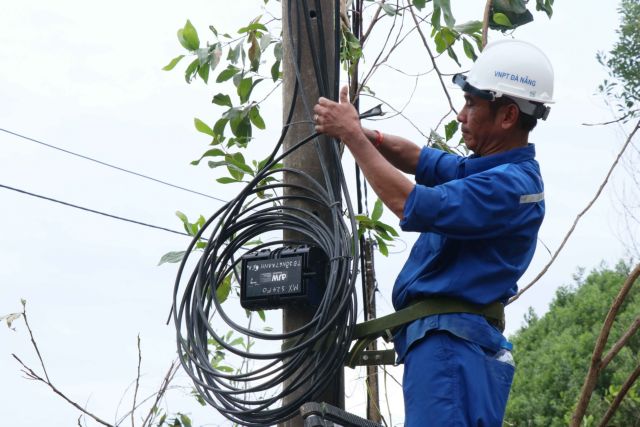 |
| A telecommunications technician checks cables and restores connections in an area affected by a landslide in Đà Nẵng City’s Trà Tân Commune. |
As Việt Nam moves rapidly towards 5G and other advanced digital infrastructure, inspection requirements are taking on greater importance.
The expansion of high-density base stations, high-speed transmission systems and high-power radio equipment has increased the need to ensure technical safety and compliance with electromagnetic-field exposure limits.
The regulations specify cases requiring initial inspection, re-inspection and unscheduled inspection. Re-inspection is required when equipment's technical parameters are changed beyond permitted limits or when changes in surrounding construction conditions affect electromagnetic-field exposure safety.
At the same time, businesses are not required to undergo re-inspection if equipment is modified within permitted technical parameters and continues to meet certified safety limits.
The approach is intended to keep regulatory oversight proportionate to actual risks, protecting public safety without imposing unnecessary compliance costs on businesses.
Digital infrastructure gets a regulatory boost
Beyond its technical provisions, the consolidated document has broader implications for the development of Việt Nam's telecommunications sector.
A clearer and more consistent inspection process can help businesses deploy networks more quickly by reducing administrative delays before equipment is put into operation. This, in turn, can support faster investment in next-generation telecommunications networks.
The regulations also clarify the responsibilities of regulators, inspection organisations and businesses, while requiring inspection databases, public disclosure of relevant information and online updates of inspection and measurement results. These measures are expected to strengthen transparency and oversight while supporting digital transformation in State management.
The framework is particularly relevant to the implementation of Politburo Resolution No. 57-NQ/TW, which identifies breakthroughs in science and technology, innovation and national digital transformation as key drivers of the country's development.
Reliable telecommunications networks are fundamental to these goals. Digital government, the digital economy, smart cities, smart manufacturing and the Internet of Things all depend on infrastructure that is not only fast and widely accessible but also technically safe and reliable.
Against this backdrop, inspection based on national technical regulations provides an important safeguard, helping ensure that equipment entering operation meets requirements for quality, safety and technical compatibility.
As Việt Nam seeks to strengthen its digital capabilities, telecommunications infrastructure will remain a foundation for wider digital development.
A modern, transparent and efficient inspection framework therefore goes beyond administrative reform. By reducing unnecessary procedural burdens while maintaining essential safety requirements, it can support faster network deployment, improve business competitiveness and contribute to the development of Việt Nam's next-generation digital infrastructure. — VNS
Sci-Tech
 Sci-Tech
 Sci-Tech
 Sci-Tech
 Sci-Tech
 Sci-Tech
 Sci-Tech
 Sci-Tech
 Sci-Tech
 Sci-Tech
 Sci-Tech
 Sci-Tech
 Sci-Tech
 Sci-Tech
 Sci-Tech