 Sci-Tech
Japan-owned Kao Vietnam launches programme to improve women wokers’ reproductive health
1.
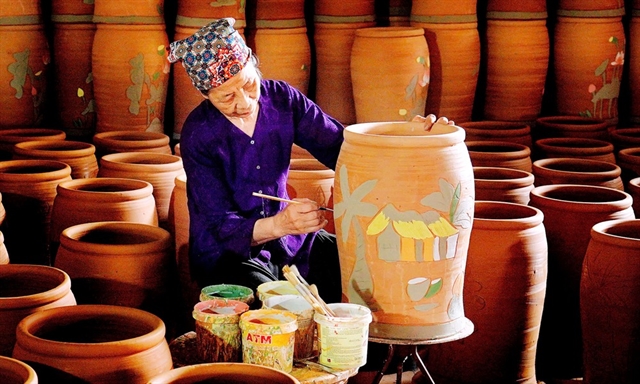 |
| Artisans decorating pottery products (illustrative image). Photo baobacninh.vn |
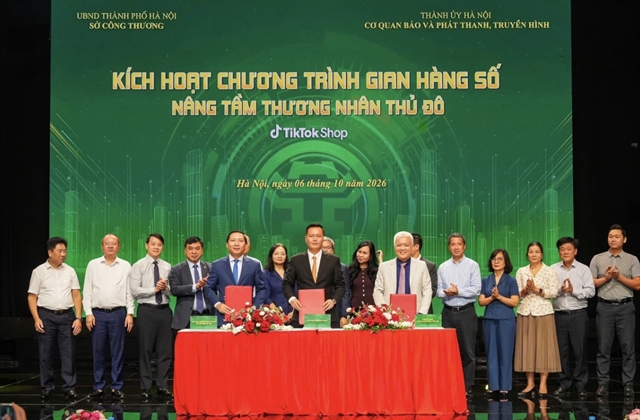
HÀ NỘI — Digital platforms are opening up new market access channels for businesses and co-operatives across Việt Nam, enabling Vietnamese goods to reach consumers more directly, enhance their competitiveness and adapt to modern consumption trends.
A smartphone, an internet connection and a livestream are becoming new trade promotion tools for the Minh Tâm Ceramics Co-operative in Phù Lãng Commune, Bắc Ninh Province. Instead of waiting for customers to visit the craft village or relying on traditional distribution channels, the co-operative now showcases its handmade ceramic products directly on social media, reaching thousands of viewers and receiving orders in real time.
Đặng Thị Tâm, Director of the Minh Tâm Ceramics Co-operative, said TikTok livestreams not only attracted large audiences but also provided opportunities to introduce the traditional Phù Lãng pottery village, the cultural values embodied in each product and the stories of the artisans behind them.
The effectiveness of this online sales channel extends beyond orders placed during broadcasts. Many customers who discover products through livestreams remain connected via Zalo, follow new product launches and return to make further purchases.
Tâm said customers who joined a livestream and placed an order could become long-term buyers rather than one-time purchasers. After receiving their goods, many continued to enquire about new products, browse other designs and place follow-up orders.
The story of Minh Tâm Ceramics shows that digital transformation does not diminish the traditional values of craft village products. On the contrary, when brought into the digital space, the stories behind the products, the land and the artisans have more opportunities to reach a wider audience.
From products shaped by craftspeople’s hands to orders placed through social media, the distance between producers and consumers is narrowing. Products that once had relatively limited markets are finding new customers in many localities, rather than relying solely on visitors to the craft village.
In practice, many businesses are proactively using e-commerce as both a trade promotion and sales channel. Websites, applications, sales management software, electronic payment systems, QR codes for product traceability and stores on e-commerce platforms are becoming increasingly widespread.
Trần Thị Vượng, General Director of Thạch An Food Processing Joint Stock Company, said e-commerce produced significant results in promoting a company’s image and product brands. Businesses could sell wherever their customers were, she said, adding that with a smartphone in everyone’s hands, the device itself had become a marketplace.
Evidence suggests that livestreaming is gradually evolving from a simple promotional format into a trade promotion tool capable of directly connecting products, sellers and buyers.
At the “Vitality of Vietnamese Goods” programme at 62 Tràng Tiền Street in Hà Nội, organised by the Department of Domestic Market Management and Development under the Ministry of Industry and Trade since the beginning of 2026, a model combining physical display areas with livestreaming has made a clear impact on the promotion, networking and consumption of Vietnamese goods.
The programme aims to help businesses reach consumers through modern methods while creating a space where customers can experience products first-hand. Combining direct product experiences with sales on digital platforms has generated two-way interaction, enabling businesses to introduce their products, receive feedback and adjust their market approaches.
The programme’s effectiveness is reflected in visitor numbers, as well as the views, comments and shares generated during livestreams. Notably, orders have come not only from consumers in Hà Nội but also from many other provinces and cities.
This shows that products placed in the digital environment can transcend geographical boundaries. Consumers no longer need to visit a shop or craft village in person. They can still learn about a product’s origins, manufacturing process and quality, communicate with the seller and make a purchase.
Trần Hữu Linh, Director General of the Department of Domestic Market Management and Development, said the “Vitality of Vietnamese Goods” programme was designed to create additional channels connecting products with consumers through an omnichannel model combining physical shopping and product experience spaces with digital platforms.
Incorporating livestreaming into the programme also reflects the growing shift in consumption towards the digital environment. Consumers can explore and experience products in person at the event while also accessing and purchasing them online. As a result, connections between local products and the market are being considerably expanded.
From a single smartphone livestream to an omnichannel business ecosystem, digital transformation is expanding the development space available to Vietnamese goods. When product quality is combined with technology, brand storytelling and consumer trust, products from craft villages, co-operatives and Vietnamese enterprises have more opportunities to reach wider markets, both domestically and internationally. – VNS
Sci-Tech
 Sci-Tech
 Sci-Tech
 Sci-Tech
 Sci-Tech
 Sci-Tech
 Sci-Tech
 Sci-Tech
 Sci-Tech
 Sci-Tech
 Sci-Tech
 Sci-Tech
 Sci-Tech
 Sci-Tech
 Sci-Tech