 Opinion
Int’l cooperation helps address nuclear power workforce shortages
1.
 |
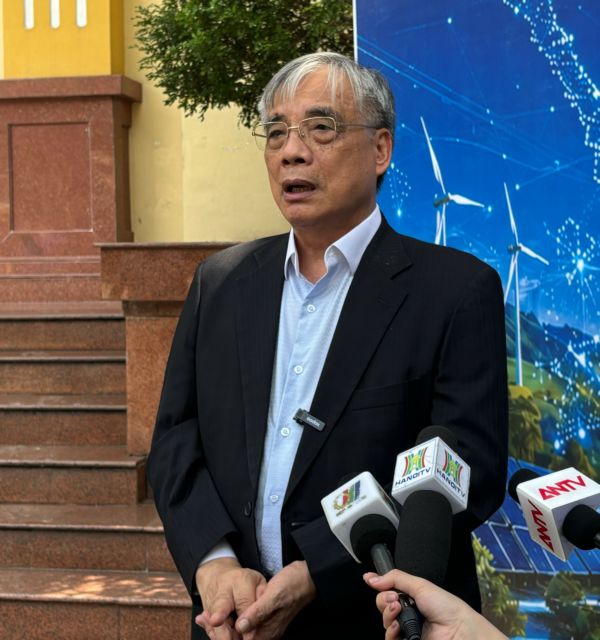
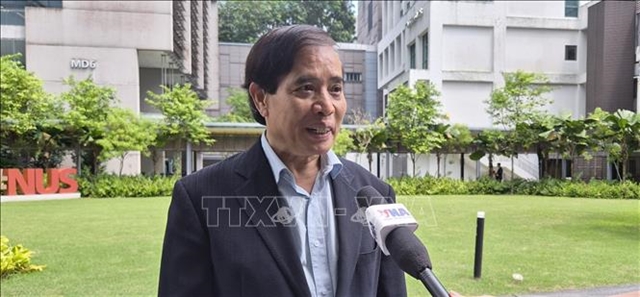
| Professor Trần Thọ Đạt, chairman of the Science and Training Council, National Economics University. — Photo courtesy of Trần Thọ Đạt |
Professor Trần Thọ Đạt, chairman of the Science and Training Council, National Economics University, speaks to Việt Nam News reporter Thu Trang about the country’s new development model driven by productivity, science, technology and innovation.
In the spirit of newly-issued Resolution 19, Việt Nam has set itself the goal of development driven by productivity, science and technology, and innovation. Is this the right path in line with regional and international development trends? And why?
The shift set out in resolution is unavoidable. Việt Nam’s earlier model, mobilising more labour, capital and natural resources while expanding processing and assembly for export, was highly effective at one stage. It created jobs, reduced poverty and embedded the economy in global value chains.
But every model has a limit. Labour is no longer as abundant or inexpensive, the population is ageing, environmental costs are rising, and additional investment is producing progressively smaller gains.
The global context has also changed. Competitiveness now depends less on labour costs than on technological capability, skills, data, energy efficiency and resilient supply chains. Automation and the green transition are rapidly shifting where value is created.
The new model should not mean abandoning manufacturing, exports or foreign investment. It means extracting more value from them through stronger domestic suppliers, better engineering and design, Vietnamese brands, and closer links between foreign and local firms. Agriculture must likewise move from producing more to producing smarter.
The real test is whether productivity rises, firms acquire new capabilities and workers earn higher incomes. That is the only credible route towards high-income status.
What advantages does Việt Nam currently possess in pursuing this new development model?
Việt Nam’s first advantage is that it is not beginning from a blank slate. It has created a long-running industrial platform, improving infrastructure, extensive trade links and a workforce familiar with modern production.
Participation in global value chains, from electronics and machinery to garments, furniture and agri-food, provides a base from which domestic firms can learn and move into higher-value functions.
The country also combines political stability, a favourable location, a large population and broad international integration. As multinational companies diversify supply chains, these attributes make Việt Nam an attractive long-term destination.
Yet location and openness are opportunities, not automatic advantages, their value depends on institutions and domestic absorptive capacity. A further strength lies in people: broad basic education, a digitally adaptive workforce, an entrepreneurial private sector and an overseas Vietnamese community with knowledge and international networks.
The weakness is not a shortage of aspirations, but the ability to turn them into technological mastery. Việt Nam has many capable individuals, yet still too few innovative firms and effective research-business links. Potential becomes productivity only through disciplined reform.
Việt Nam has set itself the goal of maintaining a high rate of economic growth over the next decade. In your view, to what extent is this target achievable, and what conditions would be required to achieve it?
The target is achievable, but it should not be treated as an extention of recent performance.
Growth of 8.18 per cent in the first part of 2026 is encouraging, it does not by itself establish a new long-term trend. Credit expansion, public spending or a favourable export cycle can lift growth temporarily. Sustaining a high rate for a decade requires a continuous rise in productive capacity and total factor productivity.
Three conditions are decisive. First, investment must become more efficient. Việt Nam needs faster development of transport, energy, digital and climate-resilient infrastructure, but speed cannot substitute for project quality, connectivity and accountability. Public investment should remove bottlenecks and crowd in private capital.
Second, the domestic private sector must become the central engine of expansion. Investment from overseas remains important, but no economy reaches high-income status on foreign production alone. Vietnamese enterprises need to scale, adopt technology, build brands and enter international markets; policy should reward innovation, not access to privilege.
Third, ambition must rest on macroeconomic stability. Inflation, banking risks, property imbalances, energy security and public debt become more consequential, not less, when growth accelerates.
Two-digit growth must be built through better decisions, more productive firms and a state apparatus capable of consistent execution.
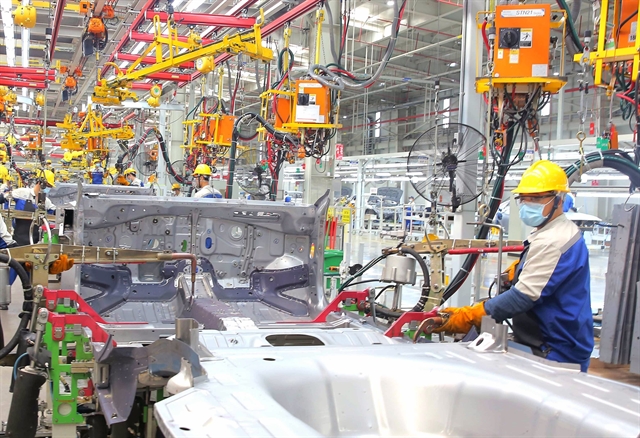 |
| People at work at an industrial zone in Ninh Bình Province. Two-digit growth is built through better investment decisions, more productive firms and a state apparatus capable of consistent execution. — VNA/VNS Photo Nguyễn Chinh |
What specific institutional breakthroughs does Việt Nam need to pursue in order to successfully transition to a growth model based on sci-tech and innovation, while also avoiding falling into the middle-income trap?
The middle-income trap, at its core, is an institutional problem. A country becomes trapped when wages rise faster than productivity while rules continue to favour administrative privilege, resource rents and imitation rather than competition and innovation.
Việt Nam therefore needs reform that changes how opportunities and resources are allocated.
First, the business environment must be predictable: property rights and contracts should be protected, regulations applied consistently, and unnecessary pre-approval replaced by risk-based supervision. Firms will not take technological risks if regulatory uncertainty is added to commercial risk.
Second, markets for land, capital, data and talent must work better. Capital should flow to productive ideas, not merely to firms with collateral.
Third, Việt Nam must close the gap between policy design and implementation. Every reform needs clear responsibility, deadlines, resources and measurable outcomes; effective pilots should be scaled, ineffective ones discontinued.
Fourth, universities, research institutes, firms and markets must be connected. Public procurement can create demand for domestic technologies, while investing incentives should support suppliers, training, research and knowledge transfer.
The state must set direction, build common capabilities and safeguard fair competition, not select permanent winners. The decisive breakthrough is one that allows innovative, productive firms to grow faster than those living on privilege. — VNS
Error: Please check your e-mail and password in the settings
Opinion
 Opinion
 Opinion
 Opinion
 Opinion
 Opinion
 Opinion
 Opinion
 Opinion
 Opinion
 Opinion
 Opinion
 Opinion
 Opinion
 Opinion