 Opinion
Việt Nam urged to take cautious approach to carbon capture technology
1.
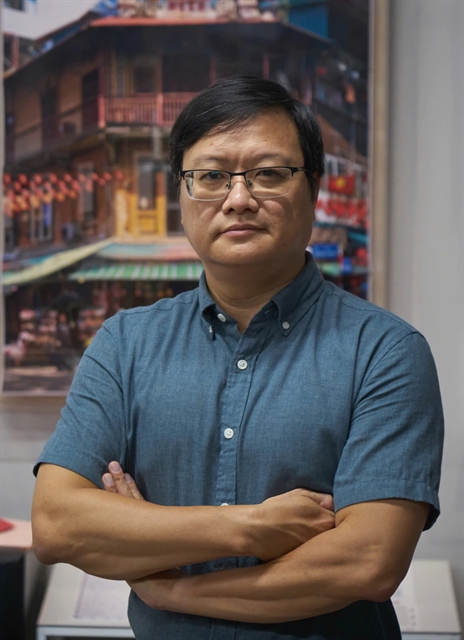 |
| Artist Nguyễn Thế Sơn. — Photo thethaovanhoa.vn |
As urbanisation and economic development accelerate, culture is not only a spiritual foundation but also an important resource for shaping value systems, creating identity and strengthening the competitiveness of each city.
VNU School of Interdisciplinary Sciences and Arts lecturer and artist Nguyễn Thế Sơn has spent years working in public art, urban memory and creative projects.
He spoke to the media about the relationship between preserving and promoting cultural and historical value alongside economic development, with the aim of making culture a genuine resource for development.
How do you see the relationship between economic and cultural development in the current context?
As Việt Nam enters a period of rapid development, we need to recognise that culture is no less important than the economy. Through the art projects and creative spaces I have developed over the past decade, particularly in public art, I have seen growing public demand for experiencing and engaging with art.
Culture is a broad concept, but what people can experience directly is creative and artistic expression. I believe culture must go hand in hand with economic development, rather than being overshadowed by an exclusive focus on the economy.
How should the role of cultural institutions such as museums, theatres, libraries and creative spaces be understood?
A culturally rich city must, first and foremost, have a thoughtful approach to its natural environment, communities, art and heritage. Culture is clearly expressed through architecture, visual arts, performing arts, and the way communities engage with the historical heritage passed down by previous generations.
We can look to developed cities around the world. There, museums, theatres, libraries and cultural and artistic spaces have become an integral part of everyday life. For example, Amsterdam has hundreds of museums, while Vienna is home to numerous spaces dedicated to music, visual arts, contemporary art and public art. More recently developed countries, such as South Korea and Singapore, also have a high number of art museums per capita.
What matters is for visiting museums, theatres, libraries and cultural spaces to become a natural part of everyday life, alongside shopping and material consumption. A culturally rich city needs a vibrant culture of engaging with and experiencing cultural offerings, from architectural heritage to visual and performing arts.
You have spent many years pursuing art projects connected with urban memory, heritage and public spaces. What role can art play in preserving identity amid increasingly rapid urbanisation?
I am particularly interested in urban memory, not only in Hà Nội but also in other cities across Việt Nam and around the world. I think cities are an important expression of human culture, complex entities that encompass the cultural and artistic values of their communities.
Preserving identity amid urbanisation and economic development is therefore crucial. Cultural identity helps position a city or community within the global narrative, while also creating a competitive advantage.
When a city preserves its historical, cultural and artistic elements while encouraging creativity and the reinterpretation and rediscovery of its memories and heritage, it is also pursuing a form of sustainable economic development.
Art can be a bridge, allowing communities to experience the city’s memories across different periods while fostering awareness, aesthetic appreciation and a sense of humanity.
Many cultural and heritage spaces, as well as sites tied to collective memory, are coming under pressure from development. In your view, what needs to change to make culture a resource for sustainable development?
We need to change our approach. Rather than seeing heritage and cultural spaces or sites tied to collective memory as obstacles to development, we should recognise them as elements of identity that can contribute to economic development.
These spaces are what give a city greater cultural and historical depth, while providing stories to tell when it engages with the world. Of course, there needs to be a balance. We need to identify and preserve the core values, spaces and sites that define a city, thus fostering its diversity and its ability to tell its own stories.
The projects I have undertaken on communal houses in the Old Quarter and old collective housing blocks show that when we see heritage as a resource for cultural development and historical preservation, these places can be transformed into spaces that hold contemporary stories.
Around the world, many former factories, old residential complexes, historic buildings and even natural spaces have been repurposed.
Seoul once restored an old stream in the heart of the capital after years of rapid development. This shows that, in some cases, returning to older values can help restore balance to the landscape and environment while also supporting economic development.
Việt Nam is undergoing a period of rapid development and transition. A more scientific, civilised and multi-dimensional approach will help us harness creative resources by recognising the expressive potential of culture, art and collective memory. — VNS
Opinion
 Opinion
 Opinion
 Opinion
 Opinion
 Opinion
 Opinion
 Opinion
 Opinion
 Opinion
 Opinion
 Opinion
 Opinion
 Opinion