 Opinion
Int’l cooperation helps address nuclear power workforce shortages
1.
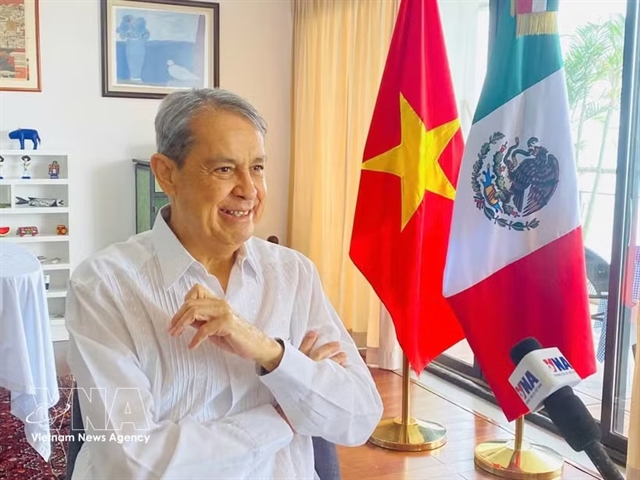 |
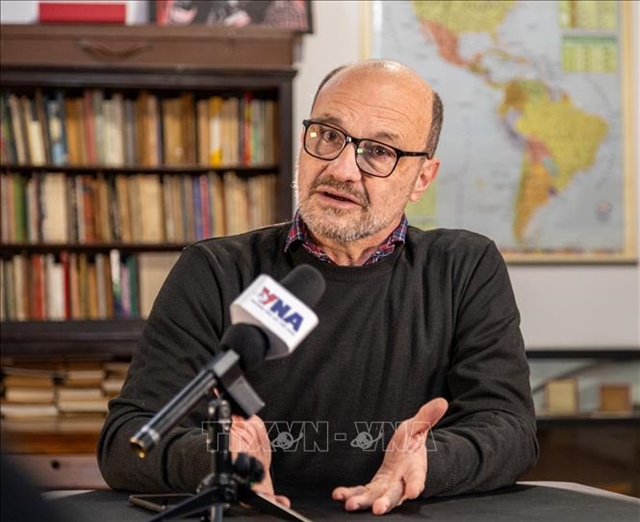
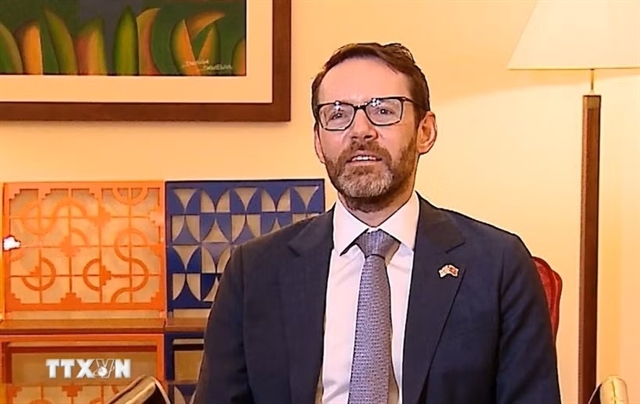
| Mexican Ambassador to Vietnam Alejandro Negrin Munoz. — VNA/VNS Photo |
HÀ NỘI — Mexican Ambassador to Việt Nam Alejandro Negrin Munoz has said that relations between the two countries still hold significant potential for further development, underpinned by their economic and international integration, as well as shared perspectives on development and cooperation.
In an interview granted to the Vietnam News Agency (VNA), he spoke highly of Việt Nam’s Politburo Resolution No 59-NQ/TW, adopted in 2025, on enhancing international integration in the new context, saying that deeper integration into the world could make an important contribution to the realisation of the country’s national development goals.
According to the diplomat, both Việt Nam and Mexico have highly open economies, strong capacity to attract foreign investment and deep engagement in global value chains. The two countries also share ambitious economic goals, with Mexico aspiring to become one of the world’s 10 largest economies in the near future, and Việt Nam pursuing its goal of becoming a developed country within a relatively short period.
He stressed that Việt Nam’s open-door policy is creating new opportunities to advance the bilateral agenda after more than five decades of diplomatic relations. In this context, he highlighted the publication of the book “Mexico–Vietnam: A Vision for the Future”, describing it as the first bilateral, multidisciplinary academic project examining the development and prospects of relations between the two countries.
The ambassador also underscored the strong growth of bilateral economic ties over the past decade, driven in large part by their participation in the Comprehensive and Progressive Agreement for Trans-Pacific Partnership (CPTPP). He said this experience demonstrates the potential of multilateral mechanisms to expand cooperation not only between Việt Nam and Mexico, but also between Việt Nam and Latin America.
For the coming years, the identified priorities include facilitating bilateral investment and trade flows, while making more effective use of multilateral mechanisms in which both countries participate. In particular, he attached importance to Việt Nam’s APEC presidency for 2027 and Mexico’s in 2028, saying that the two occasions will provide opportunities for the countries to coordinate bilateral and inter-regional priorities and foster high-level dialogue.
Regarding Việt Nam’s international role, Alejandro Negrin Munoz stressed the importance of diplomacy in maintaining stability, peacefully resolving disputes and strengthening multilateral mechanisms. He said that under the administration of President Claudia Sheinbaum, Mexico is advancing a people-centred multilateral agenda, with a focus on peace, gender equality, sustainable development and social welfare improvement.
Within this framework, Mexico wishes to continue working with Việt Nam in areas of mutual interest and make use of platforms such as APEC and the CPTPP, as well as the linkage between the Pacific Alliance and ASEAN, to enhance connectivity between Latin America and Southeast Asia, he went on.
Speaking about Việt Nam’s image and standing among the Mexican public, the diplomat said the two countries share many historical similarities, as well as aspirations and goals for socio-economic development.
For Mexicans, the image of President Hồ Chí Minh continues to hold a special place as a symbol closely associated with Việt Nam and its history, he said, adding that political and economic relations between the two countries have made significant progress in recent years, reflected in growing exchanges and cooperation across various fields.
He identified a wide range of areas with strong cooperation potential, including inclusive tourism, the green economy, heritage preservation and restoration, digital transformation, clean energy, high-tech agriculture, innovation and academic exchanges.
The key, the ambassador said, is to translate these shared strengths and similarities into concrete projects, thereby strengthening people-to-people links and connections between the countries' production sectors. — VNA/VNS
Opinion
 Opinion
 Opinion
 Opinion
 Opinion
 Opinion
 Opinion
 Opinion
 Opinion
 Opinion
 Opinion
 Opinion
 Opinion
 Opinion
 Opinion