 Opinion
Students to compete in first national dance talent contest
1.
|
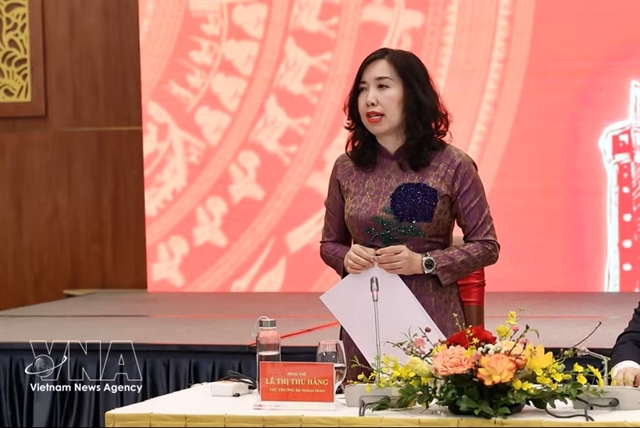
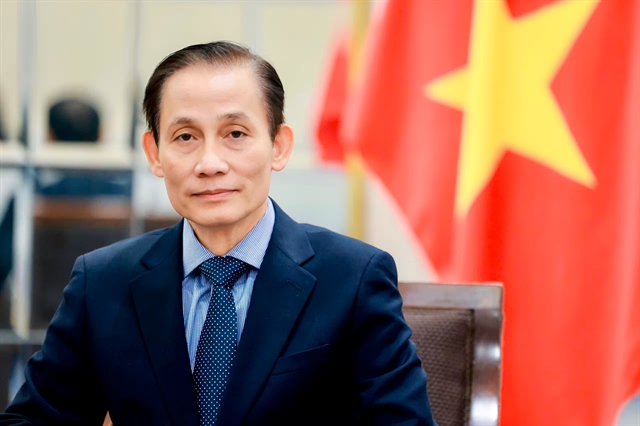
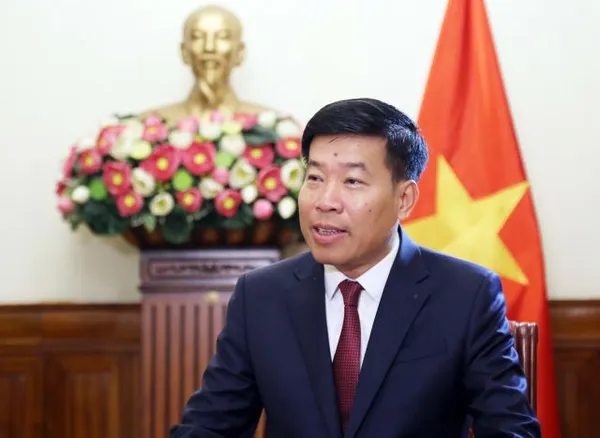
| Deputy Minister of Foreign Affairs Lê Thị Thu Hằng. VNA/VNS Photo |
HÀ NỘI – A new Politburo resolution has outlined the role of overseas Vietnamese (OVs) in the national unity strategy and links them closely to socio-economic development, science and technology, innovation, digital transformation, culture, diplomacy and remote defence.
The statement was made by Deputy Minister of Foreign Affairs Lê Thị Thu Hằng, who told the Vietnam News Agency that the Politburo’s Resolution 23-NQ/TW dated August 2 carries political, diplomatic and national development significance for Việt Nam.
Hằng said the resolution reflects the Party and State’s sustained attention to the Vietnamese community abroad after more than two decades under an earlier policy framework. It also confirms that OV affairs form part of the country’s development and collective strength agenda in the new era, she noted.
According to the Deputy Foreign Minister, the resolution reasserts the Party and State’s consistent policy of national unity, treating OVs as an inseparable part of the Vietnamese community.
It also updates Party policies toward OVs to match the country’s new development context and the community’s growing maturity, reflecting their increasing position, role and capacity to contribute to national construction, development and defence.
Under the resolution, an important political foundation is provided for authorities to refine mechanisms and policies, build a united and legally secure community, and create an open environment for OVs to act as bridges, promote Việt Nam’s image and participate more deeply in development, particularly in science, technology, innovation, investment, trade and global integration.
As for the resolution’s new elements, Hằng said it identifies OVs for the first time not only as an inseparable part of the nation, but also as one of the country’s most important strategic resources contributing to national collective strength.
The resolution reaffirms that OV affairs are the responsibility of the entire political system, requiring close coordination among Party bodies, ministries, agencies, localities and Vietnamese representative missions abroad, she said.
According to Hằng, the Party and State will continue to fully protect OVs' legitimate rights and interests, coordinate efforts to ensure their security and safety, support settlement and integration in host countries, preserve Vietnamese language and cultural identity, and foster their ties with the homeland.
Rather than limiting efforts to mobilising and caring for the community, she said the State will improve institutional frameworks, policies and the operating environment so OVs can join the country’s development process. This can be done by fine-tuning mechanisms to attract intellectuals, experts and entrepreneurs and expanding channels for research, technology transfer, policy consultation and national development schemes.
She added that resource mobilisation should not be understood only as financial mobilisation. More broadly, it means fully harnessing knowledge, technology, management experience, international networks and the community’s prestige and standing in host countries.
The resolution’s continued emphasis on national reconciliation is significant for bolstering social consensus and deepening ties between Vietnamese at home and abroad, she said. Reconciliation does not mean erasing differences in circumstances or viewpoints, but respecting differences that do not conflict with national interests while working toward a developed, strong and prosperous Việt Nam.
The most important task after the resolution’s issuance is to move quickly from awareness to action and from policy orientations to concrete schemes and results, a responsibility shared by the entire political system rather than only the Ministry of Foreign Affairs or the State Committee for Overseas Vietnamese.
For the Ministry of Foreign Affairs and State Committee for Overseas Vietnamese, four task groups will be prioritised.
First, they will intensify dissemination of the resolution to build common understanding and concerted action among authorities, sectors, localities, missions abroad and the OV community, with each agency and unit translating the resolution into practical tasks and action plans.
They will also work quickly to turn the resolution into plans and mechanisms. The ministry is leading the drafting of the Government’s action plan and its own rollout plan, while coordinating with ministries, agencies and localities to review and fine-tune policies and create a more favourable environment for OVs to maintain ties with the homeland and contribute to its development.
Next, they will develop mechanisms and an ecosystem to connect OVs, focusing on building databases and networks of experts, intellectuals, scientists, entrepreneurs and young people worldwide, and establishing platforms to match supply with domestic demand from ministries, localities, businesses, research institutes and universities, converting potential into concrete cooperation schemes, investment projects, technology transfer and innovation.
Finally, OV affairs will be carried out with a renewed focus on working with the community to create mechanisms and build resources. Vietnamese representative missions abroad will uphold their role as focal points for connecting Vietnamese resources in their areas, shifting from holding activities to building long-term connectivity and from convening people to supporting and harnessing their resources, she added. VNA/VNS
Opinion
 Opinion
 Opinion
 Opinion
 Opinion
 Opinion
 Opinion
 Opinion
 Opinion
 Opinion
 Opinion
 Opinion
 Opinion
 Opinion