 Society
Việt Nam urged to take cautious approach to carbon capture technology
1.
|
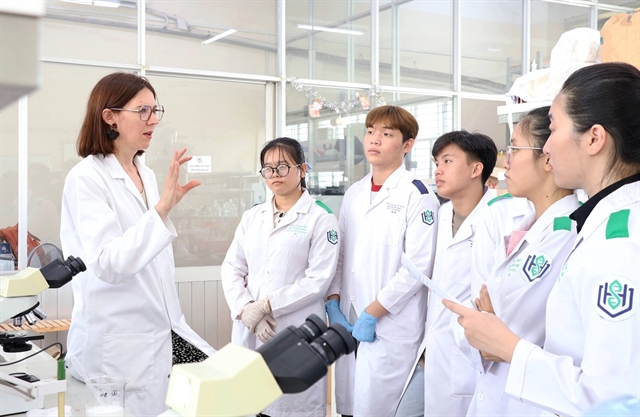
| A professor from the University of Tours in France instructs students during a laboratory session at the University of Health Sciences under the Việt Nam National University-HCM City as part of a visiting professor initiative. — Photo of the University of Health Sciences |
HCM CITY — HCM City aims to rank among Việt Nam’s top five localities in attracting and developing talent by 2030, especially in strategic technologies, finance, industry, and urban development, by improving recruitment, training, and working conditions.
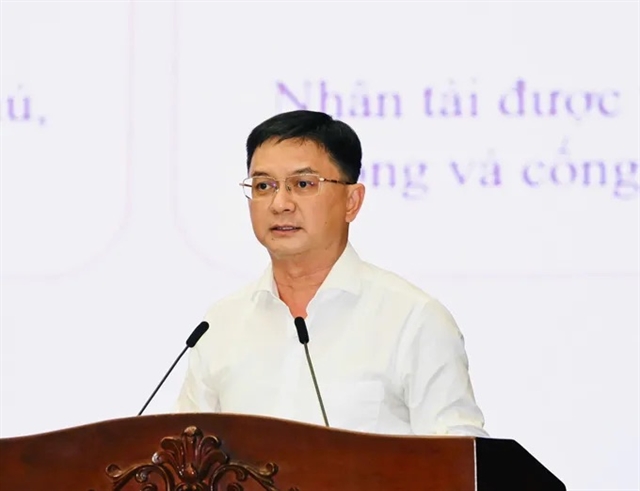
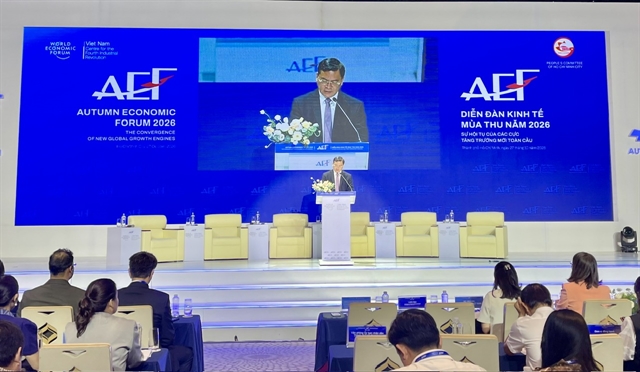
Speaking at a conference on October 26 to disseminate and implement resolutions adopted at the fourth plenum of the 14th Party Central Committee, Nguyễn Mạnh Cường, deputy chairman of the municipal People’s Committee, outlined key provisions of a draft action programme prepared by the city Party Standing Committee.
The programme seeks to implement the Politburo’s Conclusion No. 105-KL/TW on attracting and effectively utilising talent in key sectors to support the country’s rapid and sustainable development.
It sets out five guiding principles, recognising talent as a strategic resource and making its attraction and effective utilisation a regular responsibility of the entire political system.
It calls for a shift from managing personnel primarily through staffing quotas to developing talent, with tangible results and contributions serving as the main measures of performance.
Effective utilisation of talent is considered the decisive factor, while talent development provides the long-term foundation.
The programme also calls for an open talent ecosystem connecting the public and private sectors, and for domestic and international networks.
It seeks to strengthen cooperation between state agencies, educational institutions, research institutes, and businesses, and focus resources on key sectors, urgent tasks, and difficult challenges where talent could help the city achieve breakthroughs.
Talent would be assessed based on personal qualities, ethics, capabilities, professional reputation, and proven achievements rather than academic qualifications, titles, positions, or seniority alone.
“The city aims to establish and maintain a position among the country's top five localities in national level talent attraction and development indicators by 2030,” Cường said.
By 2045, the city seeks to become a regional hub for attracting, developing, and sharing talent, with strong competitiveness and connections to global knowledge networks.
It also wants to develop a workforce capable of mastering core and strategic technologies and modern urban governance, and rank among the top five Southeast Asian cities in talent attraction and competitiveness.
|
| Nguyễn Mạnh Cường, vice chairman of the HCM City People's Committee presents a draft action programme on attracting and utilising talent at a conference in the city on October 26. — Photo www.sggp.org.vn |
Priority sectors
The draft identifies five broad priority areas for talent attraction and development, covering basic sciences and their practical applications, artificial intelligence, data, semiconductors, information security, and other strategic technologies.
Other priorities include international finance, financial technology, risk management, law, and international dispute resolution, as well as high-tech industries, precision engineering, automation, new materials, renewable energy, logistics, seaports, and the marine economy.
The city also plans to attract specialists in polycentric urban planning and governance, public transport, urban railways, underground spaces, flood prevention, environmental protection, and climate change adaptation.
Further priorities include biotechnology, specialised medicine, high-tech agriculture, education, public policy, cultural industries, arts, sports, and tourism.
The city will identify, assess, and publish specific challenges requiring solutions from skilled professionals, and assign agencies to deploy the results.
To improve policies for attracting and developing talent, it will review existing regulations, address obstacles and overlaps, and introduce clear transitional provisions to protect the rights and legal commitments of recruited professionals.
A key change involves identifying, selecting, and assigning tasks to candidates based on demonstrated capabilities.
The city will actively seek candidates through their research, technologies, initiatives, and professional achievements, while expanding nomination channels and allowing individuals to apply directly.
It will also diversify recruitment and engagement arrangements, including expert contracts, consultancy, concurrent appointments, secondments, research partnerships, and project-based work.
Private-sector professionals, overseas Vietnamese, and foreign specialists will be able to participate directly or remotely.
The city will also focus on developing the next generation of talent through commissioned training tailored to practical requirements with a focus on improving foreign language proficiency, digital skills, interdisciplinary research, and modern management capabilities.
The programme proposes a “talent develops talent” approach, under which leading specialists will mentor younger professionals and pass on their knowledge and expertise.
It also calls for a professional, democratic, and transparent working environment that respects expertise and academic freedom, supported by adequate infrastructure for research, testing, and technology validation, strong data security, and safety measures. — VNS
Society
 Society
 Society
 Society
 Society
 Society
 Society
 Society
 Society
 Society
 Society
 Society
 Society
 Society
 Society