 Society
Việt Nam seeks to move up global value chains amid shifting investment flows
1.
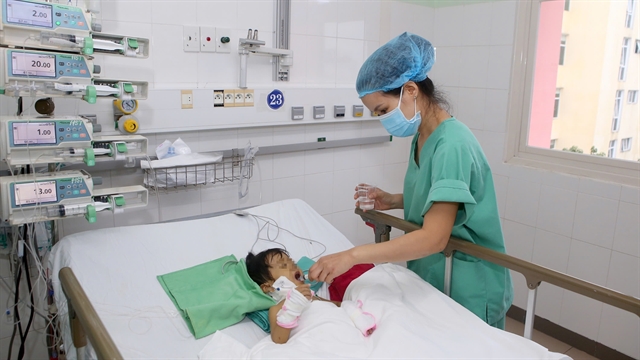 |
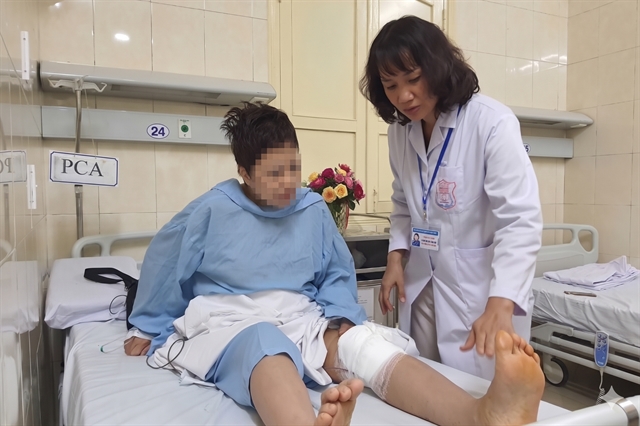
| A doctor is caring for a paediatric liver transplant patient at Huế Central Hospital in Huế City. — VNA/VNS Photo |
HÀ NỘI — Leading medical experts have described proposed provisions allowing children to donate certain tissues and organs as a humanitarian measure that could save lives, while stressing the need for strict safeguards to protect minors from coercion and ensure their best interests remain paramount.
Public concern has grown in recent days over proposed amendments to the Law on Donation, Removal and Transplantation of Human Tissues and Organs and Donation and Removal of Cadavers, particularly provisions concerning people under 18.
Professor Trần Minh Điển, director of the National Children's Hospital and president of the Việt Nam Paediatrics Association, told the Voice of Việt Nam newspaper the proposals needed to be explained clearly and transparently, based on scientific evidence and medical ethics.
He stressed that the policy was not intended to permit the indiscriminate removal of tissues or organs from children but to create more opportunities to treat and save critically ill patients under strictly regulated legal conditions, while placing children’s rights, health, dignity and safety above all else.
He said that by clearly explaining the provisions, refining them in line with scientific evidence and enforcing them under rigorous oversight, the public would better understand the draft law’s humanitarian purpose, helping advance tissue and organ donation and transplantation to save lives and protect public health.
The draft law addresses two distinct issues: donation of regenerative tissues by living children and donation of tissues and organs after brain death or circulatory death.
The two involve fundamentally different medical and legal considerations.
Regenerative tissue donation
Under the proposed amendments, regenerative tissues are those the body can continue to produce or replace after collection.
One example is haematopoietic stem cells, which can be collected from bone marrow or peripheral blood to treat certain life-threatening diseases.
Unlike the removal of a non-regenerative organ such as a kidney, appropriately collected stem cells can be replenished by the body.
In paediatric practice, children with leukaemia, bone marrow failure, severe thalassaemia or congenital immunodeficiency may require stem-cell transplants.
In some cases, a younger sibling under 18 may be the best-matched donor for a seriously ill brother or sister when no suitable adult donor is available.
“Allowing a younger sibling to donate haematopoietic stem cells, following a thorough assessment of their health and the necessary conditions, could give a family member a chance of treatment and survival,” Điển said.
He described the draft provision permitting minors to donate regenerative tissue to relatives in exceptional circumstances as scientifically grounded and humanitarian.
This is not a new issue internationally.
The World Health Organization and other international professional bodies have issued principles and recommendations allowing children to donate regenerative cells within their families when no suitable adult donor is available, subject to strict safeguards.
However, he emphasised that permission to donate regenerative tissue must not be confused with allowing living children to donate non-regenerative organs, such as kidneys or parts of the liver.
The draft sets out conditions according to age, limits the eligible recipients to specified relatives and requires consent from both the child and their legal representative, alongside independent counselling intended to ensure the decision is voluntary.
Donation after death
The draft law also proposes allowing tissue and organ donation from minors after brain death or circulatory death, subject to strict medical and legal requirements.
Điển said this could offer a lifeline to children with end-stage heart, liver or kidney disease, for whom finding a suitably sized and compatible organ was often challenging.
Brain death is not the same as a coma or a critical illness. It means the complete and irreversible loss of brain function and must be established according to stringent medical criteria. A patient who remains in a coma, however severe their condition, cannot be considered a brain-dead donor unless brain death has been formally determined.
Under the draft, death must be established according to professional standards and legal requirements, while the donor's wishes and the consent of their legal representative must be verified.
A specialist council would be responsible for determining brain death or circulatory death. Doctors directly involved in treating the patient, seeking donation or carrying out organ retrieval and transplantation would be excluded from the council assessing that donor. The separation is intended to ensure independence, objectivity and transparency.
"From an ethical perspective, one donation after death could enable other patients to survive, but the donation must reflect a legally valid and voluntary decision, follow rigorous medical procedures and respect both the donor and their family," Điển said.
Protecting both donor and recipient
Associate Professor Nguyễn Lân Hiếu, director of Hà Nội Medical University Hospital, also supported the objective of expanding the donor pool.
He talked to Sức khỏe & Đời sống (Health & Life) newspaper about how he had encountered many children with end-stage heart or kidney failure waiting for transplants, some of whom had died before a suitable organ became available.
“Transplantation from adults to young children can be difficult because of differences in organ and blood vessel size, making suitable paediatric donors particularly important,” he said.
Hiếu welcomed the proposal to allow people under 18 to register as donors after death, provided their legal representatives gave written consent. Current legislation permits registration only from the age of 18.
Nevertheless, he argued that parental consent and a child's stated wishes should not automatically be considered sufficient.
He proposed involving an independent third-party witness and establishing oversight by child-protection authorities.
He also suggested giving children over 13 an explicit right to refuse donation, drawing on the French approach.
While supporting the proposals, Hiếu warned that children could face considerable emotional pressure when asked to donate tissue to a seriously ill sibling.
Even when consulted privately, a child might find it difficult to refuse, particularly when parents were desperate to save another child.
He therefore called for tighter restrictions on eligible recipients.
For donors aged 15 to under 18, he proposed limiting recipients to biological parents and siblings, alongside counselling by professionals entirely independent of the transplant team.
The draft prohibits living donors under 18 from donating non-regenerative organs, including kidneys and parts of the liver. Hiếu fully supported this restriction.
For adults, the draft also tightens eligibility requirements, allowing people aged 18 and over to donate while alive to family members and setting a minimum age of 25 for donation to people outside their families, with the aim of preventing disguised organ trading.
For regenerative tissues such as bone marrow, the proposal would permit donations by children aged 15 to under 18 to family members when no suitable adult donor is available. Children under 15 could donate to their parents or siblings under similar circumstances. These provisions do not apply to blood donation.
Both experts stressed that a child's physical health, psychological readiness, understanding of the procedure and freedom to express their wishes must be carefully assessed.
Children must receive age-appropriate information and be protected from pressure, including from family members.
“Listening to children does not mean making them bear a decision beyond their capacity; protecting them does not mean taking away their right to speak,” Hiếu said.
“Expanding the donor pool to save children is necessary, but we cannot save one child by putting another at risk.”
Điển said the law must balance the interests of patients needing transplants with the rights, dignity, health and safety of potential child donors.
Living donation should be considered only when there is a clear medical indication, no suitable adult donor is available and the risks to the child have been thoroughly assessed.
The draft also prohibits organ and tissue trading, coercion, unlawful removal and the misuse of guardianship arrangements to facilitate illegal donation involving minors.
To ensure effective implementation, Điển called on the Government and Ministry of Health to issue detailed implementing regulations once the National Assembly passes the law.
These should specify which regenerative tissues minors may donate, establish medical and psychological assessment procedures, protect children's rights to information and consent, and provide for independent counselling and oversight.
Long-term follow-up and healthcare for donors should also be addressed, he said.
Regarding organ donation after brain death or circulatory death, detailed guidance is needed on death determination, verification of minors' donation wishes, representatives' responsibilities and independent monitoring throughout the process.
The experts said clear rules, robust oversight and respect for children's rights would be essential to ensuring that the proposed law fulfils its humanitarian purpose without compromising the welfare of the children it is intended to protect. — VNS
Society
 Society
 Society
 Society
 Society
 Society
 Society
 Society
 Society
 Society
 Society
 Society
 Society
 Society
 Society