 Society

Look who’s at the top
1.
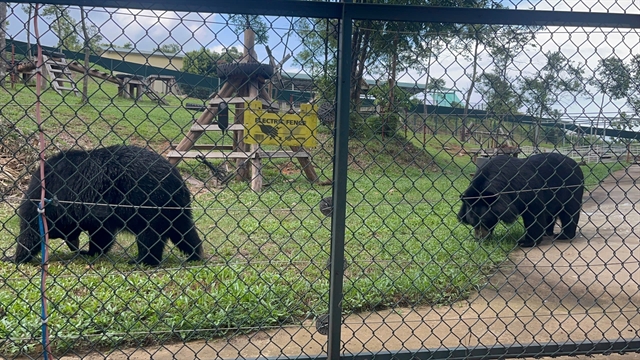 |
| Bears at the Việt Nam Bear Rescue Centre in Bạch Mã National Park, Huế City, are cared for in a semi-natural environment. — VNA/VNS Photos Văn Dũng |
HUẾ CITY — After spending 24 years in a brick-and-iron cage in Hải Phòng City, An Tâm, an Asiatic black bear, has begun a new life at the Việt Nam Bear Rescue Centre in Bạch Mã National Park, Huế City.
Two other bears, Harmony and Melody, have also arrived at the centre after being transferred from Hà Nội, giving all three the chance to live in a safer, more enriching environment. Their journeys showcase the tireless efforts of wildlife rescuers to provide bears freed from years of captivity with a better life.
An Tâm was bought by a family in Hải Phòng in 2002 and later registered and fitted with an identification microchip. For more than two decades, his world was confined to a small brick cage behind iron bars.
As the family members aged, caring for him became increasingly difficult. The owner's younger sister, aged 70, eventually took on the responsibility, but the family ultimately agreed to transfer An Tâm to a rescue facility.
To ensure his safety, An Tâm was anaesthetised and removed from the enclosure under professional supervision before being transported to Bạch Mã.
The Việt Nam Bear Rescue Centre in Bạch Mã began operations in October 2023. Its 12.5-hectare first phase includes a veterinary hospital, a quarantine area, bear houses and four large semi-natural habitats.
The centre has so far received 30 bears, all of which were voluntarily handed over by members of the public. Each has its own name and receives individual care based on its needs.
“Most bears arriving at the centre are in poor health. Many are malnourished, ill or injured after years in captivity,” said Võ Thành Lợi, a staff member at the centre.
New arrivals undergo health checks and quarantine, followed by rehabilitation before being introduced to semi-natural habitats. These spaces feature trees, climbing structures, swings and pools, allowing bears to explore, exercise, forage and interact with one another.
Such opportunities help improve physical health, reduce stress and encourage natural behaviours, particularly among bears that have spent years in cramped enclosures.
For An Tâm, Harmony and Melody, the move offers a chance to live in a more suitable environment. Recovery may take time, but they can now receive dedicated care and enjoy greater freedom of movement.
The success of wildlife rescue, however, is measured not only by the number of animals removed from captivity, but also by the quality of life they receive afterwards.
Not every bear can fully recover. Some arrive at the centre already elderly and suffering serious, long-term health problems. For these animals, the priority is to ease their suffering and provide the best possible quality of life.
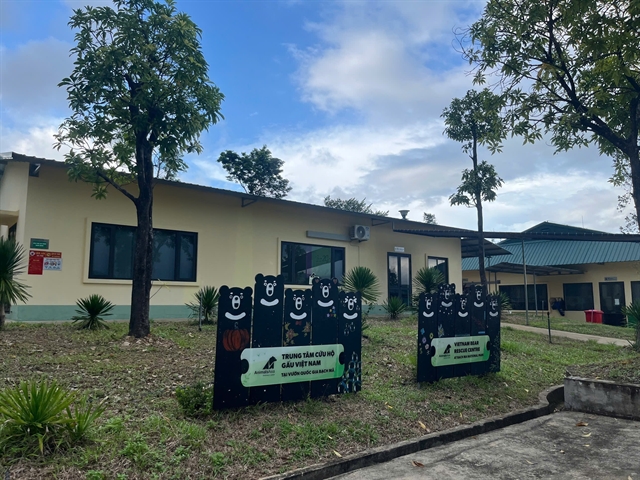 |
| Bear enclosures at the Việt Nam Bear Rescue Centre in Bạch Mã National Park, Huế City. |
Hoàng Thị Thu Thủy, a manager at the centre, said staff hold farewell ceremonies when a bear dies. They bring its favourite foods or flowers, read poems written in Vietnamese and English, and later erect memorial plaques bearing messages of remembrance.
“These ceremonies reflect the affection caregivers develop for the bears over the years. To them, each bear is more than an animal in their care. It is a living creature that can experience pain and fear and deserves protection,” Thủy said.
According to Animals Asia, the organisation has rescued 305 Asiatic black bears and sun bears in Việt Nam since 2007. Of these, 170 now live in semi-natural habitats at its rescue centres in Tam Đảo National Park in Phú Thọ Province and Bạch Mã National Park in Huế.
All the bears receive lifelong care, particularly those unable to return to the wild. Beyond rescue and rehabilitation, Animals Asia also works with authorities and forest rangers on wildlife law enforcement and public awareness programmes.
Its education initiatives encourage students to protect wildlife and natural ecosystems. The organisation also collaborates with traditional medicine practitioners to promote herbal alternatives to bear bile for certain uses, helping reduce demand for bear bile. — VNS
Society
 Society
 Society
 Society
 Society
 Society
 Society
 Society
 Society
 Society
 Society
 Society
 Society
 Society
 Society