 Society

Panama’s export processing zones offer opportunities for Vietnamese firms
1.
|
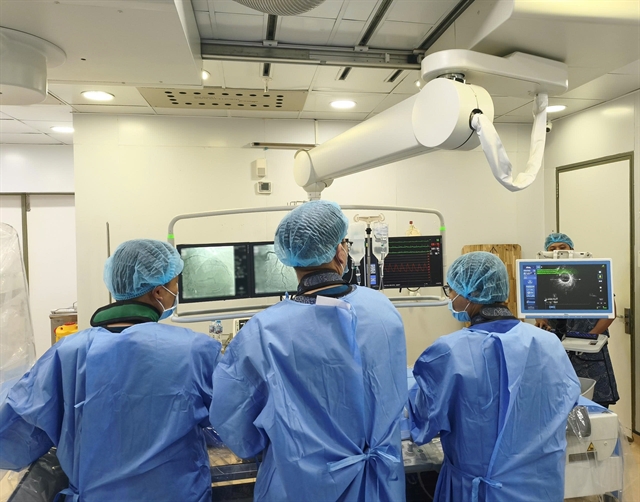
| Doctors perform an emergency coronary procedure on the 50-year-old patient at Thủ Đức General Hospital in HCM City. — Photos courtesy of the hospital |
HCM CITY — Doctors at Thủ Đức General Hospital in HCM City have successfully saved a 50-year-old male patient who survived a 30-minute cardiac arrest caused by an acute myocardial infarction, before later overcoming a life-threatening heart wall rupture risk.
The patient P.V.T., a resident of Đông Hòa Ward, was rushed to the emergency room on September 11 with an acute inferior myocardial infarction and a third-degree atrioventricular block.
At the time of admission, his heart rate had dropped to just 30 beats per minute alongside severely low blood pressure.
Shortly after arrival, the patient suddenly collapsed into cardiac arrest and stopped breathing.
Emergency physicians immediately performed advanced cardiopulmonary resuscitation, including chest compressions and multiple electrical defibrillations.
Spontaneous circulation was restored after nearly 30 minutes of intensive resuscitation.
Subsequent coronary angiography revealed a complete occlusion of the proximal right coronary artery, along with severe diffuse stenosis in the left anterior descending artery.
Interventional cardiologists successfully implanted a stent to restore blood flow to the heart muscle, while placing a temporary pacemaker and an intra-aortic balloon pump to support mechanical circulation.
However, two days after the initial intervention, the patient developed fresh chest pain.
Bedside echocardiography detected pericardial effusion and a suspected left ventricular free wall rupture near the apex, a dangerous mechanical complication caused by necrotic heart tissue.

|
| Patient P.V.T. (left) poses for a photo with Dr Lê Duy Lạc, Head of the Cardiac Intensive Care and Interventional Cardiology Department, following his successful recovery. |
The cardiac intensive care team, in close coordination with cardiac surgeons, opted for intensive medical management combined with hourly clinical monitoring and bedside scans, preparing an emergency surgical plan if his condition deteriorated.
The patient’s condition gradually improved, and subsequent scans confirmed that the suspected rupture site had stabilised and pericardial fluid had significantly decreased.
He was discharged after nearly three weeks in hospital. Follow-up examinations and cardiac MRI six weeks later showed a full recovery.
Dr Lê Duy Lạc, head of the hospital’s Cardiac Intensive Care and Interventional Cardiology Department, attributed the success to seamless interdisciplinary coordination.
“It ranged from immediate resuscitation and revascularisation to prompt detection of post-infarction complications,” he said.
Medical experts advise people with risk factors such as hypertension, diabetes, high cholesterol, or heavy smoking habits to undergo regular medical check-ups. Anyone experiencing chest pain, shortness of breath, or sudden dizziness should seek emergency care immediately. — VNS
Society
 Society
 Society
 Society
 Society
 Society
 Society
 Society
 Society
 Society
 Society
 Society
 Society
 Society
 Society