 Economy

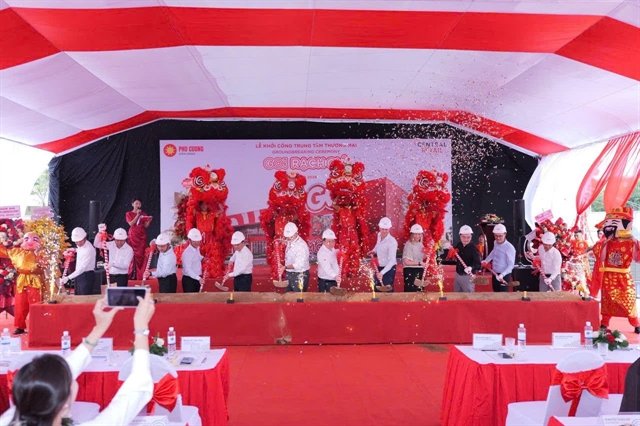
Central Retail breaks ground on GO! Rạch Giá shopping centre
1.
|
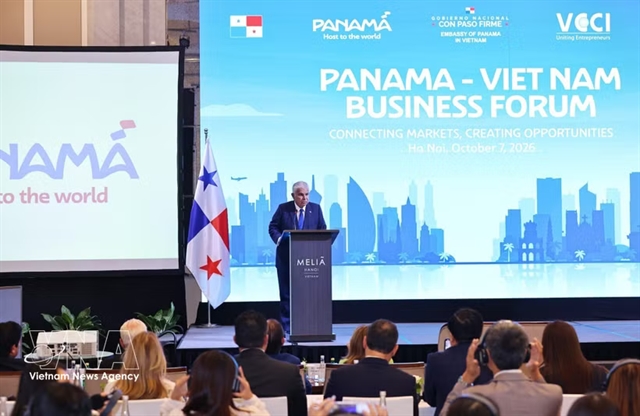
| Panamanian President José Raúl Mulino speaks at the Panama - Vietnam Business Forum on October 7, 2026. — VNA/VNS Photo |
HÀ NỘI — Panama’s export processing zones, with their dedicated legal framework and tax, immigration and labour incentives, are creating opportunities for foreign businesses, including those from Việt Nam, to invest in production, processing and goods supply facilities serving Latin American and North American markets.
The Panamanian side highlighted this at a conference on export opportunities and business cooperation between Việt Nam and Panama, organised in Panama City by the Vietnam Trade Office in Mexico.
Vietnamese businesses are encouraged to explore investment opportunities in Panama’s export processing zones, which operate under a legal framework introduced in 2011 to attract foreign investment and create jobs.
During his official visit to Việt Nam in early October, Panamanian President José Raúl Mulino highlighted the American country’s transport and logistics advantages, particularly the Panama Canal, describing Panama as a complementary partner and gateway to the Americas, while Việt Nam serves as a bridge to Asia.
At the conference, held one week after the Panamanian President’s visit to Hà Nội, Cristina Danello, an adviser to the General Directorate of Free Trade Zones under Panama’s Ministry of Commerce and Industries, said the zones had clearly defined, enclosed boundaries and could be established anywhere in the country. Each must cover at least two hectares and involve an initial investment of US$250,000, which she described as “almost negligible”.
After more than 15 years of operation, Panama’s system comprises 27 zones, including 20 operational and seven under development. They host 201 companies conducting 282 business activities, nearly half of which involve logistics, services, and the processing of finished or semi-finished products. Examples include Panaparc, the largest zone, near Tocumen International Airport, and a seafood export processing zone that benefits from an adjacent seaport.
From 2019 to 2025, the Panamanian zones attracted more than $365 million in investment and generated around 8,000 direct jobs. Investors are expected to create another 23,359 jobs in the time to come.
Eligible activities in the zones include manufacturing, assembly, processing, high-tech development, services, logistics and property leasing. Pure import-export operations without any transformation of goods are not permitted.
According to Danello, companies face no minimum capital requirement to obtain a licence. Licences are free, issued within 90 days of application, and valid indefinitely, subject to annual reporting. Foreign businesses are exempt from import duties on production materials and machinery, income tax on export earnings, and the 7 per cent VAT on domestically purchased materials. They must export a specified share of output, ranging from 40 per cent to 60 per cent in some cases, while domestic sales remain subject to applicable taxes.
A representative from the Panamanian Ministry of Commerce and Industries said the ministry was legally authorised to support investors after licences were granted, helping address concerns over lengthy procedures involving environmental assessments, fire safety and design reviews.
Rules of origin are also crucial for businesses exporting finished products to the US. Danello said Vietnamese investment should focus on genuine sourcing and processing in Panama, rather than relying on components or materials from third countries.
Immigration incentives allow owners and shareholders to obtain permanent residency from the outset, while investors visiting to explore the market can receive nine-month visas. Labour arrangements are also more flexible than those under Panama’s Labour Code.
Potential cooperation between the two countries includes aquaculture in Panama using Vietnamese technology and expertise, followed by processing in the zones, as well as finishing and re-exporting Vietnamese wood products and furniture, provided full traceability documentation is available. These arrangements could facilitate access to markets across Latin America and the US. — VNA/VNS
Economy
 Economy
 Economy
 Economy
 Economy
 Economy
 Economy
 Economy
 Economy
 Economy
 Economy
 Economy
 Economy
 Economy
 Economy