 Opinion

HIIVE by fusion brings business and golf closer in Bình Dương
1.
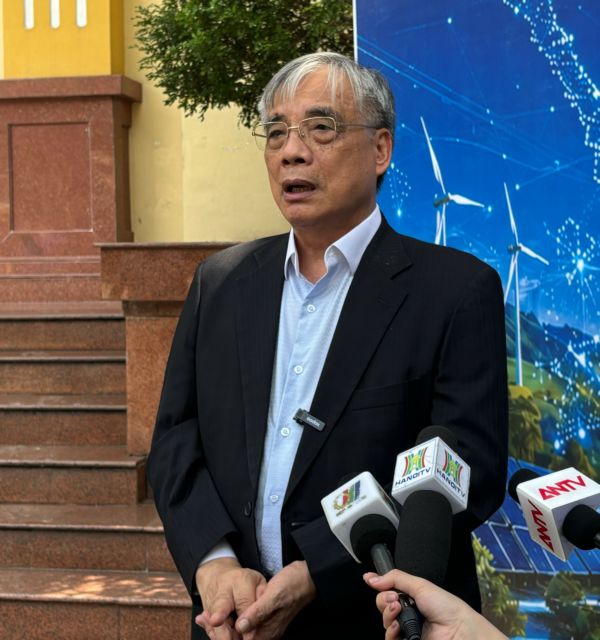 |
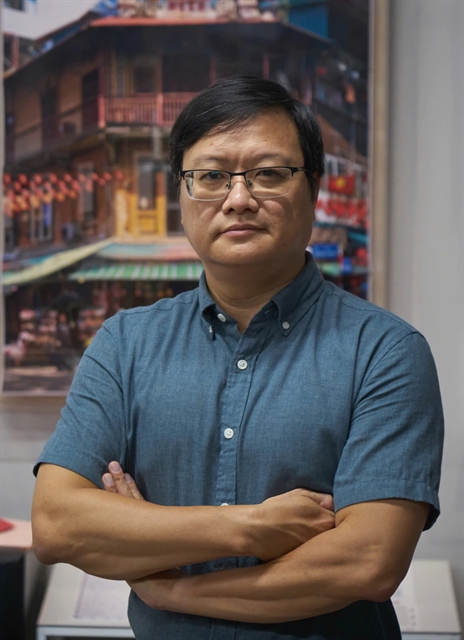
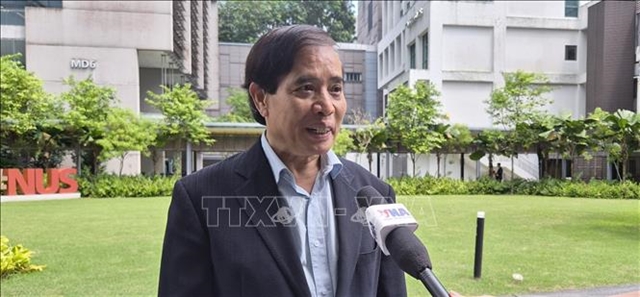
| Associate Professor Trần Đình Thiên, former director of the Việt Nam Institute of Economics. — VNS Photo Khánh Dương |
Việt Nam News reporter Khánh Dương speaks to Associate Professor Trần Đình Thiên, former director of the Việt Nam Institute of Economics under the Việt Nam Academy of Social Sciences, about driving forces behind Việt Nam’s new development model.
The Politburo has issued Resolution 19 on renewing Việt Nam’s development model. Why does Việt Nam need to renew its development model at this time?
Put simply, we can use a very apt phrase as mentioned by Party General Secretary and President Tô Lâm: it is the era of the nation’s rise.
After 40 years of Đổi Mới (Renewal), Việt Nam has achieved remarkable successes, but at the same time, a number of problems have accumulated. As the Party has pointed out, the 'bottleneck of bottlenecks' is the institutional framework.
As the times have changed, if we continue to do things the old way, even if those approaches were once appropriate, they may no longer meet the development requirements of the new period. The matter today is not merely to adjust the growth model, but to renew the development model.
This change can be seen in the role of the private sector. In the past, the private sector was viewed as important and valuable, but its position remained relatively marginal. Today, the private sector is identified as one of the most important driving forces of the economy. This represents a fundamental shift in thinking about the development model.
Going forward, Việt Nam must compete through technology. If the business system continues to consist mainly of old-generation enterprises, it will not be able to compete on the basis of technology.
The economy needs new-generation enterprises, digital businesses, science and technology enterprises and innovative enterprises. At the same time, mechanisms must be put in place to promote innovation and enable businesses to absorb and apply new technological achievements.
Another very important requirement is that Việt Nam cannot focus solely on domestic issues. It must step up international integration.
Not only must we integrate, but we must do so from a position of autonomy and strategic autonomy.
To achieve this, the economy must have sufficient international competitiveness, because only with international competitiveness can we integrate effectively.
In your view, what are the key elements in renewing Việt Nam's development model to meet the requirements of the new era?
In my view, the Party's recent resolutions have identified the most crucial points.
Previously, these resolutions also addressed such issues, but they were often viewed separately. Today, from the outset, the Party has placed four resolutions within an overall framework, as a package of resolutions rather than as separate documents, which is a major difference.
There are now more than 10 resolutions each of which forms part of this overall framework. We should not view each resolution in isolation.
If the private sector is identified as one of the most important driving forces of the economy, we must recognise its links with science and technology.
The institutional and market conditions must be created to open the way for businesses to drive the development of science and technology. These are precisely the key elements of the transformation.
In principle, several major points can be highlighted.
First, in terms of economic structure, Việt Nam must move decisively away from the traditional structure that relies heavily on land and conventional agriculture, as well as from a model based on processing, assembly and manual labour. The economy must shift rapidly and strongly toward high technology and the digital economy.
But that is not enough. The digital economy and high technology must be linked with the green economy, which is a very important condition. Without meeting this requirement, we could easily be left out of the international game.
Next, the transition must go hand in hand with institutional reform, with institutions serving as a catalyst for development. For many years, institutions have created considerable constraints and have not truly played a role in opening the way for development. Institutional barriers must therefore be removed.
Once institutions are identified as the 'bottleneck of bottlenecks', the issue cannot stop at removing or modifying individual obstacles. The entire system must be transformed.
Việt Nam needs a comprehensive reform aimed at building a new, modern economic institutional system that is commensurate with the new productive forces we seek to create.
Finally, in the current context, Việt Nam cannot rely solely on subjective aspirations to choose its development path. We emphasise self-reliance, confidence and self-strengthening because Việt Nam has entered a space of integration rather than merely opening its doors.
Through integration, Việt Nam has become part of the global game. Against a backdrop of considerable global instability and risks, if these challenges are not handled well, it will be difficult for the development process to succeed.
Around the world, many countries are developing free trade zones, and some are moving toward the more advanced model of free economic zones. The level of integration is becoming increasingly deep and extensive, while countries continue to accelerate opening up and integration.
The way Việt Nam can become a destination for attracting resources while also having the capacity to spread development outward to the world is an art in itself.
We must learn from others while finding a path suited to the new era. These are unprecedented approaches for Việt Nam, and many of the issues are also new to the world. Renewing the growth model and the development model is therefore an inevitable requirement.
You have just mentioned the key elements needed to meet Việt Nam's new growth requirements, including science and technology. In your opinion, what role does science and technology play in generating development momentum?
Today, we talk a great deal about science and technology and are devoting substantial efforts to this field. However, perhaps we need to return to the core and foundational issues.
Labour consists of two components: manual labour and intellectual labour. Intellectual labour is not entirely synonymous with creativity, but it is fundamentally associated with intellectual capacity and creative ability.
To this day, Việt Nam has basically not yet escaped agricultural civilisation.
The world is developing artificial intelligence and various forms of automation to move beyond that state, while we remain closely attached to land in traditional ways, still viewing land as a means of creating wealth and concentrating heavily on land speculation.
To move to a new state, we must fundamentally change the state of human civilisation. Intelligence must be regarded as a valuable asset and given the conditions to flourish.
In recent years, human intellectual assets have not been fully used in proportion to their potential.
We therefore need to answer fundamental questions: what mechanisms can enable intellectual labour to flourish? What conditions are needed for intellectual work to develop? This is a much broader issue that encompasses the specific challenges we are currently trying to address.
Science and technology are indeed a decisive driving force. But to unleash that force, the cultural and development foundations must be based on valuing talent and intelligence, while creating the conditions for human intellect to develop in line with the requirements of the times. — VNS
Opinion
 Opinion
 Opinion
 Opinion
 Opinion
 Opinion
 Opinion
 Opinion
 Opinion
 Opinion
 Opinion
 Opinion
 Opinion
 Opinion
 Opinion