 Opinion
Int’l cooperation helps address nuclear power workforce shortages
1.
|
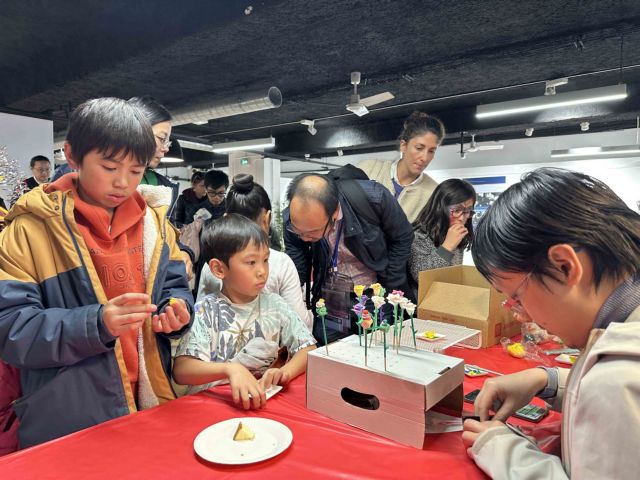
| Mid Autumn Festival held in Paris for Vietnamese community in France last October. — VNA/VNS Photo Ngọc Hiệp |
PARIS — The spirit of 'accompanying and listening; highlighted in the Politburo’s Resolution No. 23-NQ/TW on overseas Vietnamese (OV) affairs is key to strengthening trust, fostering community bonds and mobilising the diverse resources of Vietnamese people abroad for national development, according to Dr Hoàng Thị Hồng Hà, chairwoman of Parfums du Việt Nam and a member of the Executive Committee of the Association of Vietnamese in France.
This approach is particularly important as OV communities are becoming increasingly diverse in terms of generations, professions, living conditions, views and levels of attachment to their homeland, Hà said.
She stressed that national unity does not mean everyone must think alike. Instead, it is important to create common ground where all those who have goodwill towards Việt Nam feel respected, heard and able to contribute.
Drawing on years of studying, researching and living within the Vietnamese community in France, Hà noted that people have different ways of contributing to the homeland, whether through knowledge, business, social activities, culture and education, or through professional and social networks built in their host countries.
For younger generations born and raised abroad, their connections with Việt Nam may begin with simple things such as the Vietnamese language, family memories, music, cuisine or cultural experiences. Therefore, it is important that every Vietnamese living overseas, regardless of generation, feels they have a place within the national community and can contribute according to their abilities.
The expert emphasised that Resolution No. 23 not only calls for greater mobilisation of overseas Vietnamese resources but also highlights the responsibility to accompany, support and listen to the community. When OVs feel that the homeland genuinely regards them as an integral part of the nation, trust and a lasting desire to contribute will naturally grow.
She also highlighted the role of Vietnamese associations and organisations abroad as important bridges connecting OV communities with Việt Nam and their host societies. Such organisations can go beyond providing meeting spaces to facilitate cultural exchanges and international cooperation.
Culture, she said, is a particularly powerful connector. Programmes promoting Việt Nam's culture, arts and heritage, including the Then practice of the Tày, Nùng and Thai ethnic groups, in France can help OVs reconnect with memories and identity, while opening a door for younger generations to explore their roots.
Preserving culture, however, should not mean simply repeating traditional practices. Young people need opportunities to engage through contemporary forms such as arts, creative activities, exhibitions, educational programmes and exchanges with Vietnamese and French peers.
She also called for stronger networks connecting Vietnamese professionals, researchers, entrepreneurs, artists, youth and community organisations abroad. Such resources often remain fragmented despite their considerable potential.
According to her, networks should be built around specific fields and practical projects, linking Vietnamese experts and institutions with overseas associations and partners such as schools, museums and cultural organisations. Clearer focal points and more flexible coordination mechanisms between overseas organisations and domestic agencies will also help turn community initiatives into concrete outcomes.
The resources of overseas Vietnamese, she stressed, should be understood broadly, encompassing not only financial contributions and remittances but also knowledge, international experience, professional expertise, languages and networks.
If every Vietnamese person, wherever they live, feels that they have a place and can contribute to the country’s development, this will provide an important foundation for strengthening the collective strength of Vietnamese communities abroad in the new period, added Hà. — VNA/VNS
Opinion
 Opinion
 Opinion
 Opinion
 Opinion
 Opinion
 Opinion
 Opinion
 Opinion
 Opinion
 Opinion
 Opinion
 Opinion
 Opinion
 Opinion