 Society
Vietnamese scientist wins ASEAN-US Science Prize for Women
1.
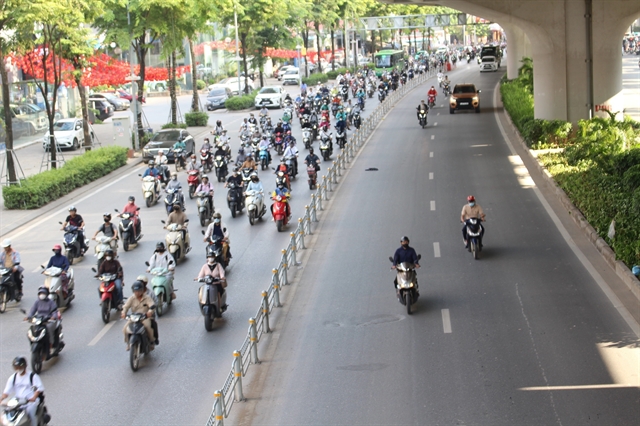 |
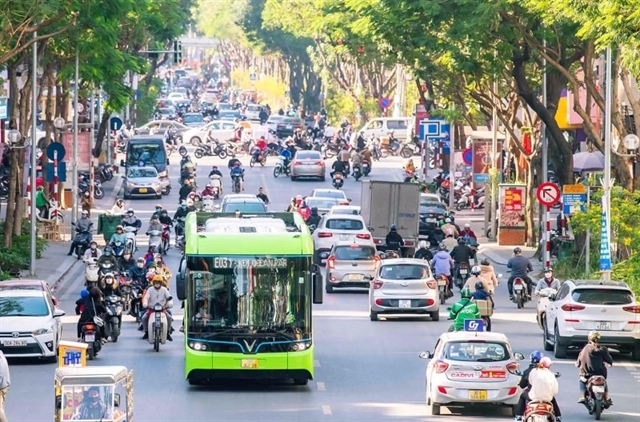
| Vehicles travel along Phạm Văn Đồng Street in Hà Nội. VNA/VNS Photo |
HÀ NỘI — Hà Nội has agreed to postpone a ban on substandard petrol-powered motorcycles entering the city's Ring Road 1 area until January 1, 2028, instead of July 1, 2026 as proposed in an earlier plan.
Under the recently approved project on establishing a low-emissions zone within Ring Road 1, the city has set out a roadmap to restrict and gradually prohibit certain petrol- and diesel-powered vehicles in an effort to curb air pollution.
The low-emissions zone will be implemented in three phases.
Phase 1 will be piloted in Areas 1 and 2 of Hoàn Kiếm Ward from July 1 to December 31, 2026.
During this stage, the city will not impose a complete ban on petrol-powered motorcycles. Instead, it will focus on public communication campaigns aimed at raising awareness and improving the preparedness of residents and businesses.
Vehicle restrictions will apply from 7pm to midnight on Fridays, Saturdays and Sundays in the pedestrian zone around Hoàn Kiếm Lake and the night market area. Priority vehicles, as defined by regulations, will continue to operate around the clock.
For ride-hailing motorcycles and delivery services operating through digital transport platforms, the city will only encourage operators to limit their activities rather than impose a ban. Platform providers will be responsible for directing vehicles through their management systems and encouraging drivers to switch to greener modes of transport.
Private vehicle owners will also be encouraged to reduce the use of motorcycles manufactured or imported before 2008 and mopeds manufactured or imported before 2016.
Meanwhile, vehicles carrying 16 passengers or more, excluding buses, school buses and staff transport vehicles, will only be allowed to operate outside peak hours. Those wishing to operate during peak periods must obtain written approval from the Hà Nội Police Department.
Cargo vehicles will also face restrictions based on their weight. Trucks weighing under two tonnes will only be permitted to operate outside peak hours. Those weighing between two and 3.5 tonnes will be allowed on the roads only between 9pm and 6am the following day. Trucks weighing more than 3.5 tonnes will be subject to the same time restrictions and will require approval from authorities to operate outside the permitted schedule.
In the second phase, from January 1 to December 31, 2027, the low-emissions zone will be expanded to cover Hoàn Kiếm and Cửa Nam wards.
During this period, ride-hailing motorcycles and delivery vehicles using fossil fuels will be prohibited from operating within the low-emissions zone. Trucks with a gross vehicle weight of more than 3.5 tonnes will also be completely banned from the area.
The most significant changes will come in the third phase, from January 1, 2028 to December 31, 2029, when the low-emissions zone will be extended across the entire Ring Road 1 area.
From that date, app-based motorcycles powered by petrol will be banned from operating within the zone. In addition, privately owned petrol-powered motorcycles that fail to meet Level 3 emissions standards or higher under QCVN 99:2025/BNNMT will not be allowed to enter the zone.
Also on Monday, Hà Nội’s People's Council approved a resolution on policies to support residents in transitioning to greener road transport.
Under the policy, the city plans to provide direct financial assistance to members of poor households who switch to eco-friendly vehicles. Each eligible individual will receive one-time support for replacing one motorcycle or moped, with assistance capped at VNĐ20 million (US$760).
The city will also waive bus fares, excluding tourist buses, for people travelling within Ring Road 1 from January 1 to December 31, 2027.
In addition, Hà Nội plans to offer free travel on public buses and metro services citywide, excluding tourist buses, during major holidays, Tết (Lunar New Year) and significant national events until the end of 2030.
The estimated budget for implementing these support policies during the 2026-2030 period is approximately VNĐ1.045 trillion. — VNS
Society
 Society
 Society
 Society
 Society
 Society
 Society
 Society
 Society
 Society
 Society
 Society
 Society
 Society
 Society