 Society
NA President calls for high-quality legislation to drive national development
1.
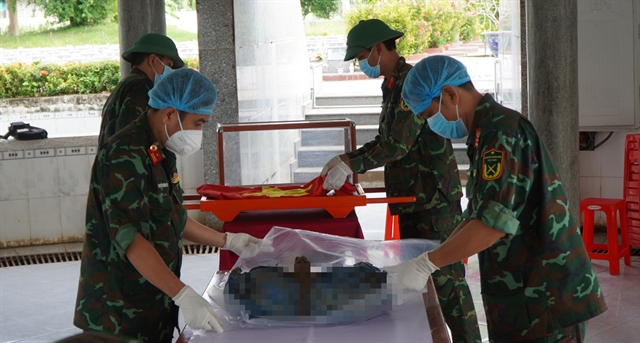 |
| Officials in Đồng Tháp Province exhume and collect bone samples from unidentified martyrs’ graves for DNA profiling. — VNA/VNS Photos Nhựt An |
ĐỒNG THÁP — The Cửu Long (Mekong) Delta province of Đồng Tháp has launched a major campaign to exhume and collect bone samples for DNA profiling, aiming to identify tens of thousands of unnamed fallen soldiers resting in local cemeteries.
This initiative is part of a nationwide 500-day campaign to intensify the search, recovery and identification of fallen soldiers’ remains, which will run through the end of 2030.
The Martyrs’ Cemetery in Châu Thành District, which contains hundreds of graves currently marked "Information Not Yet Identified," was selected as the pilot site to evaluate and refine the operational process before expanding province-wide.
A specialised task force consisting of military personnel, engineers, medical staff, and data processors has been working from 6:30am daily to carry out the mission.
Within the first week, the team successfully extracted and preserved more than 70 bone samples.
The pilot phase aims to complete sampling for 442 unidentified graves by the end of June.
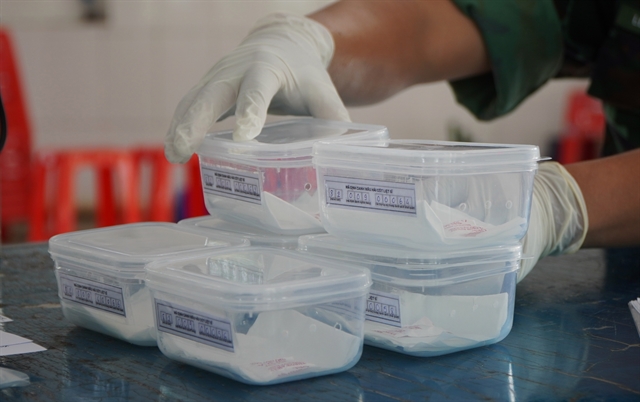 |
| Each sample box is assigned a unique identification code to ensure absolute accuracy and prevent any mix-ups. |
Nguyễn Nhật Minh, head of the exhumation and construction team under the provincial Military Command, said the work requires precision and deep respect.
"Graves in different cemeteries often have varying structures and designs. We have to study and find the most efficient exhumation methods to speed up the process without impacting adjacent graves," Minh said.
Once sampling is complete, the team immediately restores the graves to their original state, ensuring aesthetics and cleanliness, he added.
To guarantee scientific accuracy, the task force operates under a strictly enclosed loop system.
Each sample box is assigned a unique identification code, photographed, and logged into specialised information management software.
Senior Lieutenant Colonel Nguyễn Tuấn Anh, Deputy Political Chief of the Đồng Tháp Province Military Command, stated that all working units are strictly adhering to Protocol 01 issued by the Department of Military Medicine.
This medical protocol ensures that bone samples are collected and handled under strict sterile conditions to prevent any cross-contamination of DNA and avoid any mix-ups between the samples.
"Our highest priorities are ensuring the safety of personnel, meeting strict progress deadlines, and preventing any potential cross-contamination of DNA between samples," he said.
The collected data will be integrated directly into the national software and database for people with meritorious services to aid long-term matching and verification efforts.
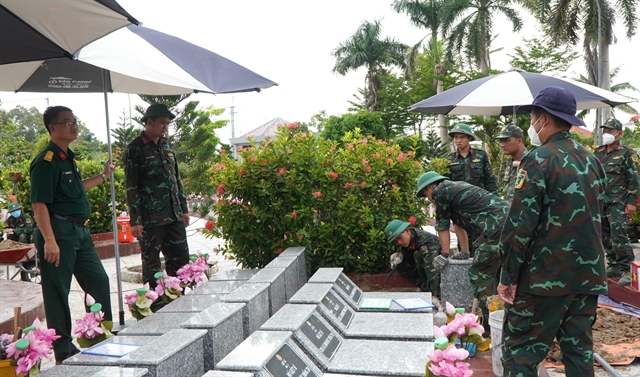 |
| Officials carefully restore and clean graves after completing the sampling process. |
Over 21,000 samples targeted by 2030
The province’s Steering Committee for the Search, Collection, and Identification of Martyrs' Remains (Steering Committee 515) has mapped out a comprehensive, two-phase roadmap.
In the first phase, spanning from 2026 to July 27, 2027, the province aims to complete the sampling and handover of 11,810 unidentified martyrs' remains from local cemeteries and ongoing recovery efforts.
In the second phase, running from July 2027 to December 2030, the campaign will proceed to collect and analyse 9,346 additional samples from graves that lack full information or require empirical verification.
To manage this massive workload, the province has mobilised three specialised task forces with nearly 30 core members split into dedicated units, including exhumation, medical sampling, security, public relations, and logistics teams.
Despite facing harsh weather and complex historical records, members of the task force – including very young conscripted soldiers – expressed immense pride in participating in the campaign.
They view the campaign as a sacred duty to alleviate the decades-long anxiety of martyrs' families and honour those who made the ultimate sacrifice for national independence. — VNS
Society
 Society
 Society
 Society
 Society
 Society
 Society
 Society
 Society
 Society
 Society
 Society
 Society
 Society
 Society