 Society
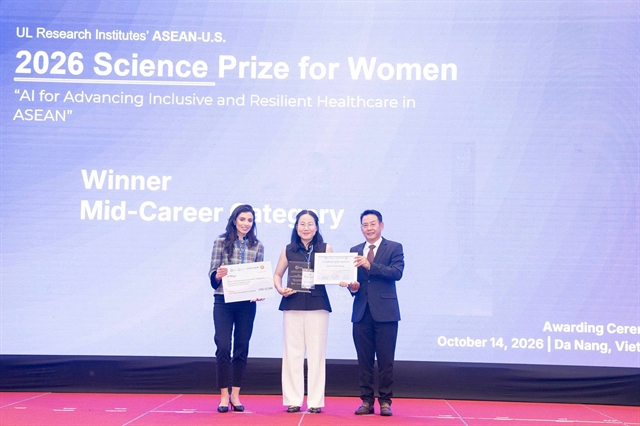
Vietnamese scientist wins ASEAN-US Science Prize for Women
1.
|
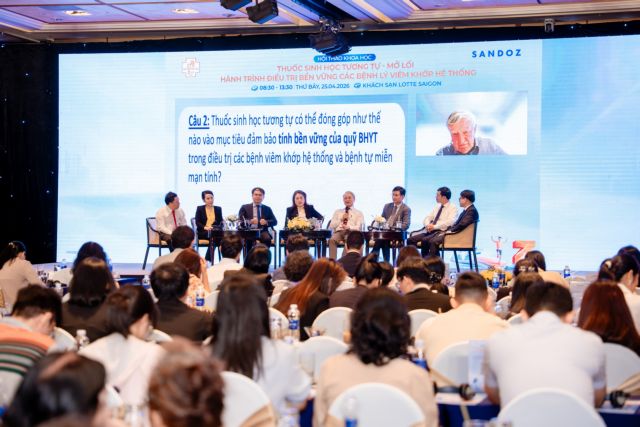
| Panellists discuss sustainable treatment pathways for rheumatic autoimmune diseases in Việt Nam. — Photo courtesy of the organiser |
HCM CITY — Health experts discussed the role of biosimilars in increasing patient access to rheumatology care in Việt Nam at a recent scientific conference series, titled 'Biosimilars in Rheumatology: Scientific Dialogue on Sustainable Care', in Hà Nội and HCM City.
The event was jointly organised by the Hồ Chí Minh City Rheumatology Association (HRA), the Vietnam Rheumatology Association (VRA) and Sandoz Vietnam.
The conferences brought together nearly 300 healthcare professionals from across Việt Nam, reflecting growing interest in sustainable treatment pathways for patients with rheumatic autoimmune diseases.
Rheumatic and musculoskeletal diseases represent a significant and growing health burden in Việt Nam, with population-based studies estimating that around 15 per cent of adults are affected. Among these, rheumatic autoimmune diseases – including rheumatoid arthritis and related conditions – are chronic, progressive illnesses that can significantly affect patients’ quality of life and contribute to long-term disability. Despite advances in treatment, affordability and healthcare system constraints continue to impact optimal disease management.
According to experts, over the past two decades, biologic therapies have become an important treatment option for many patients, significantly improving disease control and long-term outcomes.
However, their cost remains a key barrier to access. As demand for biologic medicines continues to grow globally – with the market projected to expand from approximately US$400 billion in 2024 to more than $650 billion by 2030 – healthcare systems are increasingly challenged to balance patient access to innovative therapies with long-term sustainability.
At the event, leading rheumatology experts, healthcare policymakers and international speakers focused discussions on biologic therapies in rheumatoid arthritis and other autoimmune diseases, treatment optimisation across patient populations, and emerging evidence and experience with biosimilars.
Speaking at the HCM City conference, Assoc. Professor Dr Nguyễn Đình Khoa, President of the Hồ Chí Minh City Rheumatology Association, emphasised the growing importance of sustainable treatment pathways.
“The need for effective, long-term and sustainable treatment for patients with rheumatic autoimmune diseases is becoming increasingly urgent,” said Dr Khoa.
“Biologic therapies have played a very important role in improving treatment outcomes, helping to control disease activity better and improve patients’ quality of life. The challenge now is how to make these modern therapies more widely accessible while ensuring the sustainability of the healthcare system.
"Biosimilars, supported by scientific evidence, clinical data and practical experience, can help expand access to treatment for more patients.”
Across both conferences, speakers and participants highlighted the important role of biosimilars in expanding access to biologic therapies while supporting healthcare sustainability amid growing healthcare demand.
Against this backdrop, health experts said that biosimilars are increasingly recognised as a key enabler of both patient access and healthcare sustainability. Supported by rigorous scientific evidence and extensive clinical experience, they offer an opportunity to broaden access to biologic therapies while helping healthcare systems make more efficient use of limited resources.
“Expanding access to advanced therapies while ensuring the long-term sustainability of healthcare systems is one of the defining challenges facing healthcare today,” said Charaf Eddine Kadri, General Director of Sandoz Vietnam.
“We believe biosimilars are not only a therapeutic alternative, but also a policy-aligned solution that can help expand patient access while supporting the sustainable use of healthcare resources.
“By continuing to foster dialogue and collaboration across the healthcare ecosystem, we can help improve patient outcomes and support more sustainable access to advanced therapies for people living with rheumatic autoimmune diseases.” — VNS
Society
 Society
 Society
 Society
 Society
 Society
 Society
 Society
 Society
 Society
 Society
 Society
 Society
 Society
 Society