 Society
Vietnamese scientist wins ASEAN-US Science Prize for Women
1.
|
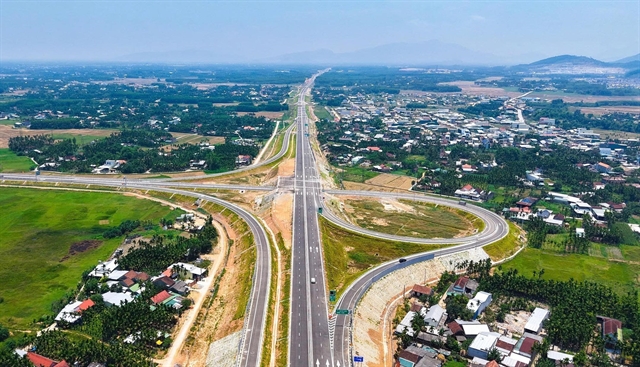
| A section of the Quảng Ngãi–Hoài Nhơn Expressway that opened to traffic on April 29. — VNA/VNS Photo |
HÀ NỘI — Every expressway in Việt Nam will be wired into a new national traffic data platform by 2030, under a plan the Ministry of Construction says will bring AI-driven monitoring to a highway network that has so far relied on scattered, route-by-route systems.
Known as Intelligent Transportation System (ITS) Core, the platform is meant to become the digital backbone of Việt Nam's expressways. It will pull in real-time data from every traffic management centre along the network, spotting incidents automatically, forecasting congestion and helping operators reroute traffic before jams set in.
It will also feed data to other Government agencies and open up some traffic information to businesses in the private sector and to the public.
Construction will unfold in stages over the next four years.
The ministry plans to spend the rest of 2026 and 2027 to lay the groundwork, setting technical standards for how local traffic centres feed data into the system and designing the platform's software architecture and security.
Work will then shift to building the platform's core functions in 2028: a central data warehouse, road infrastructure records, vehicle weight control monitoring and electronic toll collection, tested first on three to five expressways along the North-South Corridor and near Hà Nội and HCM City.
That same year, engineers are expected to start training AI models to recognise incidents from traffic camera footage and to build a GIS-based map for real-time monitoring.
By 2029, the ministry aims to have the system fully tested and running, with an initial data link to the Ministry of Public Security's traffic command centre and a companion app tied to the VNeID system.
The final push comes in 2030, when every operating expressway is expected to be connected, national highways brought into the fold and the platform linked to urban traffic control centres in Hà Nội, HCM City, Đà Nẵng, Hải Phòng and Cần Thơ.
The ministry also aims to have the infrastructure ready by then to support vehicle-to-everything, or V2X, communication–technology that lets cars talk directly to roads, signals and each other.
At its core, the platform is built on five components: data integration and standardisation, centralised storage, AI-based analysis and forecasting, traffic monitoring and management, and data-sharing services.
The data warehouse will hold everything from raw video feeds and infrastructure records to weigh-in-motion and toll data, while the AI component will scan for incidents, predict bottlenecks and suggest how to redirect traffic.
One notable feature is a live map showing conditions across the entire expressway network at once, rather than one route at a time. The map is built to plug into the Ministry of Public Security's data systems and connect to VNeID.
The ministry's Department for Roads will lead the software build-out and write the rules for running the platform, while coordinating with expressway operators to keep data connections on schedule.
Meanwhile the ministry's Department of Science, Technology, Environment and Building Materials will handle technical standards, and its planning and finance arm will oversee funding. — VNS
Society
 Society
 Society
 Society
 Society
 Society
 Society
 Society
 Society
 Society
 Society
 Society
 Society
 Society
 Society