 Society
HCM City honours fallen soldiers with solemn musical tribute
1.
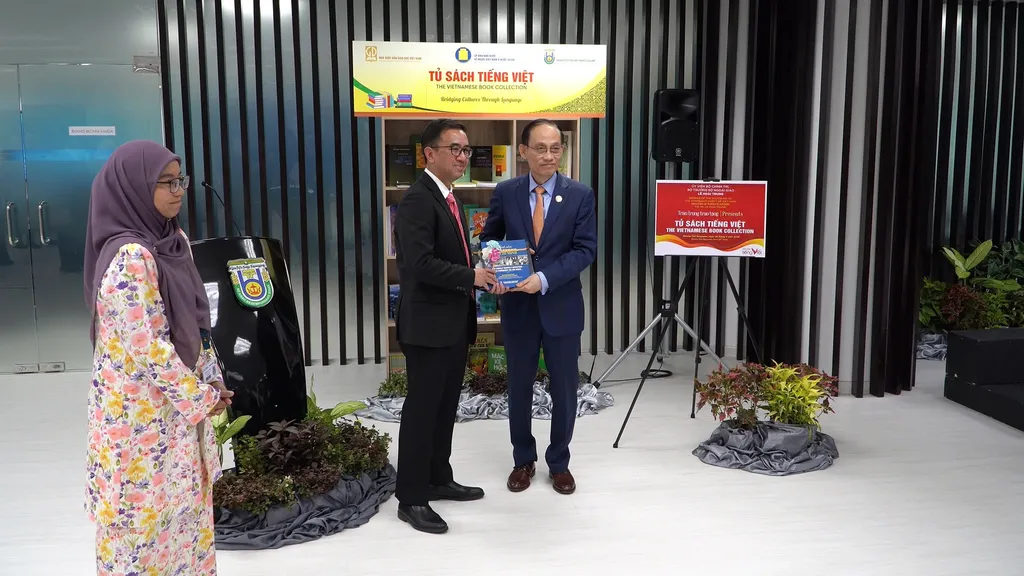 |
| Foreign Minister Lê Hoài Trung presents a Vietnamese-language book library to Universiti Brunei Darussalam. Photo courtesy of the Ministry of Foreign Affairs |
HÀ NỘI — For Vietnamese communities living thousands of kilometres from home, a book in Vietnamese, a familiar phrase spoken by a teacher or a lesson shared on a screen can be more than a learning tool. It can be a bridge to language, culture and a sense of belonging.
That connection has been at the heart of efforts by the Vietnam Education Publishing House (VEPH) and the State Committee for Overseas Vietnamese Affairs (SCOVA) to strengthen Vietnamese-language education among overseas Vietnamese communities.
Over the past year, their cooperation has expanded from teacher training and book donations to digital learning resources and television programmes, as part of the Government's project on Vietnamese Language Day in Overseas Vietnamese Communities for 2023-30.
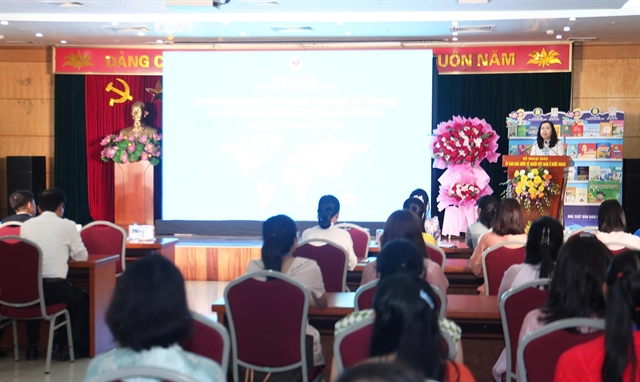
The results were highlighted at a ceremony reviewing Vietnamese Language Day 2026, held in Hà Nội on August 12, bringing together about 80 delegates at the Hà Nội venue and participants from more than 100 locations worldwide.
The gathering came shortly after the Politburo issued Resolution No. 23-NQ/TW on work concerning overseas Vietnamese, underlining the continued importance of maintaining links between Vietnamese communities abroad and their homeland.
Teachers at the heart of the effort
For children growing up outside Việt Nam, learning Vietnamese can be challenging when the language is surrounded by the dominant language of their country of residence.
Teachers therefore play a particularly important role, not only in teaching vocabulary and grammar, but also in helping young Vietnamese develop an attachment to their mother tongue.
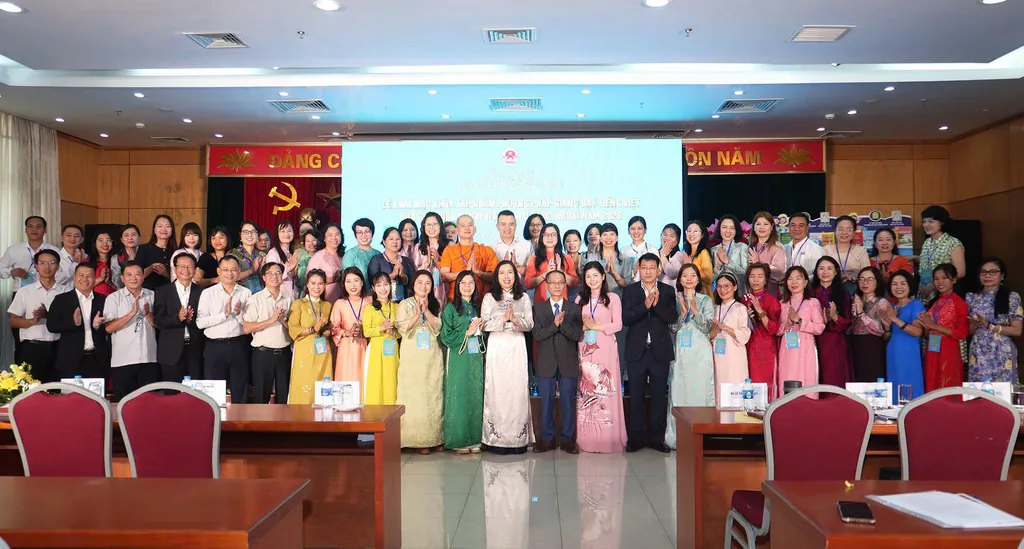 |
| The opening ceremony of a 2026 training course on Vietnamese-language teaching methods for overseas Vietnamese teachers. Photo courtesy of SCOVA |
Training Vietnamese-language teachers overseas has consequently become a major focus of the cooperation between VEPH and SCOVA.
A training course for 50 teachers from 14 countries and territories was launched during the 2026 Vietnamese Language Day review ceremony. The programme was jointly organised by SCOVA, the University of Social Sciences and Humanities under Hà Nội National University and VEPH.
The initiative has extended beyond Việt Nam. Training sessions have been held both online and in person in areas with sizeable Vietnamese communities, including northeastern Thailand and the Republic of Korea.
The programmes provide teachers with updated teaching methods and opportunities to exchange practical experience, while taking into account the particular circumstances of Vietnamese-language education overseas.
For many teachers, such training also offers something equally important: a chance to connect with colleagues who face similar challenges in keeping Vietnamese relevant and attractive to younger generations.
Books that build community
If teachers are the people who bring Vietnamese to life in the classroom, books can provide a lasting home for the language.
In 2026, four Vietnamese-language book libraries were established in Thailand, Singapore and Brunei, while nearly 5,000 books and teaching and learning materials were provided to Vietnamese communities in several countries.
The initiative goes beyond simply putting books on shelves.
Vietnamese-language book libraries can become community spaces where children discover stories in their parents' language, families spend time together and learners have access to materials that may otherwise be difficult to find locally.
According to the report presented at the review ceremony, the number of books and libraries delivered during the year met and exceeded the targets set for the programme.
The result points to a continuing demand for Vietnamese-language educational materials among overseas communities and the importance of ensuring that learners have regular and convenient access to them.
Bringing Vietnamese into the digital age
The effort to preserve Vietnamese is also moving beyond classrooms and bookshelves.
As overseas Vietnamese increasingly rely on digital platforms for education and communication, VEPH has expanded its digital learning resources, including free access to electronic textbooks.
Such resources can be particularly valuable for communities scattered across different countries, where access to Vietnamese-language teaching materials varies considerably.
VEPH has also worked with VTV4, the foreign-language channel of Vietnam Television, to produce programmes such as Chào tiếng Việt (Hello Vietnamese) and Tiếng Việt diệu kỳ (The Wonderful Vietnamese Language).
By combining educational content with the accessible format of television, the programmes offer another way for overseas Vietnamese, especially children and young people, to hear, learn and use Vietnamese.
From language lessons to cultural connection
The work reflects a broader understanding of what it means to preserve a language overseas.
For Vietnamese communities abroad, maintaining the mother tongue is closely linked to passing cultural knowledge and family traditions from one generation to the next. It also helps younger Vietnamese maintain a connection with relatives and communities in Việt Nam.
At the Vietnamese Language Day 2026 review ceremony, Deputy Minister of Foreign Affairs Lê Thị Thu Hằng presented VEPH with a commemorative medal in recognition of its contributions to preserving and promoting Vietnamese among overseas Vietnamese communities.
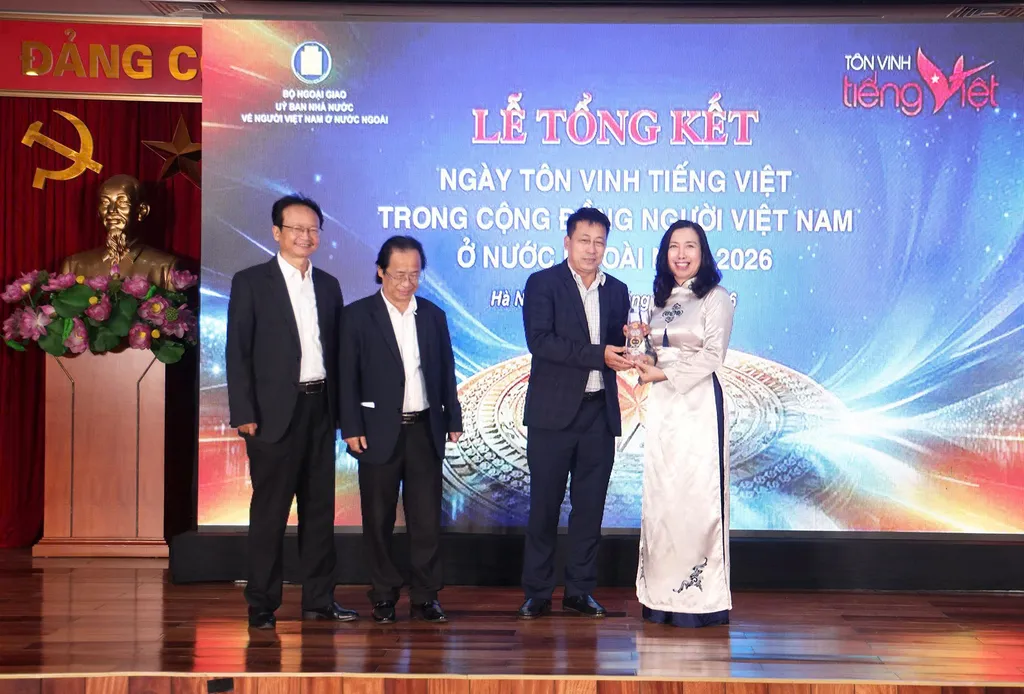 |
| Phạm Vĩnh Thái, Editor-in-Chief of VEPH, receives a commemorative medal in recognition of his outstanding contributions to preserving and promoting the Vietnamese language among overseas Vietnamese communities |
For VEPH, the recognition comes as the organisation looks to broaden its role in the next phase of the programme.
The publisher plans to further cooperate with SCOVA and other partners to develop a modern, multi-platform Vietnamese-language content ecosystem that combines printed books, teacher training, digital resources and other forms of educational content.
The goal is not simply to ensure that Vietnamese is taught abroad, but to make the language a living part of everyday community life.
For a child growing up far from Việt Nam, that may begin with a book on a library shelf, continue with a teacher's lesson and eventually become a conversation with grandparents back home.
Each of those moments helps keep the Vietnamese language travelling across generations and borders.-VNS
Society
 Society
 Society
 Society
 Society
 Society
 Society
 Society
 Society
 Society
 Society
 Society
 Society
 Society
.jpg) Society
Society




