 Society

Việt Nam, Russia step up cooperation in criminal sentence enforcement
1.
|
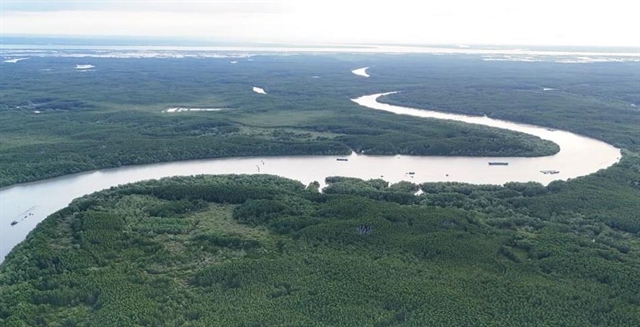
| The Cần Giờ Mangrove Biosphere Reserve possesses immense potential for carbon absorption and storage, serving as a key resource for HCM City to develop forest carbon credit projects under new regulations. — VNA/VNS Photos Hồng Đạt |
HCM CITY — HCM City is set to lead Việt Nam’s forest carbon credit market by leveraging its rich forest ecosystems, new landmark legal frameworks, and its position as the national financial centre.
The city’s prospects received a major boost following the implementation of Circular No. 31/2026/TT-BNNMT and Decree No. 180/2026/NĐ-CP on July 15.
These long-awaited regulations complete the national legal framework for valuing forest carbon absorption services.
They set clear guidelines to prevent double-selling and lay the foundation for a domestic carbon credit trading platform.
Recent administrative boundary adjustments have expanded the city’s total forest coverage.
The city now manages high-value protective and special-use forests with strong carbon absorption capacities, centred around the Cần Giờ Mangrove Biosphere Reserve.
However, converting ecological wealth into financial resources requires standardised data and modernised oversight.
Huỳnh Đức Hoàn, director of the city Management Board for Protective and Special-Use Forests, said updating forest databases is an immediate priority.
The city must accelerate the integration of remote sensing, Geographic Information Systems (GIS), and digital monitoring tools to track forest dynamics accurately, Hoàn said.
"Establishing baseline carbon stocks and running pilot projects in Cần Giờ are essential first steps."
To meet international carbon market standards, local forest management bodies must implement robust Measurement, Reporting, and Verification (MRV) systems.
Doing so requires targeted investments in workforce training across forestry, climate change, and carbon finance.
Lê Châu Hải Vũ, director of ConsulTech Enterprise Consulting Company, said the city's status as the nation's financial hub offers a distinct advantage.
“It helps connect local projects with green investment funds and corporate buyers seeking carbon offsets.”
He asked local authorities to digitalise mangrove carbon maps, test pilot trading mechanisms, and introduce green credit incentives for early adopters.
|
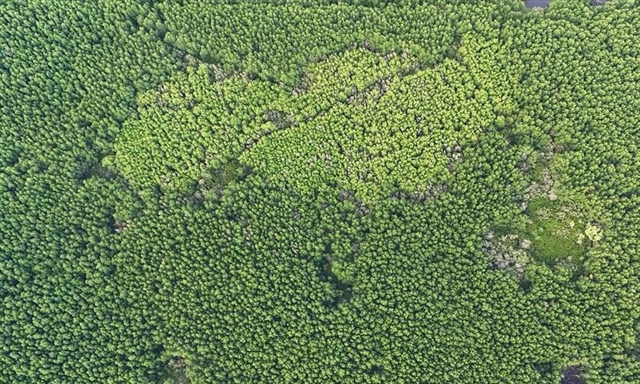
| A close-up view of the Cần Giờ mangrove forest in HCM City. The city is accelerating the digitalisation of forest data to establish baseline carbon stocks for future trading. — VNA/VNS Photo Hồng Đạt |
Detailed rules on credit valuation and trading
Historically, the absence of unified pricing guidelines for carbon sequestration was a major obstacle to project implementation in the country.
Circular 31 addresses this gap by outlining two valuation methodologies: the cost-based method and the comparative method.
Under Circular 31, project developers must calculate actual development, MRV, registration, and transaction costs.
They must also allocate up to 15 per cent of state forest protection funds to support local community livelihoods.
The higher of the two values derived from the cost-based and comparative approaches serves as the baseline for trade negotiations or listings on carbon exchanges.
If no transactions take place within 12 consecutive months, the baseline is adjusted based on the average price of the three most recent forest carbon projects whose credits were traded nationwide.
Decree 180 further mandates that forest carbon credits can only be traded via contracts or on carbon exchanges.
Exports are capped at 50 per cent to safeguard domestic climate targets.
Crucially, credits or emission reduction results already transferred under contract cannot be resold.
"Circular 31 provides a transparent scientific and legal foundation for carbon valuation," Hoàn said, adding that it effectively turns ecosystem services into economic assets, enabling forest owners to mobilise private capital for conservation and restoration.
To ensure long-term market efficiency, industry experts recommend focusing on three key areas.
These include developing digital forest maps, aligning MRV frameworks with international standards, and defining clear operational links between Forest Protection and Development Funds and carbon exchanges.
As a major economic centre with unique mangrove assets, the city is expected to lead the country in carbon credit initiatives.
This will promote green growth locally while supporting the country's broader net-zero commitments. — VNS
Society
 Society
 Society
 Society
 Society
 Society
 Society
 Society
 Society
 Society
 Society
 Society
 Society
 Society
 Society