 Politics & Law
Vietnamese scientist wins ASEAN-US Science Prize for Women
1.
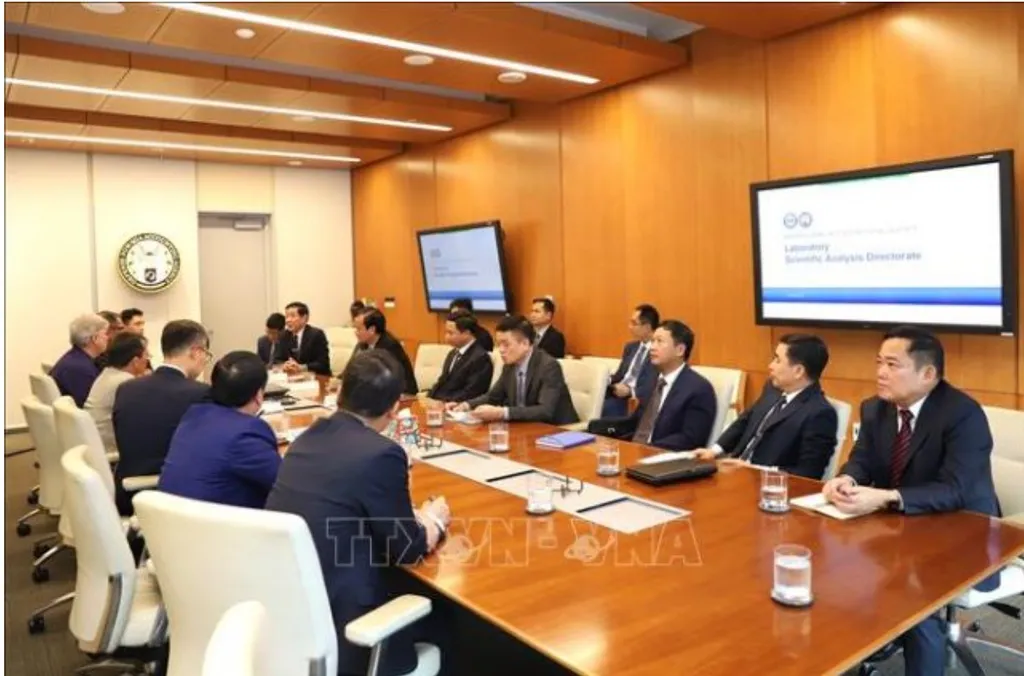 |
| A view of the working session between National Steering Committee 515 delegation and DPAA in Washington D.C on August 14. VNA/VNS Photos |
WASHINGTON – Việt Nam has requested that US authorities expedite the declassification and transfer of relevant records and documents, while actively encouraging US veterans to provide information regarding burial sites of Vietnamese soldiers.
The request was made during a working session on August 14 between a delegation from the National Steering Committee for the search, collection, repatriation, and identification of fallen soldiers' remains (National Steering Committee 515) and the US Defense POW/MIA Accounting Agency (DPAA).
The Vietnamese delegation was led by Senior Lieutenant General Nguyễn Văn Gấu, Member of the Party Central Committee, Deputy Minister of National Defence, and Permanent Vice Chairman of the National Steering Committee 515.
The meeting was part of the delegation’s working visit to the United States, reported the Vietnam News Agency correspondent in Washington D.C.
The Vietnamese side proposed that the DPAA enhance the sharing of technical processes and transfer modern solutions for Next-Generation Sequencing (NGS), including Single Nucleotide Polymorphism (SNP) techniques.
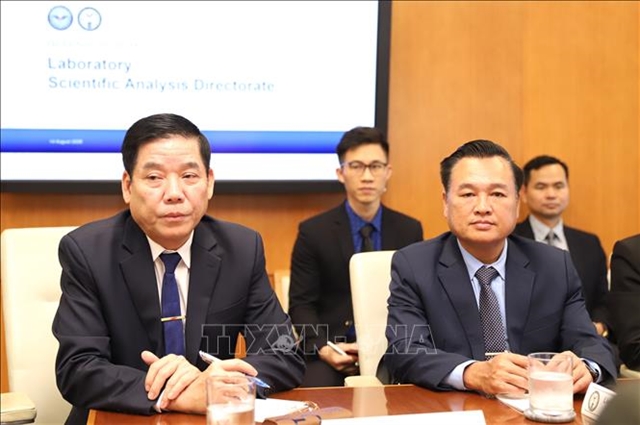 |
| The Vietnamese delegation was led by Senior Lieutenant General Nguyễn Văn Gấu (left), Member of the Party Central Committee, Deputy Minister of National Defence, and Permanent Vice Chairman of the National Steering Committee 515. |
The delegation also suggested optimising mitochondrial and nuclear DNA testing methods, forensic skeletal anthropology procedures, and emerging methods such as stable isotope analysis. Furthermore, Việt Nam sought US support in providing equipment and reagents, as well as organising training programmes to enhance the professional expertise of Vietnamese specialists.
The DPAA currently operates large-scale forensic anthropology and identification laboratories in Hawaii and Nebraska. The agency utilises field archaeology, dental analysis, forensic anthropology, and NGS technology to identify individuals even from small or severely degraded bone fragments.
Equipped with state-of-the-art technology, high-quality human resources, and advanced protocols, the DPAA noted that the average time required to accurately identify a single case is approximately two years. Given the vast volume of remains awaiting identification in Việt Nam, this poses a significant challenge.
DPAA representatives affirmed that US authorities considered supporting Việt Nam in searching for and identifying martyrs' remains a moral responsibility and a top priority. They pledged to provide the maximum possible assistance, particularly in areas where the US holds expertise that aligns with Việt Nam’s needs.
During the session, both sides reviewed the results of their coordination in searching for personnel missing in action. The search for US MIAs (Missing in Action) is one of the earliest humanitarian cooperation areas established between the two nations, spanning several decades and involving hundreds of joint field operations. Việt Nam’s spirit of responsible, goodwill, and unconditional cooperation has facilitated the search and repatriation of hundreds of US remains, serving as a vital foundation for advancing bilateral relations.
The working session concluded with several key agreements, opening new avenues for cooperation in addressing war legacies. These efforts are expected to accelerate the search, repatriation, and identification of Vietnamese martyrs’ remains, thereby easing the lingering pain of war for families and further strengthening mutual trust between Việt Nam and the United States. VNS
Politics & Law
 Politics & Law
 Politics & Law
 Politics & Law
 Politics & Law
 Politics & Law
 Politics & Law
 Politics & Law
 Politics & Law
 Politics & Law
 Politics & Law
 Politics & Law
 Politics & Law
 Politics & Law
 Politics & Law