 Society
Vietnamese scientist wins ASEAN-US Science Prize for Women
1.
|
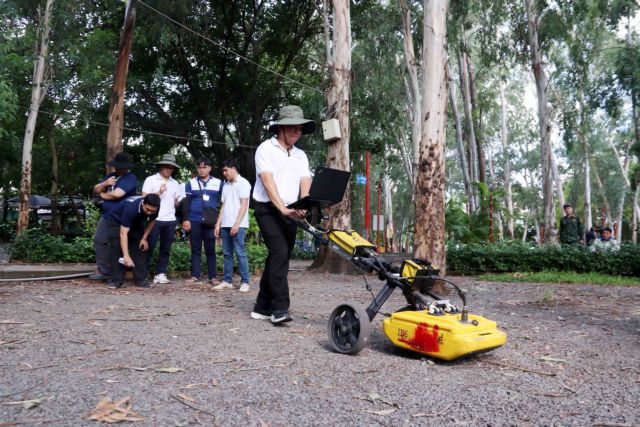
| Associate Professor Dr Lê Văn Anh Cường of the University of Science under Việt Nam National University–HCM City uses ground-penetrating radar to identify subsurface geological structures at a site suspected to contain the remains of fallen American War martyrs at the Lê Thị Riêng Cultural Park in HCM City on June 15. — VNA/VNS Photo Xuân Khu |
HCM CITY — HCM City authorities launched a survey at the Lê Thị Riêng Cultural Park on Monday (June 15) using advanced detection technology to identify suspected mass graves and support efforts to recover the remains of martyrs killed during the resistance war against America.
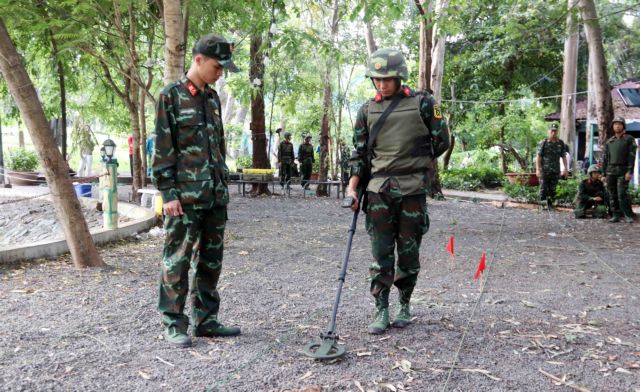
The HCM City Military Command, in co-operation with researchers from the University of Science under Việt Nam National University-HCM City and historical witnesses, began surveys, mine-clearance operations, and specialised scanning work at the location.
The geophysical surveys are designed to analyse underground structures and identify areas showing signs of soil disturbance, helping narrow down potential burial sites before further search operations begin.
Nguyễn Xuân Thắng, an architect and member of the research team, said zone A has emerged as the most significant area after researchers reviewed historical documents and interviewed witnesses.
“Based on the information collected, the research team has proposed expanding the survey area in zone A to about 5,000sq.m to examine the entire length of the suspected mass burial trench. Some witnesses also indicated that, in addition to the main trench, parallel trenches may exist nearby.”
Zone C is also being surveyed to determine whether the suspected trench extends further. Initial assessments suggest zones A and C may form part of the same mass grave running along a north-south axis.
Meanwhile, zone B, near Sân Chim Café, was selected for investigation mainly on the basis of indications identified in aerial photographs taken in 1969. Historical witness accounts related to the area remain limited.
|
| Military engineers use specialised equipment to detect and neutralise potential risks from bombs, mines, and unexploded ordnance, ensuring safety during the search for martyrs’ remains at the Lê Thị Riêng Cultural Park in HCM City on Monday. — VNA/VNS Photo Xuân Khu |
Colonel Nguyễn Đình Chuẩn, deputy political commissar of the HCM City Military Command and deputy head of the city's Steering Committee 515, which oversees the search, recovery and identification of martyrs’ remains, said participating units would continue working closely together to complete the survey and prepare for the next stage.
“After the survey results are consolidated and assessed, they will be reported to relevant authorities for the next steps.”
The survey at Lê Thị Riêng Cultural Park is seen as an important step towards locating and recovering the remains of war martyrs, helping clarify unresolved parts of wartime history and bringing closure to the families of the fallen.
In recent years, drawing on information from domestic and international sources, the Steering Committee 515 has carried out extensive research and verification work.
The investigations have led to the preliminary identification of several suspected mass graves believed to contain the remains of soldiers killed during the Mậu Thân 1968 General Offensive and Uprising in the area now occupied by Lê Thị Riêng Cultural Park.
The offensive, commonly known in the west as the Tết Offensive, was one of the largest military campaigns against the American military forces. — VNS
Society
 Society
 Society
 Society
 Society
 Society
 Society
 Society
 Society
 Society
 Society
 Society
 Society
 Society
 Society