 Opinion
Top Vietnamese leader highlights new horizon for Việt Nam–Denmark cooperation
1.
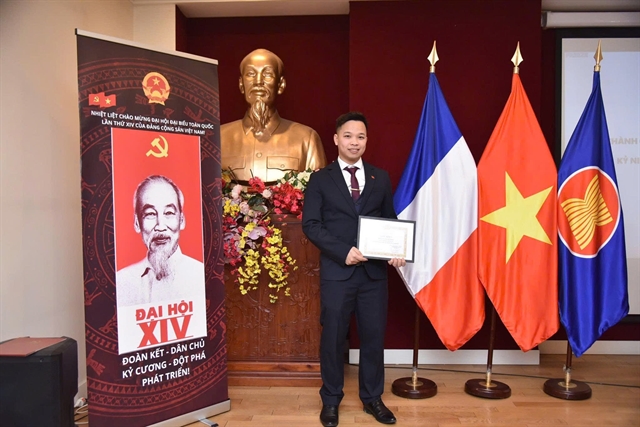 |
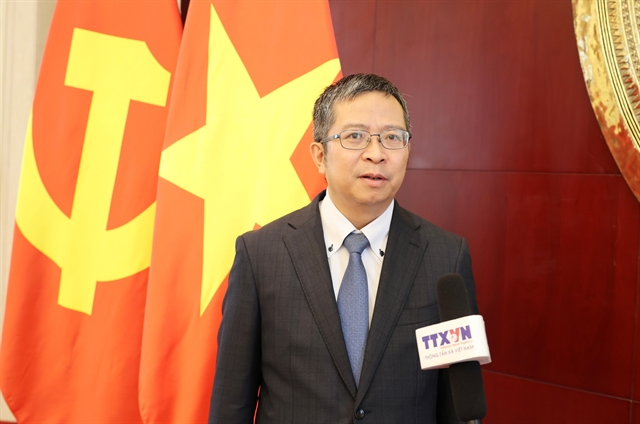
| Associate Professor Dr Trần Lê Hưng, a high-speed rail specialist at the Engineering School of Paris at Gustave Eiffel University in France. Photo courtesy of Trần Lê Hưng |
As Việt Nam enters a new phase of development following the 14th National Party Congress, elected bodies are expected to play an increasingly pivotal role in institutional refinement, fostering science and technology, and enhancing national governance efficiency. Associate Professor Dr Trần Lê Hưng, a high-speed rail specialist at the Engineering School of Paris of Gustave Eiffel University in France, shares his expert insights on the requirements for the 2026–2031 term with Vietnam News Agency reporters Thanh Tuệ and Khánh Chi
What are your expectations for the deputies of the 16th National Assembly (NA) and People’s Councils at all levels for the 2026–2031 term?
As the country embarks on a new era of development following the 14th National Congress of the Communist Party of Việt Nam, the greatest expectation for the 16th NA and People’s Councils at all levels is that they truly become the driving force in perfecting institutions and enhancing the quality of national governance. This requires each deputy to not only fulfil their role as a representative of the people's will and aspirations but also to possess strategic vision, professional expertise and a high sense of responsibility regarding major national decisions.
I expect the 16th NA to continue its strong innovation of working methods, moving toward greater professionalism, transparency, and a scientific, people-centric approach. NA deputies must enhance their legislative capacity, particularly in emerging fields such as the digital economy, artificial intelligence, green transition and the circular economy. Given the rapid pace of scientific and technological advancement, the NA needs to proactively develop forward-looking legal frameworks to ensure that legislation does not lag behind reality.
In addition, deputies need to better exercise their role of supreme oversight and decision-making on the nation’s major issues. Oversight activities must be substantive, aimed at ensuring effective policy implementation and accountability of the state administration. At the same time, voter engagement should be renewed by diversifying formats and applying digital technologies to strengthen dialogue between citizens and their representatives.
For People’s Councils at all levels, I expect their activities will continue to improve in ways more closely aligned with the actual development of each locality - particularly in monitoring the implementation of socio‑economic development programmes, urban planning, infrastructure development, and the improvement of people’s living standards.
In other words, the 2026–2031 term needs to be one of institutional innovation, enhanced governance effectiveness, and strengthened public trust in elected bodies.
Looking back at the 2021–2026 term, how would you assess the performance of the 15th NA as well as People’s Councils at all levels in improving institutions, promoting socio‑economic development, and enhancing the effectiveness of national governance?
The 15th NA term took place in a special context, as the country faced unprecedented challenges, particularly the profound socio‑economic impacts of the post‑COVID‑19 pandemic. Nevertheless, overall, the NA demonstrated a proactive and flexible role in enacting many important policies aimed at economic recovery and development, and stabilising social life.
One notable achievement is that the 15th NA accelerated the improvement of the legal system, passing numerous important laws and resolutions to remove institutional bottlenecks. Key areas such as public investment, planning, finance and budgeting, land, digital transformation, and innovation received significant attention in the legislative agenda.
The NA’s oversight activities were also strengthened, particularly through increasingly substantive and transparent questioning sessions. The organisation of thematic hearings and supreme oversight on major issues, such as the use of resources for economic recovery, land management, and the financial market, has contributed to enhancing the accountability of the executive branch.
For People’s Councils at all levels, their role in local governance has been further consolidated. Many localities have proactively introduced special mechanisms and policies to promote local economic development, improve the investment environment, and enhance the quality of public services.
However, it is also necessary to frankly acknowledge that certain challenges remain. Legislative quality in some areas has not been entirely consistent; policy monitoring and impact assessment have at times been untimely; and the capacity of some local deputies is still limited.
Overall, the 2021–2026 term can be regarded as one of significant efforts toward innovation, flexible adaptation in the face of crises and gradual improvement in the effectiveness of elected bodies.
Given the new focus on tech, innovation and infrastructure, what do you see as the key priorities for the 16th NA?
In this new development phase, the demands placed on the 16th NA will be significantly higher than before. The country is entering a period of profound transformation, in which science, technology, innovation, and digital transformation are identified as the key drivers of growth.
First, the NA needs to build a development-enabling institutional system. This means that legislation must move beyond mere management to actively encouraging innovation, removing barriers for businesses, and creating favourable conditions for new business models. Fields such as artificial intelligence, big data, fintech, renewable energy, and the digital economy require clear, flexible legal frameworks that align with international standards.
Second, the NA must strengthen its role in deciding strategic investment policies, particularly for digital, transport, and energy infrastructure, as well as innovation centres. Public investment decisions should be based on a long-term vision, ensuring efficiency and a strong spillover effect across the entire economy.
Third, digital transformation must be accelerated within the NA’s own operations, ranging from the legislative and oversight processes to voter engagement. A "Digital Parliament" will enhance transparency, improve the quality of policy debates, and bridge the gap between the legislative body and the citizenry.
Fourth, it is essential to promote mechanisms and policies that attract resources, particularly high-quality intellectual capital from the overseas Vietnamese community, while creating a conducive environment for these intellectuals to thrive. These endogenous resources will serve as an invaluable strength, enabling us to successfully achieve the targets and objectives set forth in the Resolution of the 14th National Party Congress.
Finally, the NA needs to enhance its capacity for forecasting and policy responsiveness. In a rapidly changing global landscape, having flexible and timely legislative mechanisms will allow Việt Nam to seize opportunities and mitigate risks during its development process.
With the world and the region changing so quickly, what is your take on the role of parliamentary diplomacy in boosting international ties and Việt Nam's global position?
In today’s world, which is undergoing profound geopolitical, economic, and technological shifts, parliamentary diplomacy has increasingly become a vital channel that complements both state diplomacy and people-to-people diplomacy.
Through cooperation mechanisms such as the Inter-Parliamentary Union (IPU) and the ASEAN Inter-Parliamentary Assembly (AIPA), Việt Nam’s NA has the opportunity to strengthen policy exchanges, share legislative experiences, and promote multilateral cooperation.
Parliamentary diplomacy possesses a unique advantage: its flexibility and its capacity to build political consensus between nations. Parliamentarians not only discuss bilateral issues but can also champion joint initiatives in critical areas such as climate change, energy security, sustainable development, and digital transformation.
For Việt Nam, parliamentary diplomacy also contributes to enhancing international understanding of the country's development policies, thereby consolidating Việt Nam's position and prestige in the international arena. At the same time, it serves as a vital channel for attracting international resources to support socio-economic development.
In the coming time, I believe Việt Nam must continue to be even more proactive and active in international parliamentary forums, while closely aligning parliamentary diplomatic activities with the country’s overall development and international integration strategies.
As a board member of the Global Network of Young Vietnamese Intellectuals, what specific strategies would you suggest to more effectively engage overseas Vietnamese experts and intellectuals in the nation’s future development?
The overseas Vietnamese intellectual community is an invaluable resource for the country’s development. Through the Global Vietnamese Young Intellectuals Network, numerous experts in fields such as science and technology, economics, education, and healthcare have had the opportunity to connect with and contribute to Việt Nam.
However, to more effectively leverage this resource, I believe several specific solutions should be implemented:
First, it is necessary to establish sustainable connection mechanisms between diaspora intellectuals and domestic agencies and organisations. This can be achieved through digital platforms, collaborative research programs, or innovation projects involving international experts.
Second, there must be policies to attract and facilitate the participation of overseas Vietnamese experts in national development programs, particularly in spearhead sectors such as artificial intelligence, semiconductor technology, infrastructure and clean energy.
Third, we should develop flexible cooperation models that are not limited to long-term 'repatriation'. Instead, we should encourage remote contributions, policy consultancy, knowledge transfer, or participation in specific projects.
Finally, it is essential to create an academic and innovation environment that is open, transparent, and fairly competitive within the country. When the research and start-up ecosystem becomes more attractive, Vietnamese intellectuals worldwide will have a stronger motivation to stay connected and contribute to the nation's development.
Furthermore, I believe we should research and gradually establish appropriate mechanisms for the overseas Vietnamese community to participate more deeply in the country's political life. This includes considering ways to facilitate their participation in elections or voting for representative bodies. Expanding these channels will not only promote the rights and responsibilities of overseas Vietnamese citizens but also strengthen the bond between the diaspora and the nation’s overall growth.
I am confident that with the right mechanisms in place, the global Vietnamese intellectual community will become one of the key drivers of Việt Nam’s rapid and sustainable development in the decades to come. VNS
Opinion
 Opinion
 Opinion
 Opinion
 Opinion
 Opinion
 Opinion
 Opinion
 Opinion
 Opinion
 Opinion
 Opinion
 Opinion
 Opinion
 Opinion