 Opinion
Việt Nam, EU and Belgium seek deeper, practical cooperation
1.
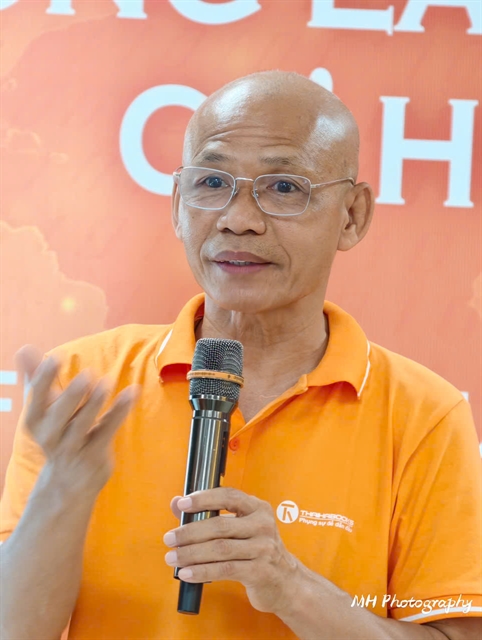 |
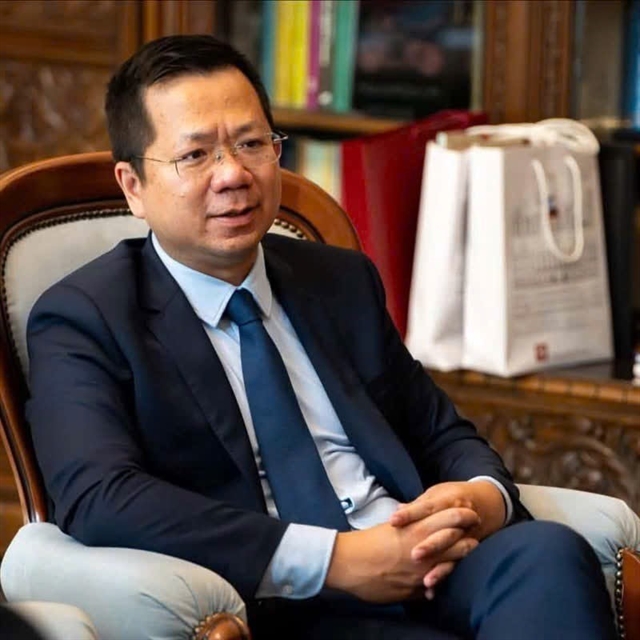
| Dr. Nguyễn Mạnh Hùng, Chairman of ThaiHaBooks. |
Technology is not just changing how books are made, it is also revolutionising the way readers access knowledge, stated Dr. Nguyễn Mạnh Hùng, Chairman of ThaiHaBooks, and a member of the Executive Committee of the Vietnam Publishers Association in an interview with Việt Nam News reporter Nguyễn Khánh Chi.
First of all, how do you see technology is reshaping the landscape of the Việt Nam’s publishing industry?
Technology is comprehensively reshaping the Vietnamese publishing industry. We are transitioning from traditional publishing models toward a multi-platform digital content ecosystem, where print books, e-books, audiobooks, AI, and data coexist and complement one another.
Technology is not only transforming how books are produced but also changing how readers access knowledge. It enables publishers to expand their reach, personalise the reading experience, and bring Vietnamese knowledge to a global audience faster than ever before.
I believe that in the future, the industry's competitive advantage will shift from volume to value. Success will not be defined by how many books a publisher prints, but by how effectively they bridge the gap between knowledge and the reader. Therefore, technology is not just an option, it is a prerequisite for sustainable development and international integration.
To put it simply, technology is transforming publishing from a "book-making" industry into a "content, data, and experience" industry. It helps expand the readership, diversify the ways knowledge is accessed, and integrate Vietnamese publishing more deeply into the global market. In the digital era, technology does not replace publishing; rather, it makes the industry stronger, faster, and more closely connected to its readers.
Faced with increasing competition from social media and shifting reading habits, what must the publishing industry do to reinvent itself and "retain" readers?
I believe the publishing industry should not compete with social media by trying to mimic it. Instead, it must leverage its unique strengths: providing deep, reliable, and enduring knowledge.
To retain readers, the industry needs to innovate across three dimensions. First, content innovation: placing the reader’s needs at the very center. Second, format innovation: building a multi-platform ecosystem that includes print, ebooks, audiobooks, podcasts, and digital products. Third, engagement innovation: building reading communities and utilising AI and technology to connect more effectively with audiences.
In an era of information overload, readers do not lack information, they lack curated knowledge. This is both the opportunity and the mission of the publishing industry.
If I were to offer a concise message for today, June 5, 2026, it should be "To retain readers, publishing must move beyond selling books and start creating experiences for learning, connection, and human development."
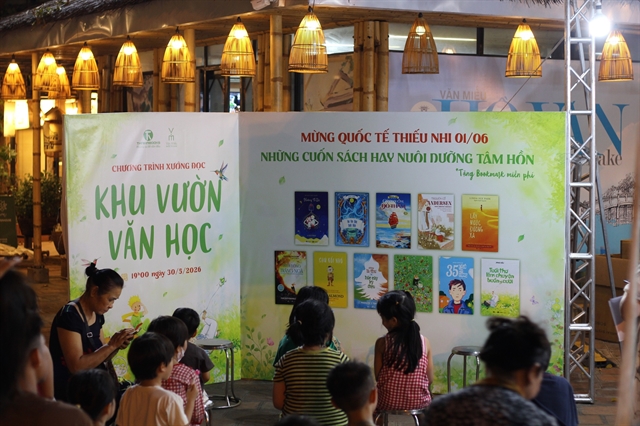 |
| A book-reading event held by ThaiHaBooks on the occasion of the Children's Day 2026. |
You once said, “The future of publishing is not just about producing more books, but about creating more value for people and society.” What exactly are these values?
Precisely. I believe the future of publishing will not be measured by the volume of titles released, but by the impact the industry has on individuals and society.
In a digital context, the primary value of publishing is no longer just providing information since information is now everywhere. What society needs most is curated, verified, and systematised knowledge. That is the first value.
The second value is human development. A good book doesn’t just give readers more facts; it encourages deeper reflection, inspires better living, and helps individuals become the better versions of themselves.
The third value is fostering lifelong learning. As technology and AI evolve rapidly, the ability to self-teach and continuously update one’s knowledge will become a core competency for every citizen.
Finally, publishing plays a vital role in preserving cultural identity, spreading humanistic values, and enhancing a nation’s soft power during international integration.
ThaiHaBooks has introduced several innovative and captivating publishing formats. First are our Special Editions, which feature exquisite craftsmanship using materials like lacquer, mother-of-pearl inlay, and embroidery on silk or brocade. We even use traditional trúc chỉ (bamboo-pulp) paper, coconut paper, lotus leaf paper, and custom-made wooden or copper boxes. These editions are designed to inspire readers, and they have become highly sought after by book collectors, with 40 titles released to date.
Second, recognising the growing preference for concise reading, we launched Pocket Books. The first dozen titles in this series have already been very well received.
Finally, today, June 5, 2026 marks exactly 115 years since President Hồ Chí Minh departed to find the path to national liberation. To commemorate this milestone, we are launching a set of miniature books (the size of a matchbox) titled "Vietnam - Independent and Resilient". This collection includes four monumental works Đường Kách Mệnh (Revolutionary Path), Hịch Tướng Sĩ (Proclamation to the Officers), Bình Ngô Đại Cáo (Great Proclamation upon the Pacification of the Wu), and Tuyên Ngôn Độc Lập (The Declaration of Independence).
 |
| ThaiHaBooks has launched a set of miniature books (the size of a matchbox) titled "Independent and Resilient Vietnam." Photos courtesy of ThaiHaBooks |
Could you please elaborate on the set of miniature books Việt Nam Độc Lập Tự Cường or Vietnam - Independent and Resilient?
The thousand-year history of Việt Nam’s development and protection has been written with blood, tears, and an indomitable spirit of independence and resilience. There are literary works that not only belong to a particular era but have become the very soul of the country—sacred echoes affirming the sovereignty and dignity of an independent nation.
Within the "Culture and Education" book series, under the theme Vietnam – Independent and Resilient, a special volume brings together three of the greatest works in the nation’s history: Hịch Tướng Sĩ by Trần Hưng Đạo, Bình Ngô Đại Cáo by Nguyễn Trãi and Tuyên Ngôn Độc Lập by President Hồ Chí Minh.
These masterpieces are now presented in an extraordinary format: a miniature book, currently the smallest in Việt Nam, measuring just 3.5 x 5.0 cm.
As readers turn each tiny page, they are immersed in the flow of thought and the fervent patriotism spanning three glorious historical periods.
The combination of the monumental stature of these three immortal masterpieces with the refined miniature design has transformed the book into not only a valuable resource for study and reflection but also a work of art, a meaningful heritage gift. The book serves as a gentle yet profound reminder: Great ideas and national pride do not lie in the size of the page, but in the weight of each word that has entered the sacred soul of the land.
This book is dedicated to all Vietnamese and to anyone who carries within themselves the blood of Vietnamese patriotism.
For the publishing industry to become a knowledge-based economy, a cultural economy, and an active publishing hub in the region, which strategies should Việt Nam focus on?
Việt Nam needs to focus on five key strategies as follows:
First, accelerate comprehensive digital transformation, develop a multi-platform publishing ecosystem, and apply AI, big data, and new technologies across the entire publishing value chain.
Second, develop high-quality content, invest in authors, translators, copyrights, and products that carry Vietnamese identity while being accessible to international markets.
Third, promote copyright export and bring Vietnamese knowledge to the world, while also attracting global intellectual excellence to Vietnamese readers.
Fourth, build a reading culture and a learning society, since readers are the foundation for the sustainable development of the publishing industry and the knowledge economy.
Fifth, strengthen international cooperation, deepen connections with major publishing centers in the region and the world, and actively participate in the global publishing value chain.
I believe that if these strategies are implemented effectively, Việt Nam will not only become a developed publishing market but also a creative hub, a center for knowledge exchange, and an exporter of influential content within ASEAN and beyond.
I also want to emphasise that, to become a regional publishing hub, Việt Nam must shift from the mindset of producing books solely for the domestic market to the mindset of creating knowledge for the region and the world.
In an era where the world is changing rapidly due to technology and AI, what advice do you have for the younger generation of Việt Nam?
I believe that AI will not replace humans. However, those who know how to utilise AI will have a significant advantage over those who do not.
In a fast-changing world, the most important thing is not to learn a single trade for life, but to build the capacity for lifelong learning. Technology will evolve and jobs will change, but the human abilities to learn, adapt, create, and collaborate will always remain core competencies.
I have three suggestions for the young people of Việt Nam.
First, learn how to learn: do not just accumulate knowledge, instead, sharpen your critical thinking, your ability to self-study, and your problem-solving skills.
Second, master AI instead of depending on it: use AI as an assistant to learn faster and work more efficiently, but never let AI replace your own thinking, creativity, or responsibility.
Third, nurture the values that machines cannot replace: ethics, compassion, empathy, a spirit of service, and the aspiration to contribute to society.
I believe that in the future, the most successful people will not be those who know the most, but those who learn the fastest, adapt the best, and constantly strive for self-improvement. That is the true spirit of lifelong learning.
I want to further emphasise that treating AI as a tool, not a master. Use technology to elevate human potential, rather than letting humans become dependent on technology. VNS
Opinion
 Opinion
 Opinion
 Opinion
.jpg) Opinion
Opinion
 Opinion
 Opinion
 Opinion
 Opinion
 Opinion
 Opinion
 Opinion
 Opinion
 Opinion