 Politics & Law
NA President sets June 2027 deadline for APEC projects, rules out delays, quality cuts and violations
1.
|
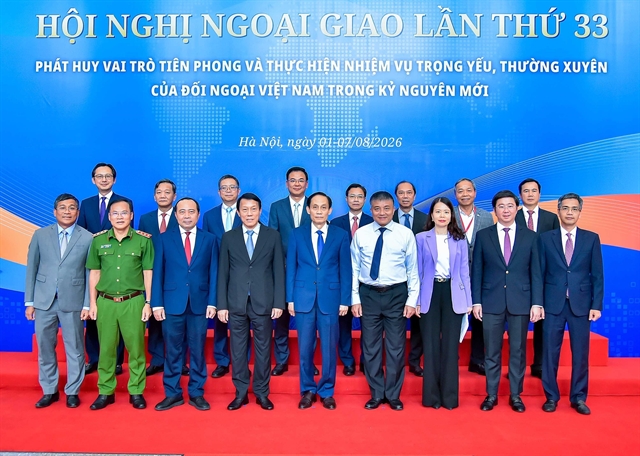
| Delegates attending the session on science and technology diplomacy as a contributor to building national development capacity in Hà Nội on Wednesday. — VNA/VNS Photo |
HÀ NỘI — A session on science and technology diplomacy contributing to building national development capacity was held on Wednesday within the framework of the 33rd Diplomatic Conference, highlighting the role of international cooperation in advancing science, technology, innovation and digital transformation.
The event was co-chaired by Minister of Foreign Affairs Lê Hoài Trung, who is also a member of the Central Steering Committee for the Development of Science, Technology, Innovation and Digital Transformation, and Minister of Public Security General Lương Tam Quang, who is also Standing Deputy Head of the committee.
The session brought together leaders of ministries, central agencies, sectors, localities and organisations, representatives of the Government and central steering committees on science, technology, innovation and digital transformation and major Vietnamese technology corporations, heads of Vietnamese representative missions abroad, and more than 500 delegates from research institutes, universities, associations and technology enterprises.
Through two discussions, participants focused on identifying Việt Nam’s international cooperation needs in science, technology, innovation and digital transformation, as well as opportunities, priority partners and measures to enhance the role of the diplomatic sector and Vietnamese representative missions abroad.
Addressing the opening session, Trung stressed that science - technology and innovation diplomacy has become an important pillar of development-oriented diplomacy, playing a role in opening up opportunities, connecting partners and creating favourable international conditions to strengthen national scientific and technological capacity.
Such efforts contribute to mastering strategic technologies, ensuring technology security and enhancing the country's position in the emerging global technology order, he said.
The minister highlighted achievements in technology diplomacy, including establishing and deepening scientific and technological cooperation frameworks with partners, particularly leading global technology hubs; connecting technology corporations, research institutes, universities and international investment funds with Việt Nam; and supporting localities, businesses and research institutions in seeking partners and joining global technology value chains.
He also noted that diplomacy has helped promote deeper connections with Vietnamese experts and intellectuals abroad, gradually forming a knowledge network that can make direct contributions to national science, technology and innovation development.
However, Minister Trung pointed out challenges in implementing science and technology diplomacy, saying the focus should not only be on seeking more opportunities or signing more agreements, but also on identifying the country’s development challenges, selecting appropriate partners and technologies, and choosing effective cooperation models to turn international commitments into domestic capabilities.
During the discussions, delegates underlined the need to access and master strategic technologies to create new growth drivers and ensure long-term development. They also discussed the role of international cooperation and diplomacy in implementing breakthroughs in science, technology, innovation and digital transformation, as well as key tasks in carrying out the Politburo's Resolution No. 57-NQ/TW.
Representatives from localities and businesses shared their needs for attracting high-tech investment, connecting with international investment funds, supporting technology startups, developing a national artificial intelligence platform and strengthening support from the Ministry of Foreign Affairs and Vietnamese representative missions abroad.
Concluding the session, Minister of Public Security Quang affirmed that science - technology diplomacy is the responsibility of the entire political system, requiring close coordination among state agencies, diplomatic missions, research institutions, universities and businesses.
He called for a shift from seeking external support to promoting mutually beneficial cooperation, and from attracting investment capital to attracting knowledge, technology and strategic partnerships.
Minister Quang urged Vietnamese representative missions abroad to enhance their role as technology bridges, proactively advise on policies, connect partners, mobilise overseas Vietnamese experts and support domestic enterprises in joining global value chains.
He also emphasised the need to build networks of technology partners, research institutions, universities, businesses and experts, while developing databases of leading specialists in strategic technology fields and mapping potential opportunities in key markets.
Quang stressed that external opportunities can only become development resources when domestic conditions are fully prepared, urging ministries, sectors, localities and enterprises to proactively develop projects, mechanisms, infrastructure, human resources and capacity to receive advanced technologies. — VNA/VNS
Politics & Law
 Politics & Law
 Politics & Law
 Politics & Law
 Politics & Law
 Politics & Law
 Politics & Law
 Politics & Law
 Politics & Law
 Politics & Law
 Politics & Law
 Politics & Law
 Politics & Law
 Politics & Law
 Politics & Law