 Economy

SBV to curb property price inflation, enforce lending rate rules
1.
|
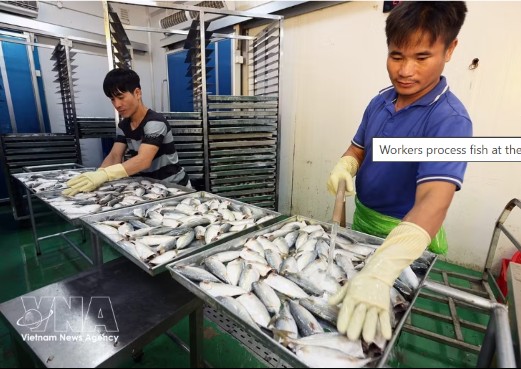
| Workers process fish at the HDT FOODS JSC factory in Thanh Hóa province. — VNA/VNS Photo |
HÀ NỘI — Việt Nam’s fishery exports continued to grow in July, keeping the industry on track to achieve its target of around US$12.5 billion in export revenue this year.
However, experts have warned that growth is likely to slow in the coming months as demand weakens in key markets and trade barriers become more challenging.
According to the Việt Nam Association of Seafood Exporters and Producers (VASEP), seafood exports reached nearly $1.02 billion in July, up 4.8 per cent year-on-year.
The figure in the first seven months of 2026 hit nearly $6.78 billion, an increase of 11.5 per cent compared to the same period last year. Shrimp remained Việt Nam’s largest currency earner, generating nearly $2.78 billion during the January-July period, accounting for about 41 per cent of the country's total seafood export value.
However, VASEP noted that export growth slowed in July, indicating intensifying competition in global markets. While lobster shipments to China remains a major growth driver, Vietnamese whiteleg and black tiger shrimp are facing stronger competition in traditional markets such as the US, the EU and Japan.
One of the biggest challenges comes from Ecuador, which has expanded not only its supply of raw shrimp but also its processed products, directly competing with Việt Nam in the value-added segment.
Vietnamese shrimp exporters are also under additional pressure in the US market after the Office of the US Trade Representative (USTR) imposed an additional 12.5 per cent tariff under Section 301, compared to 10 per cent applied to several competing suppliers, including Ecuador, India and Indonesia.
Industry representatives said the tariff gap, although relatively small, could significantly affect low-margin frozen shrimp exports, forcing Vietnamese exporters to share part of the additional tax burden with US importers in order to maintain market share.
Despite these challenges, shrimp exports are expected to benefit if demand from China remains strong and Vietnamese processors continue securing orders for value-added products from Japan and the EU.
Meanwhile, tra fish exports showed signs of slowing after strong growth in July, when turnover fell 6.1 per cent year-on-year to nearly $184 million. VASEP attributed the decline mainly to lower purchasing demand in several major markets.
Nevertheless, the sector still has opportunities to expand its presence in the global whitefish market. Limited fishing quotas, rising production costs and supply uncertainties for species such as Atlantic cod, haddock and Alaska pollock have prompted some European processors to consider tra fish as an alternative for processed seafood products.
In addition, the European Union's mandatory implementation of the CATCH electronic catch certification system since the beginning of 2026 has increased compliance costs for wild-caught seafood, creating a relative advantage for farmed pangasius if exporters can meet increasingly stringent requirements on traceability and sustainability.
However, Vietnamese seafood exporters continue to face higher standards in environmental protection, sustainable certification and supply chain transparency. The EU's "yellow card" warning on illegal, unreported and unregulated (IUU) fishing also continues to affect the industry's reputation.
China, including Hong Kong, remained the fastest-growing market for Vietnamese seafood during the first seven months of the year, with export turnover rising 34.5 per cent year-on-year to nearly $1.74 billion. In contrast, shipments to the EU, the Republic of Korea and several other markets declined.
Đỗ Ngọc Tài, Chairman of VASEP, said the industry's performance in the first seven months demonstrated the resilience and adaptability of Vietnamese seafood exporters despite an increasingly difficult business environment.
He said maintaining sustainable growth will require solutions to improve raw material supplies, logistics, financing and labour, while enhancing market diversification.
VASEP also called for faster digitalisation of export certification procedures, stronger coordination among ministries to address trade barriers and tailored strategies for major export markets.
Market analysts expect the full impact of the new US Section 301 tariffs to become clearer from August onwards. In the longer term, they believe Việt Nam’s competitiveness will depend less on price and tariffs and more on its ability to develop value-added products, comply with international standards on labour, environmental protection and traceability, and adapt quickly to changing global trade policies.
As competing seafood-producing countries are also facing challenges, experts said opportunities will remain for Vietnamese businesses that can adapt quickly, invest in higher value-added products and proactively restructure their market strategies. — VNA/VNS
Economy
 Economy
 Economy
 Economy
 Economy
 Economy
 Economy
 Economy
 Economy
 Economy
 Economy
 Economy
 Economy
 Economy
 Economy