 Economy


Bach Mai Hospital becomes Việt Nam’s first to win top WSO stroke certification
1.
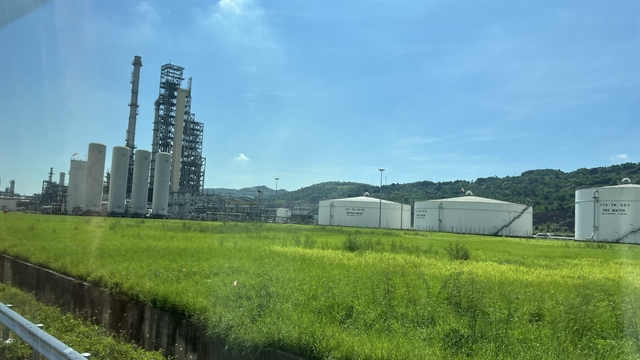 |
| Nghi Sơn Refinery plant in Thanh Hóa Province. — VNS Photo Mai Hương |
Mai Hương
HÀ NỘI — Nghi Sơn Refinery and Petrochemical LLC (NSRP) has expanded its crude oil procurement options after disruptions linked to tensions in the Middle East exposed the risks of relying heavily on a single source, helping the refinery maintain stable operations and supply 35-40 per cent of Việt Nam’s domestic fuel demand.
The refinery has successfully processed 10 new types of crude oil in recent months, expanding its options beyond its traditional Kuwait supply, Lê Nguyễn Quốc Vinh, NSRP’s plant director, said at a media briefing on October 2.
The move followed preparations begun in 2025 to test new crude grades and secure alternative supplies, including a non-Kuwait cargo in December. NSRP processed another new grade in January 2026, before the latest Middle East escalation, and has since broadened the range of crude it can process.
“This helps expand our choice of crude supplies amid geopolitical fluctuations and risks,” Vinh said.
The diversification does not mean NSRP is moving away from Kuwait. Its long-term contract requires about 80 per cent of crude to come from Kuwait, which remains its priority when shipments are available, while the rest can be sourced elsewhere.
NSRP received three Kuwaiti crude cargoes in September and is scheduled to receive three more in October, alongside one cargo from another source.
“The strategy is to combine long-term supply contracts with opportunities in the spot market, while continuing to evaluate and test new crude types,” Vinh said.
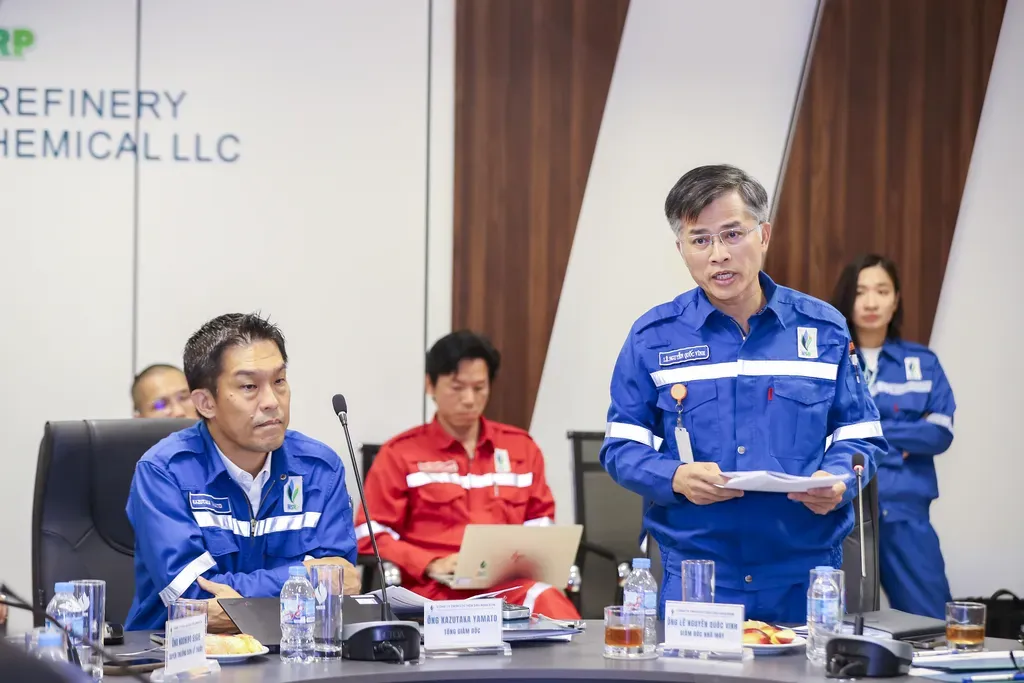 |
| Lê Nguyễn Quốc Vinh, NSRP’s plant director, speaks to the media. — Photo courtesy of NSPR |
The impact of higher crude prices has been substantial. Vinh said NSRP’s average crude input price had risen by about 63 per cent, from the US$60 per barrel to around $100 per barrel.
At the refinery’s current operating rate of about 250,000 barrels per day, every $10 increase in crude prices adds about $2.5 million to daily crude input costs, he said.
However, the impact on profitability depends more on the refining margin than on the absolute crude price.
“If input prices are high but product prices are also high, the impact is not significant. What matters is the margin between input and output prices,” Vinh said.
NSRP for the first time reported significantly improved financial performance in 2026, which the company attributed partly to higher refining margins and its ability to operate at up to 125 per cent of design capacity.
The refinery recorded revenue of VNĐ185.5 trillion (over $7 billion) in the first eight months of the year and contributed around VNĐ18 trillion to the State budget during the period. Its profit after tax reached nearly VNĐ14 trillion.
It processed 8.38 million tonnes of crude in the first nine months and supplied 6.54 million tonnes of petroleum products to the domestic market.
The company expects to supply another 2.7 million tonnes of products in the fourth quarter, taking full-year output to about 9.2 million tonnes.
NSRP currently accounts for about 35-40 per cent of domestic gasoline and diesel demand, making stable operations at the refinery an important factor in the domestic fuel supply.
During the period of tighter crude supplies earlier this year, NSRP temporarily reduced refinery utilisation to around 75-80 per cent for about a month. It compensated by cutting petrochemical output and directing more capacity towards gasoline and diesel production.
For the coming months, NSRP has secured crude supplies through November and is working on purchases for December and the following year.
NSRP General Director Kazutaka Yamato said the refinery had already secured Kuwaiti crude again and was confident of maintaining high utilisation in the near term.
“But we want to continue such kind of preparation for the future,” he said.
NSRP’s crude diversification comes as the refinery seeks to maintain high utilisation and strengthen its financial position. Shareholders are also discussing longer-term financial restructuring measures, while the company plans to deepen its petrochemical integration into products including olefins, polymers, bitumen and lubricants.
A major turnaround is scheduled for around August 2027 and is expected to take less than 50 days.
Since beginning commercial operations in 2018, NSRP has contributed about VNĐ147 trillion to the State budget. — BIZHUB/VNS
Economy
 Economy
 Economy
 Economy
 Economy
 Economy
 Economy
 Economy
 Economy
 Economy
 Economy
 Economy
 Economy
 Economy
 Economy