 Opinion

Vietnamese Prime Minister meets Cambodian National Assembly President
1.
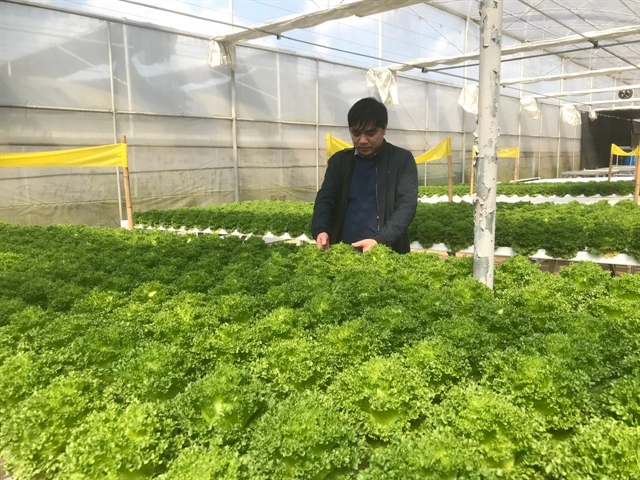 |
| Nguyễn Văn Thuận, head of Department of Quality, Processing and Market Development under the Ministry of Agriculture and Environment, check the quality of vegetable grown in a farm in Hà Nội |
Nguyễn Văn Thuận*
On a global scale, the agricultural value chain is an integrated sequence of goods and services required for an agricultural product to move from production to consumption.
Hà Nội currently has approximately 34,000ha dedicated to vegetable production (including various types of produce), yielding an annual output of 735,000 tonnes across more than 40 product varieties.
These production zones are primarily concentrated in suburban and peri-urban areas. With a population of over 10 million people living, working, and studying in the city—combined with millions of domestic and international tourists visiting annually—the demand for agricultural food products in general, and vegetables in particular, is immense.
According to 2025 data, the demand for vegetables in Hà Nội is approximately 110,000 tonnes per month. Consequently, boosting production to proactively supply the local market has become a top priority for the capital city’s agricultural sector.
The challenge of how to enhance the efficiency and sustainability of the safe vegetable supply chain for Hà Nội has been a persistent concern, requiring targeted support solutions for the city's production regions.
Based on research, surveys, and practical assessments of several safe vegetable zones in Hà Nội, the following solutions and recommendations regarding farmers' livelihoods, food safety, and digital transformation aim to establish efficient and sustainable supply chains for the city in the coming period.
Farmers’ livelihoods
Farmers’ livelihoods have always been one of the pressing issues that require the attention of society as a whole, in order to help solve employment problems, improve living standards and social welfare for farmers, while also ensuring food security, social security, green growth, environmental protection, and contributing to economic development.
In reality, the livelihoods of vegetable growers in Hà Nội are affected by many factors: small-scale production, long-standing traditional farming methods, lack of scientific knowledge, limited experience in production innovation, low value-added products, lack of capital, and profits that are not commensurate with the costs incurred. Therefore, additional policies are needed to support producers, improve farmers’ livelihoods, and ensure a sustainable future for agriculture and vegetable growers in Hà Nội.
1. Building and restructuring production models
- Develop and restructure cooperative models, encouraging farmers to join cooperatives to organize efficient production and consumption of vegetables, thereby creating stable jobs and incomes for farmers, cooperative members, and the cooperative as a whole.
- Establish pilot models of diverse production and product consumption, contributing to job creation for local residents participating in cooperative production.
- Support farmers and cooperatives in transitioning from traditional agriculture to modern agricultural production models, helping to increase income.
- Apply modern technology to help farmers reduce costs, increase productivity, and improve their living standards.
- Build distribution channels for high-quality, high-value products into premium distribution systems (supermarkets, hotels, restaurants, etc.).
2. Supporting environmental protection for farmers and communities
- Develop and implement environmental monitoring programmes, while proposing solutions to reduce soil, water, and air pollution.
- Apply environmentally friendly and ecological production technologies. Limit the use of harmful chemicals, contributing to improved living environments for farmers and communities.
- Provide solutions to prevent the impacts of climate change, reduce crop losses caused by natural disasters and climate change.
3. Sharing and transferring knowledge to farmers and cooperatives
- Develop training programmes on modern farming techniques, digital transformation, digital technology, and green production for farmers and cooperatives.
- Support the transition from traditional agricultural production models to organic, high-tech, and ecological agriculture.
- Establish processes to increase productivity, reduce production costs, and optimise farming practices.
4. Financial support and recalculation of costs–profits
- Provide assistance with procedures and credit guarantees so that farmers can access loans to invest in agricultural production.
- Consider suspending interest collection, extending debt repayment, adjusting loan terms to reduce interest rates, or handling risky debts for customers affected by natural disasters and crop failures.
- Recalculate production costs, product prices, profits, and rebalance to ensure increased income for farmers and create job opportunities for local residents.
Food Safety
Risk-based food safety management
It is necessary to identify food safety risks at each stage of the entire chain, analyse and assess them, and strictly control and manage the identified risks according to their level (high, medium, low) throughout the production, distribution, and consumption process.
A product that ensures safety means it is produced, distributed, and consumed in full compliance with food safety regulations and standards, and is considered to be: free from pathogenic microorganisms or dangerous parasites; free from residues of chemicals, pesticides, banned preservatives, or exceeding permissible limits; and free from physical contaminants such as glass fragments, metals, plastics, or foreign substances.
Applying advanced quality management systems
The application of advanced quality management systems not only helps businesses meet legal compliance requirements but is also a prerequisite for bringing products into major supermarket chains, processing plants, or exporting to international markets. This is why production facilities are recommended to adopt management systems such as VietGap, AseanGap, GlobalGap, HACCP, ISO, or equivalents to control all risks related to food safety for agricultural products in general, and vegetables in particular. This is considered a key solution to achieving safe products.
For producing processed vegetables with higher added value, it is necessary to establish and operate quality management systems such as HACCP/ISO 22000 or equivalents, focusing on controlling food safety risks during processing, meeting international food safety standards, and fulfilling the expectations of consumers in Hà Nội.
Considering transformation of vegetable production models
The application of greenhouse/net-house vegetable cultivation technology contributes to improving crop efficiency by increasing yields, reducing pests and diseases, and saving water. This approach is increasingly being expanded and evaluated as effective in many places domestically and internationally, especially in the context of complex climate change, and is a solution worth considering for transformation.
Digital transformation
The role of digital transformation in agricultural production
The application of digital technology in agriculture plays a particularly important role in restructuring the agricultural sector, aiming toward modernisation, enhancing value, and ensuring sustainability. This process is being promoted by industries, localities, businesses, and farmers to create breakthroughs in quality and productivity, while strengthening competitiveness.
The Politburo’s Resolution No 57-NQ/TW dated December 22, 2024 on breakthroughs in science, technology, innovation, and national digital transformation is considered a guiding principle for rapidly developing modern productive forces, perfecting production relations, innovating national governance methods, and promoting socio-economic development. Agriculture is regarded as an important turning point in the application of digital technology in production, management, and control.
The application of digital transformation brings many benefits such as: creating links between producers and markets/consumers; saving time and resources; improving labor productivity; and enhancing product value and quality.
(1) Irrigation and water management systems:
· Apply drip irrigation or automatic misting technology to save water and provide precise amounts for crops.
· Establish wastewater collection and treatment systems to ensure safety.
· Ensure continuous water supply in cases of drought.
(2) Application of Smart Technologies
· IoT sensor systems: Monitor temperature, humidity, light, and air quality to optimize farming processes.
· Artificial Intelligence (AI) and Big Data: Forecast weather, analyze soil and crop data to make optimal decisions.
· Automation systems: Robotic arms for harvesting, automated planting systems, biological pest control systems.
(3) Application of cold storage technology to maintain the quality of fresh products.
(4) Application of technology systems for product traceability (Blockchain, etc.).
* Nguyễn Văn Thuận, the Coordination Committee of the Safe Food for Growth project (SAFEGRO); head of Department of Quality, Processing and Market Development under the Ministry of Agriculture and Environment
Opinion
 Opinion
 Opinion
 Opinion
 Opinion
 Opinion
 Opinion
 Opinion
 Opinion
 Opinion
 Opinion
 Opinion
 Opinion
 Opinion
 Opinion