 Opinion

LANDMARK Launches ‘Destination CENTRAL’: A District-Wide Invitation to Explore the Dynamism, Luxury, and Soul of Central
1.
|
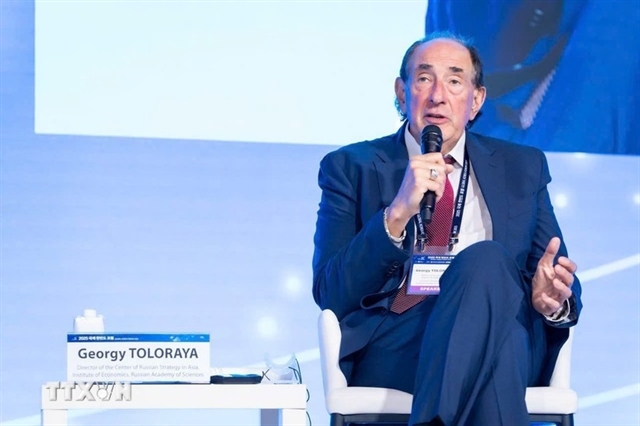
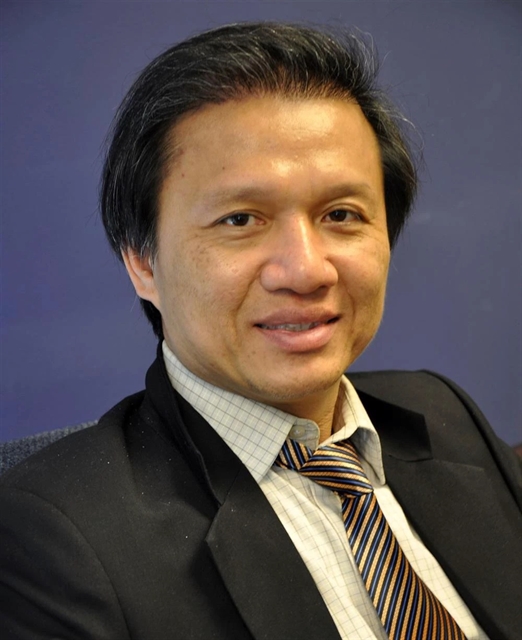
| Prof. George Toloraya, Director of the Centre for Russian Strategy in Asia at the Institute of Economics of the Russian Academy of Sciences. VNA/VNS Photo |
MOSCOW — Prime Minister Phạm Minh Chính’s recent visit to Russia, during which several cooperation agreements were reached, particularly in the energy sector, has been viewed by Russian experts as a strategic move that could reshape bilateral cooperation.
Professor, Doctor of Economics Georgy Davidovich Toloraya, Chief Research Fellow at the Centre for World Politics and Strategic Analysis under the Russian Academy of Sciences, highlighted the significance of the agreement with Russia’s Rosatom to build Việt Nam’s first nuclear power plant, especially amid ongoing conflict in the Middle East and the global energy crisis.
According to Toloraya, the agreement could serve as a catalyst for strengthening bilateral cooperation, with energy diplomacy likely to become a key pillar of Việt Nam–Russia relations.
Toloraya emphasised that the revival of the nuclear power project carries strategic significance, reflecting Việt Nam’s determination to strengthen national security and sovereignty.
He said Russian Prime Minister Mikhail Mishustin has described the project as a “new symbol of friendship,” while President Vladimir Putin highlighted the importance of further deepening the comprehensive strategic partnership between the two countries.
Beyond energy cooperation, Toloraya said Russia could also become an important logistics hub for Việt Nam’s exports to Europe, particularly agricultural products and furniture. Transport routes through the ports of St. Petersburg and Vladivostok, along with plans to expand railway services via Russia and Kazakhstan, could help ease shipping delays and rising insurance costs currently facing Vietnamese exporters.
The two countries also reached agreements in fields such as artificial intelligence, cybersecurity and the digitalisation of public services. Toloraya said the expanded cooperation reflects Việt Nam’s geopolitical vision in building alternative supply chains in energy, logistics and technology to reduce risks associated with unstable traditional supply networks.
Looking ahead, he suggested that the two sides could develop a nuclear industry cluster covering supply chains, plant operations and workforce training, with the goal of putting the nuclear power plant into operation by the end of 2031. Russia could also play a role in developing LNG centres and gas infrastructure in southern Việt Nam, enhancing regional energy connectivity.
Toloraya also emphasised the importance of establishing alternative financial channels to ensure uninterrupted cooperation amid global uncertainties. He added that the two countries could move toward a technology alliance integrating Russian cybersecurity and AI solutions into Việt Nam’s energy infrastructure management.
In urban development, potential cooperation in planning and transport infrastructure could include Russian participation in designing and constructing metro systems in Hà Nội and Hồ Chí Minh City. Meanwhile, digital economy collaboration may expand through projects involving digital identification, cloud computing and cybersecurity.
According to Toloraya, the visit and the agreements signed mark a shift from traditional trade relations toward deeper integration aimed at reducing external risks, which he described as a sound strategic approach by Việt Nam’s leadership. — VNS
Opinion
 Opinion
 Opinion
 Opinion
 Opinion
 Opinion
 Opinion
 Opinion
 Opinion
 Opinion
 Opinion
 Opinion
 Opinion
 Opinion
 Opinion