 Economy


Vietnamese Prime Minister meets Cambodian National Assembly President
1.
*Adapted from a speech at a Conference on Prospects for Halal Industry Development and Export Opportunities for Enterprises in Bắc Ninh Province, May 15, 2026
By H.E. Adam M. Tugio, Ambassador of the Republic of Indonesia
When the world hears the word halal, many still imagine vast agricultural landscapes: rice fields, coffee plantations and seafood ports. For decades, the halal economy has been viewed primarily as a traditional faith-driven food sector.
Yet the halal economy is no longer just a consumption block; it is a resilient, ethics-driven global growth engine. The numbers speak clearly. In 2023, the global halal market reached US$7.36 trillion and is projected to hit $10.89 trillion by 2028.
Halal food alone is expected to approach $6 trillion by 2034. Importantly, demand is expanding rapidly beyond Muslim-majority countries. Non-Muslim consumers increasingly associate halal certification with hygiene, traceability, animal welfare and clean-label standards.
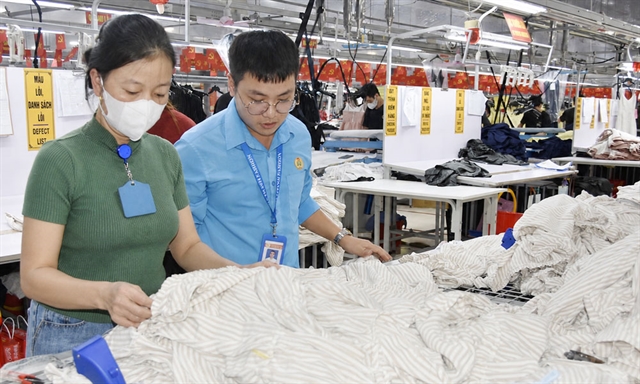 |
| Garment manufacturers that operate to high standards, such as Ha Thanh Fashion Joint Stock Company in Hoang Van Commune, have a competitive advantage in accessing the halal market. |
Recognising this shift, the Government of Việt Nam launched the National Halal Certification Authority (HALCERT) in April 2024 to streamline market entry. Việt Nam aims to double halal exports to over $2 billion by 2030, while the domestic halal food market is forecast to reach $23.39 billion by 2033.
The question is: how can Việt Nam capture a larger share of this opportunity?
Let us take a look at an example: Bắc Ninh, a billion-dollar high-tech manufacturing powerhouse and one of Việt Nam’s most attractive destinations for foreign investment.
Bắc Ninh’s competitive advantage lies not in raw commodities but in advanced technology. Việt Nam has a unique opportunity to merge its traditional agricultural and cultural strengths with its modern technological capabilities to build a holistic, future-ready halal ecosystem.
Bắc Ninh can play a significant role, as the future of halal will be built in cleanrooms, embedded in microchips and woven into sustainable, technology-enabled supply chains. The next decade of the halal economy will be shaped by digital disruption and Bắc Ninh is positioned to lead.
Allow me to share a strategic playbook for building a high-tech, sustainable halal ecosystem in Bắc Ninh:
First, pioneer the halal-tech hardware supply chain. The halal industry is moving towards blockchain-enabled traceability and AI-driven compliance to reduce verification costs and eliminate fraud. But software requires hardware. The world needs IoT sensors, RFID tags and smart-packaging microchips to track products from farms in Indonesia or Việt Nam to supermarkets in Turkey, Paris or London. Bắc Ninh’s electronics sector can manufacture this technological backbone, embedding Việt Nam into the global halal infrastructure.
Second, expand into high-value halal pharmaceuticals and cosmetics. Halal consumers are increasingly seeking halal-plus products, such as cosmetics, nutraceuticals and wellness goods that align with ethical and spiritual values.
These require pristine, contamination-free production environments. Bắc Ninh’s expertise in cleanroom manufacturing for electronics and semiconductors is directly transferable. Early movers in halal pharma and cosmetics could secure 15-20 per cent market share gains by 2030.
Third, establish a premier halal smart logistics gateway. A product is only as halal as its supply chain. Regulatory fragmentation and differing national standards remain major barriers. Bắc Ninh can leverage its strategic location to develop halal-certified smart logistics hubs with automated, uncontaminated warehousing monitored by its own technology. This would position Bắc Ninh as Việt Nam’s trusted inland port for halal exports.
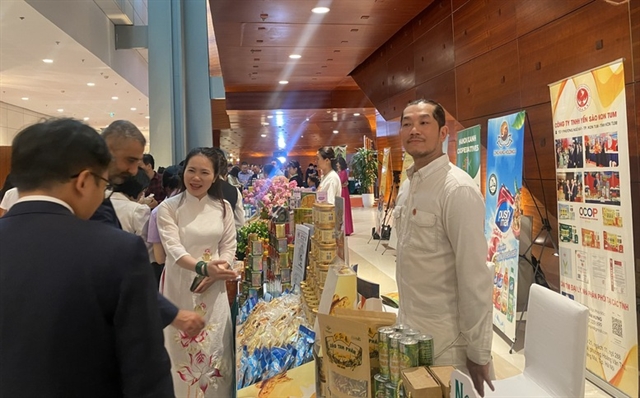 |
| A large volume of Vietnam’s agricultural and food products meets food safety and hygiene standards compatible with Halal certification. Photo baochinhphu.vn |
Fourth, elevate F&B and pioneer green halal fashion. Việt Nam already exports coffee, cashews and seafood but must move beyond raw commodities into higher-value halal innovations such as functional beverages, plant-based proteins and certified nutraceuticals.
At the same time, Việt Nam can transform its apparel sector. Modest fashion is growing rapidly and combining Shariah compliance with ESG principles opens the door to green halal fashion.
Việt Nam’s sustainable bamboo textiles, which are naturally antibacterial and environmentally friendly, also align closely with Islamic values.
Fifth, integrate halal-friendly tourism and cultural experiences. As Bắc Ninh builds green, ethical infrastructure, it can also welcome more international visitors. As the cultural cradle of the Red River Delta, Bắc Ninh can expand halal tourism through Muslim-friendly hotels, prayer facilities and halal dining. Visitors can experience ancient pagodas, craft villages and the world-renowned Quan họ folk singing in a welcoming, eco-friendly environment.
The path forward is clear. Businesses must treat halal not as a compliance checkbox but as a competitive advantage. The next decade of the halal market will be defined by inclusivity, innovation and trust, areas where Việt Nam can excel.
Việt Nam has the technology in Bắc Ninh, the agricultural wealth across its regions, the sustainable materials in its forests and the warmth of its hospitality. Early movers will capture significant premiums in a market where ethics and quality converge.
But we must remember: halal is not just a certificate. It is a total quality management system covering the entire supply chain. Halal is not merely permissible; it represents the future of ethical global commerce. VNS
Economy
 Economy
 Economy
 Economy
 Economy
 Economy
 Economy
 Economy
 Economy
 Economy
 Economy
 Economy
 Economy
 Economy
 Economy