 Opinion
VR experience brings history to life for Hà Nội students
1.
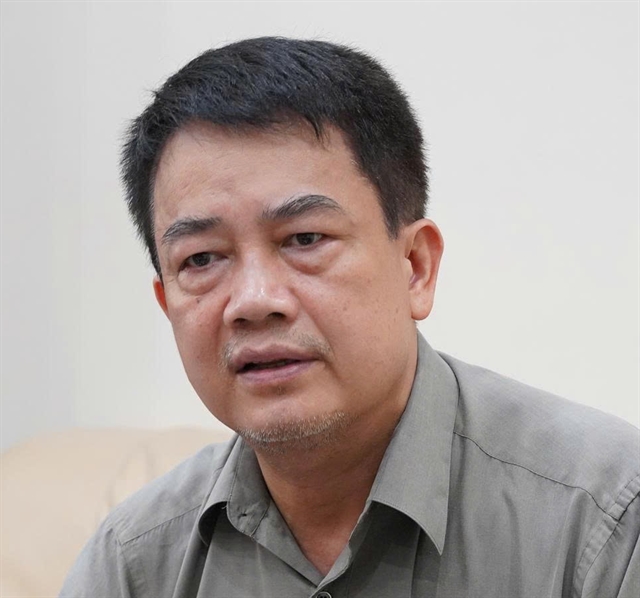 |
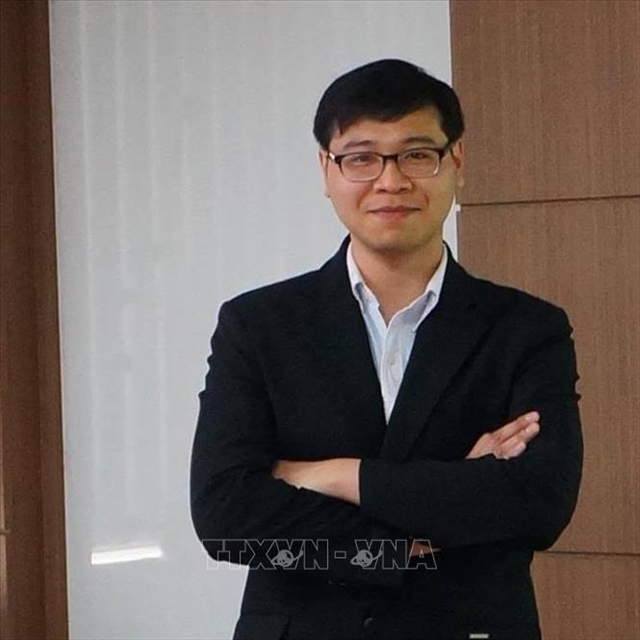
| Dr Trần Chí Thành, Director of the Việt Nam Atomic Energy Institute (VinAtom). Photo vtcnews.vn |
Dr Trần Chí Thành, Director of the Vietnam Atomic Energy Institute (VINATOM), speaks to Việt Nam News reporter Thu Vân about the country’s nuclear energy development orientation, preparations for the Ninh Thuận 1 and 2 projects, and the long-term strategy for building a safe and sustainable nuclear power programme.
The Vietnam Atomic Energy Institute was among the first units assigned by the State to study and propose nuclear power development in Viet Nam. Could you briefly outline the Institute’s achievements in this field?
The Vietnam Atomic Energy Institute, or VINATOM, is the national specialised research institute in the field of atomic energy. This field covers not only nuclear power, but also the application of nuclear science and technology in different fields, namely medicine, agriculture, industry and natural resources.
Việt Nam’s nuclear journey dates back to the 1950s. In July 1955, during an official visit to the Soviet Union, President Hồ Chí Minh visited the world’s first nuclear power plant in Obninsk. Following that milestone, outstanding Vietnamese students were sent to study nuclear physics in the Soviet Union. Those early generations of scientists laid the foundation for the development of the nuclear sector.
VINATOM was formally established in 1976, building on the Đà Lạt Nuclear Research Institute. The Đà Lạt research reactor, reconstructed and upgraded with strong support from the then Soviet Union, resumed operation in 1984 and became the cornerstone for nuclear science and technology in Việt Nam.
In the late 1990s, nuclear power development was re-examined. Together with the Institute of Energy under the Ministry of Industry and Trade, we carried out nationwide site surveys in line with IAEA guidelines. From 2002 onwards, the Pre-Feasibility Study (Pre-FS) and site assessments were conducted. Various reactor technologies, including PWR, BWR and PHWR, were studied, analysed and evaluated.
In 2009, the National Assembly approved two Nuclear Power Plant (NPP) projects at Ninh Thuận 1 and Ninh Thuận 2. Between 2010 and 2016, VINATOM undertook in-depth research on technology and safety, established criteria for the selection of reactor designs and assessed advanced designs such as VVER1200 (Russia) and AP1000 (US).
Although the programme was suspended from 2016 to 2024, we continued to strengthen capacity in advanced reactor technologies and Small Modular Reactors, or SMRs. Since the programme resumed in late 2024, we have intensified training, consolidated expert teams and prepared key research tasks to support the Ninh Thuận projects and potential future SMR deployment.
What are your views on Việt Nam’s nuclear power programme? In your opinion, what is the most important factor for the success of the Ninh Thuận projects and the long-term programme?
Nuclear power is a global trend. It provides large-scale and stable electricity without CO2 emissions, while enhancing energy security and supporting the green transition and advanced technologies such as artificial intelligence and big data.
In my view, Việt Nam’s decision to resume the nuclear power programme is both sound and strategic.
The most important factor for success is human resources. Nuclear power cannot be developed in a fragmented manner. It must be implemented under a unified national plan directed by the Government.
The programme should rest on three pillars. First, project owners must construct nuclear plants in strict compliance with quality standards and under international supervision. Second, there must be a complete legal and regulatory framework, supported by a competent and independent safety authority. Third, a long-term Research and Development (R&D) programme is required to provide sustained technical support.
Across all three pillars, qualified technical and managerial personnel are decisive.
The Institute has been assigned to provide technical support for nuclear power development. What does this involve and how has the Institute prepared for this role?
VINATOM focuses on research in nuclear technology and safety. We have established research groups in reactor physics, thermal hydraulics and safety analysis.
In addition, other specialised groups are essential for sustainable nuclear power development. These include nuclear physics, radiation safety, Non-Destructive Testing (NDT), nuclear fuel, materials science, chemical processing, reactor control, radioactive waste management, radiation monitoring and dispersion modelling.
We have also been tasked with building technical support capacity for the nuclear regulatory body. At present, while Viet Nam is lacking of capable organisations in technical support, VINATOM is prepared to undertake this responsibility in coordination with the Vietnam Agency for Radiation and Nuclear Safety (VARANS), while ensuring independence from project owners. In the future, we hope more institutions will develop sufficient expertise to support the regulatory authority.
EVN is responsible for Ninh Thuận 1 and PVN for Ninh Thuận 2. What long-term cooperation does the Institute have with these two groups?
We are maintaining active cooperation with both the Electricity of Viet Nam (EVN) and PetroVietnam (PVN).
With EVN, we are discussing tasks related to Ninh Thuận 1, including site evaluation and assessment of the VVER1200 design proposed by Rosatom. We are ready to assign experts to work closely with EVN’s project management unit.
One current challenge for Việt Nam is that we are lacking experts in Russian safety analysis codes and simulation tools, as our researchers have previously worked mainly with Western systems. Soon, Việt Nam will have to review the VVER1200 safety analysis report, which will be conducted using only Russian codes. That will be a difficult task for the Vietnamese nuclear regulator.
With PVN, we have organised introductory training courses on nuclear energy and plan to provide more advanced training, along with consultancy on technology and safety evaluation. Cooperation may expand once PVN confirms its technology partner. We are also discussing radioactive waste management and the localisation of nuclear equipment manufacturing.
The Government has allowed private participation in small modular reactor projects. What is the Institute’s orientation regarding SMR development in Việt Nam?
SMRs represent a promising global trend in nuclear technology. In recent years, we have studied SMRs in cooperation with the IAEA and several countries.
However, SMRs remain emerging technologies and have not yet been commercialised. Previously, the countries leading SMR development already possess mature nuclear industries and have invested 10 to 15 years in design and licensing.
If Việt Nam seeks to develop its own SMR, we must first establish a sound development plan, a clear design concept and conduct comprehensive safety analysis and licensing procedures. Long-term fuel supply for future SMRs is also of paramount importance. Only then can we move towards deployment, in partnership with enterprises, based on thorough assessments of safety, economic viability and domestic manufacturing capability.
If SMR technology is imported, the approach will depend on the partner. In that case, Việt Nam could gradually join the supply chain, starting with auxiliary equipment.
We are open to cooperation with enterprises, but all efforts must begin with technology research and rigorous safety evaluation.
Many overseas Vietnamese experts wish to contribute to the nuclear power programme. Does the Institute have plans to invite them? What are the advantages and challenges?
High-quality experts are vital to the success of the Vietnam Nuclear Power Programme.
VINATOM always seeks to attract talented professionals and young researchers for advanced training in nuclear power. However, recruitment depends on State mechanisms and funding. At present, we do not yet have a specific large-scale plan to invite overseas experts.
As a public research institute, we face challenges in offering competitive salaries and financial conditions. Retaining talented staff is difficult when other organisations can provide more attractive remuneration. I hope these constraints will be addressed in line with the Party’s direction on breakthroughs in science, technology and innovation.
What about training human resources for nuclear energy?
If science is to take off, Việt Nam must fundamentally reform its management mindset. Greater autonomy should be granted, and training for young researchers should be fully supported.
Retaining talent and creating motivation for scientists remains a major challenge. Limitations in salary levels, training mechanisms and financial management are invisible barriers that constrain scientific and technological development, especially in foundational fields.
Although salaries at the Institute are slightly higher than in some basic science sectors, they are still insufficient for a stable life in major cities. In the past, a newly recruited staff member with a salary coefficient of 2.34 earned around VND5 million per month. This has now increased to VND7 to 8 million, but such a level remains very low for living in Hà Nội.
The low basic income compels scientists to seek additional sources of earnings. While VINATOM has a development fund to provide supplementary support, this funding is not stable and cannot serve as a long-term solution.
To build a strong workforce, I propose a pyramid model of training. First, broad based training should be provided to create a solid human resource foundation capable of supporting all stages of research and technology development. From this broad base, the most capable and committed individuals can then be selected for advanced and specialised training at higher levels.
To achieve cutting-edge technology, there must be a solid foundation in disciplines such as chemistry, mechanical engineering, automation, nuclear science and materials science. Without strong foundational sciences, an advanced reactor technology/design cannot be developed. These fields must be systematically and consistently invested in.
As a manager, I wish to have mechanisms that allow higher salaries to encourage young and dynamic staff. However, financial regulations limit such flexibility. Even as Director of a major institute, I do not have full autonomy in allocating funds to staff. Procedures remain rigid, and decision-making is constrained by multiple approval steps.
Scientific productivity and efficiency, in my view, stem from collaboration, teamwork and management by clear objectives, accompanied by a reasonable degree of financial autonomy. When institutions are entrusted with specific missions and granted flexibility in the use of funds, they can select capable personnel and offer appropriate remuneration.
Paying a high salary to one individual without comprehensive institutional reform may create internal disparities. Policymakers should carefully study the experience of developed countries to establish a coherent mechanism that is both effective and compatible with Việt Nam’s context.
Encouraging science and technology must go hand in hand with improved remuneration and a flexible, synchronised management framework. These are prerequisites for building an environment in which leading scientists can grow and contribute fully to national development. VNS
Opinion
 Opinion
 Opinion
 Opinion
 Opinion
 Opinion
 Opinion
 Opinion
 Opinion
 Opinion
 Opinion
 Opinion
 Opinion
 Opinion
 Opinion