 Opinion
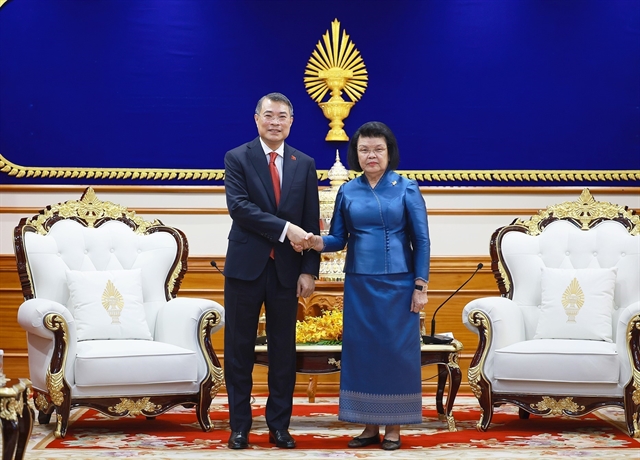
Vietnamese Prime Minister meets Cambodian National Assembly President
1.
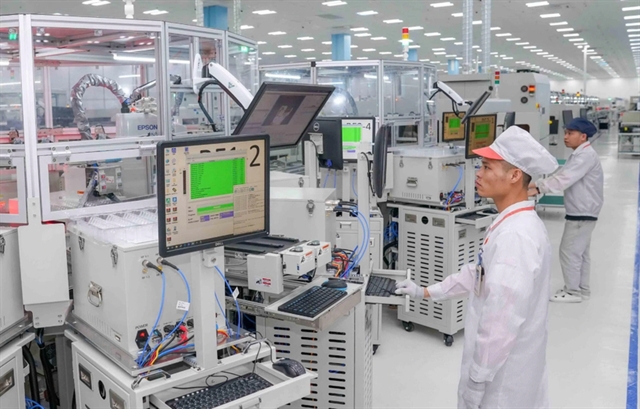 |
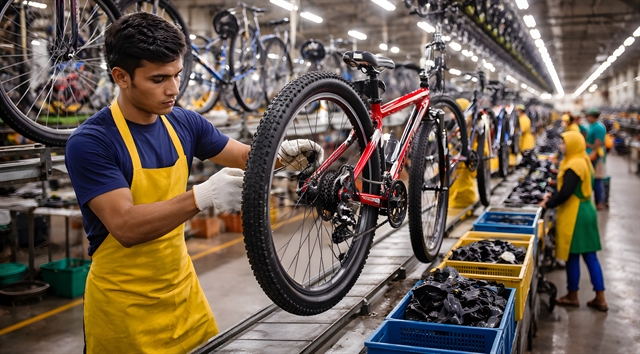
| Today, Việt Nam has developed an increasingly modern and balanced economic structure spanning industry, services and agriculture. Photo thanhnien.vn |
HÀ NỘI – Global geopolitical turbulence is an enduring feature of the modern world. Yet for Việt Nam, a confluence of favourable conditions and untapped potential is emerging, opening the door to sustained, high-quality growth.
This moment may well constitute a historic opportunity for the country to advance towards high-income status.
Việt Nam at a decisive juncture
According to Nguyễn Việt Hùng, former dean of the Faculty of Party Building and Hồ Chí Minh Ideology at the HCM City Cadre Academy, the nearly four decades since Đổi mới (Renewal) have delivered remarkable economic achievements.
Việt Nam has not only emerged from a socio-economic crisis, but has also established itself as one of the most dynamic economies in Asia and globally. Despite periods of severe global economic downturn, the country has consistently maintained positive growth, at times achieving prolonged phases of rapid expansion while preserving the vitality of its economy.
Today, Việt Nam has developed an increasingly modern, balanced economic structure spanning industry, services and agriculture. It has begun to adopt new development models aligned with advanced industrialisation and is making significant strides in the global digital transformation.
These advances, underpinned by innovation and new sources of capital, are the result of a long process of accumulation and development, positioning Việt Nam to seize opportunities as the world enters a new era.
Hùng said it is a pivotal moment for Việt Nam to transition from quantitative growth to qualitative advancement, building momentum for the next two decades and striving towards its long-term centenary goals of becoming a prosperous and powerful nation.
Dr Trần Quang Thắng, director of the HCM City Institute of Economics and Management, agreed, noting that this may represent a unique window of opportunity.
In his view, Việt Nam’s golden population structure, characterised by a large, youthful workforce, offers a competitive edge over ageing economies such as Japan and the Republic of Korea. However, this demographic advantage will not last indefinitely.
The current window for global supply chain realignment is likely to be short-lived. Việt Nam’s favourable geopolitical position is rare, particularly amid intensifying regional competition. Failure to capitalise on these advantages could see other nations surge ahead, widening the development gap.
Laying foundations for strength
Hùng further argued that Việt Nam is now well positioned to achieve its ambitions, citing key factors such as the Party’s leadership, national unity and the alignment of favourable timing.
He noted that the country has made substantial institutional preparations, including a series of seven major resolutions addressing innovation, science and technology, private sector development, energy, social welfare and breakthroughs in education and training.
Thắng added that the Politburo’s so-called 'four-pillar' resolutions are not merely strategic guidelines, but are actively generating new engines of growth. These reforms are enabling more substantive and higher-quality economic expansion through concrete mechanisms.
For instance, Resolution 68 marks a significant shift in thinking about the private sector, notably by explicitly recognising the role of entrepreneurs in national governance, an unprecedented step in Việt Nam’s policy framework.
Confidence to shape the future
According to Võ Đại Lược, former director of the Institute of Việt Nam and World Economy, the country still possesses considerable room for growth despite existing challenges.
Crucially, Việt Nam has identified institutional constraints as a principal bottleneck for breakthrough development. With reform-oriented leadership under Party General Secretary Tô Lâm, it now has a significant opportunity to undertake far-reaching institutional reforms.
Removing entrenched barriers would enable all sectors of the economy to flourish, unlocking what may be the most critical source of sustained high growth in the years ahead.
Thắng agreed, stressing that steadfast leadership provides powerful momentum not only for the economy, but for the nation as a whole. Broad social consensus, meanwhile, is facilitating the mobilisation of maximum resources in pursuit of shared national objectives. VNA/VNS
Opinion
 Opinion
 Opinion
 Opinion
 Opinion
 Opinion
 Opinion
 Opinion
 Opinion
 Opinion
 Opinion
 Opinion
 Opinion
 Opinion
 Opinion