 Opinion
Vietnamese community in China urged to stay united, contribute to homeland
1.
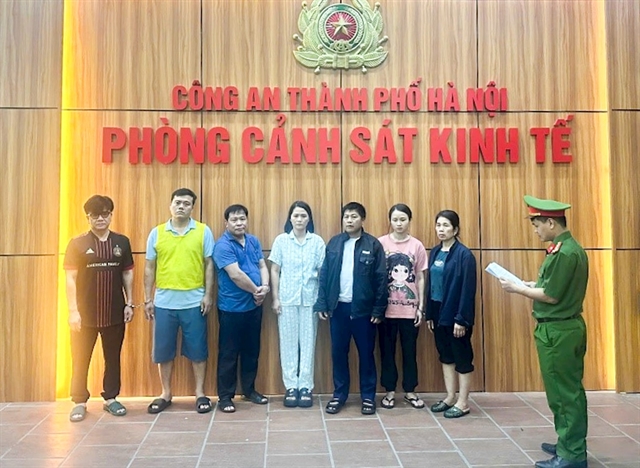 |
| Seven of the eight suspects linked to the contaminated pork ring in custody. — Photo hanoimoi.vn |
Nguyễn Cúc
HÀ NỘI — The news that nearly 300 tonnes of meat from diseased pigs may have made its way into markets and even school kitchens in Hà Nội has caused widespread outrage.
Eight people have been prosecuted in connection with the case. But beyond the anger and headlines, a quieter, more troubling question emerges: how does food that is clearly unsafe manage to pass through so many checkpoints and still end up on people’s plates?
It would be easy to treat this as a story about a handful of bad actors. And yes, those involved appear to have knowingly broken the law and put public health at risk for profit. But focusing only on them misses the bigger picture. When unsafe food can move through the system this easily, something deeper is not working.
Food safety is supposed to rest on layers of control: inspection, quarantine, monitoring of slaughterhouses and checks during transport and distribution. Each step is meant to catch problems early, long before products reach consumers.
On paper, it is a solid system. In reality, this case suggests that the lure of profit can erode its integrity, turning safeguards from real barriers into little more than formalities.
In the aftermath of incidents like this, attention often turns to schools. After all, contaminated food ending up in school meals is particularly alarming. But expecting schools to act as a final checkpoint is unrealistic.
They are buyers in the system, not regulators. They can check documents, choose suppliers carefully and keep records. What they cannot do is uncover violations that have already slipped past professional inspection bodies.
Shifting responsibility onto schools risks blurring where accountability really lies. The problem begins much earlier: at the stages where food is inspected, certified and allowed into circulation. That is where the system either works or fails.
Việt Nam does not lack food safety regulations. If anything, the legal framework has become more detailed over time. The issue is not the absence of rules but how they are carried out.
Enforcement is not always consistent. Responsibilities are not always well coordinated. And when violations happen despite multiple layers of oversight, it raises questions about how seriously those responsibilities are taken.
Improving that situation is not simply about adding more rules. It means making enforcement more effective, more proactive, less predictable and less reliant on routine checks that can be anticipated or worked around.
It also means accountability has to go beyond those caught at the end of the chain. If there are gaps in supervision, those gaps need to be addressed directly.
At the heart of all this is trust. Consumers trust inspection stamps and certifications that they cannot verify themselves. Schools trust that approved suppliers meet safety standards. When that trust is misplaced, or worse, exploited, it does not just break confidence in a single product or supplier. It weakens confidence in the system as a whole.
Food safety, especially in schools, cannot depend on reacting after something goes wrong. Nor can it rely on paperwork and assurances designed to reassure rather than protect. It has to start at the source, with controls that are strong enough and credible enough to stop unsafe products from entering the market in the first place.
This case should not be seen as an isolated incident. It is a warning sign. Not just about one network, but about the vulnerabilities that allowed it to operate.
Tightening regulations may be the most visible response. But the real challenge is making sure those regulations mean something in practice.
Because when the system works, risks are stopped early, often invisibly. When it does not, the consequences are immediate and they land, most worryingly, on those who have the least control over what ends up on their plate. — VNS
Opinion
 Opinion
 Opinion
 Opinion
 Opinion
 Opinion
 Opinion
 Opinion
 Opinion
 Opinion
 Opinion
 Opinion
 Opinion
 Opinion
 Opinion