 Life & Style

Kellogg-HKUST EMBA Ranked No. 1 in the World in the Financial Times Executive MBA Ranking 2026
1.
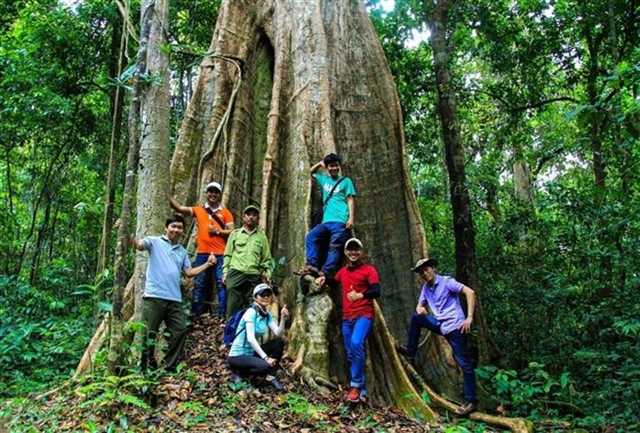 |
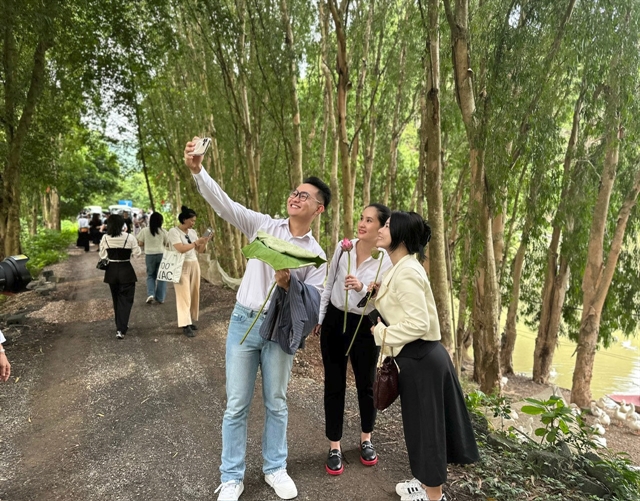
| Visitors explore the primary forest at the Đồng Nai Nature and Culture Reserve. — VNA/VNS Photo |
HCM CITY — Digital transformation is bringing profound changes to the way cultural heritage is preserved, promoted and utilised.
Where heritage once existed primarily within physical spaces and the communities that owned it, digital technology has now enabled it to transcend the limits of space and time, creating new opportunities for cultural heritage to become part of the value chain of cultural industries.
Heritage as a resource for cultural industries
Cultural heritage plays a foundational role in the formation and development of cultural industries, as it preserves systems of values, historical memory, folk knowledge and community identity.
Many countries regard cultural heritage as a form of “soft capital” for developing cultural industries and strengthening national branding.
South Korea has successfully incorporated traditional cultural elements into film, music and fashion, helping to create the globally recognised Hallyu wave.
Japan has built successful manga and anime industries by drawing on its history and national culture.
Across Europe, museums and historical sites have been transformed into attractive cultural destinations, making significant contributions to the creative economy.
These examples demonstrate that cultural heritage is an intrinsic resource for building soft power and enhancing national competitiveness in the creative economy.
According to Associate Professor Dr Lâm Nhân, Rector of HCM City University of Culture, Việt Nam possesses a rich system of tangible and intangible cultural heritage, including thousands of traditional festivals, performing arts forms, folk beliefs, indigenous knowledge systems, traditional crafts and distinctive cultural spaces.
These assets constitute a valuable and unique resource, providing creative inspiration for the development of cultural industries. They can be transformed into artistic productions, films, creative design projects, cultural tourism products, digital content and modern media offerings.
When developed through creativity, technology and contemporary market mechanisms, they can generate both cultural and economic value.
Digital transformation is fundamentally reshaping how cultural heritage is preserved, promoted and exploited.
While heritage was once largely confined to physical spaces and local communities, digital technologies have expanded the possibilities for storing, recreating and disseminating heritage beyond geographical and temporal boundaries.
Technologies such as digitisation, virtual reality, artificial intelligence, big data and digital media platforms are opening up new opportunities for cultural heritage to participate in cultural industry value chains.
Digital transformation also enables local heritage to access global markets.
A traditional festival, a folk art form or a body of indigenous knowledge can quickly gain international visibility when effectively promoted through digital platforms, becoming a source of inspiration for creative products and contributing to the development of a national cultural brand.
Digital technology further extends the lifespan of heritage through continuous reinterpretation and adaptation in contemporary life. Heritage is no longer a static asset but can be transformed into new cultural products suited to modern social demands.
However, the digitisation and commercial exploitation of heritage must also safeguard cultural authenticity and avoid reducing heritage to superficial commercial products that diminish its deeper identity and meaning.
Dr Nguyễn Anh Vũ, Editor-in-Chief of Văn Hóa (Culture) newspaper, said digital transformation is fundamentally changing the ways culture is created, produced and consumed.
A well-digitised heritage asset can become a valuable resource for education, tourism, media, cinema, design and numerous other sectors.
Creative ideas, when combined with technology, can rapidly evolve into commercially valuable products.
Digital technologies not only expand markets but also create new business models, enabling cultural products to reach global audiences more efficiently and at lower cost.
Many heritage digitisation initiatives have already delivered positive results. Online museums, virtual reality tours, digital exhibitions, AI-powered audio guides and 3D heritage reconstruction projects are attracting growing public interest, particularly among younger generations.
Digital spaces also provide opportunities for traditional cultural values to be retold through contemporary forms.
Folk tales can become animated films, historical legends can inspire video games, and traditional folk songs can be reimagined on digital music platforms.
Such creative reinterpretation ensures that heritage remains relevant and alive in the present rather than being confined to the past.
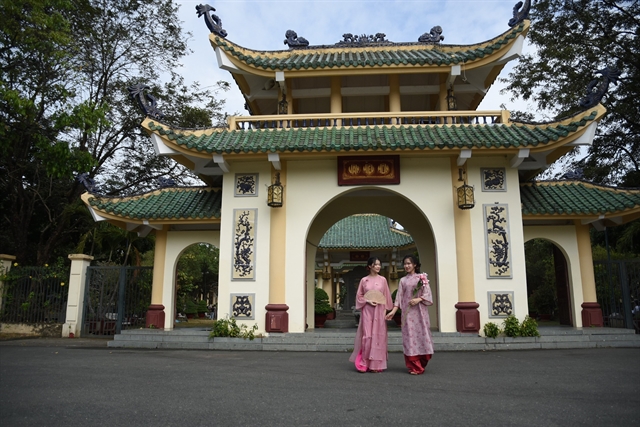 |
| Việt Nam still faces significant challenges in transforming heritage into a genuine driver of development. — VNA/VNS Photo |
Digital transformation as an endogenous driver of growth
According to Associate Professor Dr Lâm Nhân, although cultural heritage is widely recognised as an important resource for developing cultural industries, Việt Nam still faces significant challenges in transforming heritage into a genuine driver of development.
Heritage is still primarily viewed as something to be preserved, protected or restored, while its role as cultural capital, creative material and a resource for the creative economy has not received sufficient attention.
As a result, many heritage assets remain disconnected from contemporary life and cultural markets.
Việt Nam has yet to establish a comprehensive cultural industry ecosystem built on heritage foundations.
Connections among artisans, heritage-practising communities, creative enterprises, technology providers and markets remain fragmented.
Many new cultural products continue to operate on a small scale, lacking branding strategies, distribution platforms and fully developed value chains encompassing creation, production, promotion and cultural consumption.
Consequently, the economic potential and soft power value of heritage remain underutilised.
Another notable challenge is the risk of commercialisation and distortion during the exploitation process.
In the context of rapidly expanding markets and digital media, some heritage-related activities have prioritised entertainment value and short-term popularity at the expense of symbolic depth and spiritual significance.
Human resources and technological capacity also remain major constraints. Cultural industries require professionals who possess knowledge of traditional culture alongside creativity, technological expertise and market-oriented thinking. However, the supply of such interdisciplinary talent remains limited.
Meanwhile, technological infrastructure, digital databases and cultural innovation support platforms in many localities have yet to develop in a coordinated manner, reducing the effectiveness of efforts to preserve and disseminate heritage values in digital environments.
To ensure that cultural heritage truly becomes an endogenous foundation for the development of Việt Nam’s cultural industries amid digital transformation and international integration, Dr Lâm Nhân stressed the need for comprehensive reforms in mindset, institutions, resources and technology.
He argued that preservation should move beyond a static approach towards a model of preservation through development. Heritage conservation can only be sustainable when heritage continues to exist within communities, is creatively renewed and generates new value relevant to contemporary society.
At the same time, a heritage-based cultural industry ecosystem should be established, linking heritage communities, artisans, creative enterprises, educational institutions, technology providers and markets.
Only through the creation of integrated value chains spanning creation, production, promotion and cultural consumption can heritage be effectively transformed into economic value and national soft power.
Dr Nguyễn Anh Vũ noted that cultural industries should not be viewed merely as an increase in the number of cultural products. Rather, they should be understood as a development ecosystem in which creativity, technology, capital, markets and governance interact to generate new value.
“When a product preserves the essence of national culture, meets market demand and remains internationally competitive, culture can truly become a resource for development,” he said.
Cultural experts also noted that Resolution No. 80-NQ/TW reflects a new stage in the Party’s thinking on culture in general and cultural industries in particular.
The resolution sets a target for cultural industries to contribute around 7 per cent of GDP by 2030 and to become one of the country’s pillars of sustainable development by 2045.
To achieve these goals, experts said, promoting heritage values in the digital environment is not only a task for the cultural sector but also a strategic mission for the entire political system. — VNS
Life & Style
 Life & Style
 Life & Style
 Life & Style
 Life & Style
 Life & Style
 Life & Style
 Life & Style
.JPG) Life & Style
Life & Style
 Life & Style
 Life & Style
 Life & Style
 Life & Style
 Life & Style
 Life & Style