 Life & Style

HKTDC Hong Kong International Lighting Fair (Autumn Edition) and Hong Kong International Outdoor and Tech Light Expo Set to Illuminate this October
1.
|
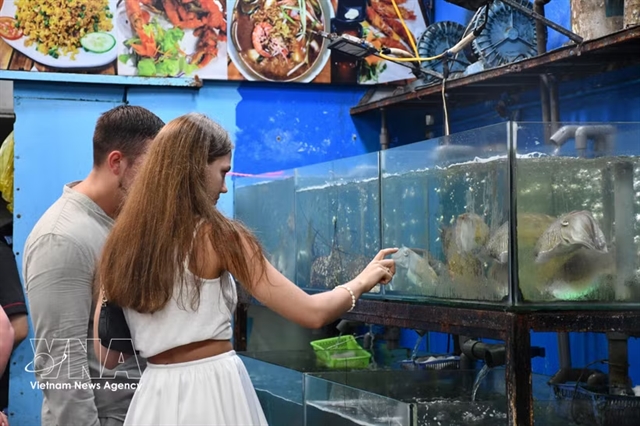
| Russian tourists buy fresh seafood in Khanh Hoa province. VNA/VNS Photo |
MOSCOW — Việt Nam welcomed a record 690,000 Russian tourists last year and 742,000 in the first half of this year, cementing Russia as its third largest source market after China and South Korea.
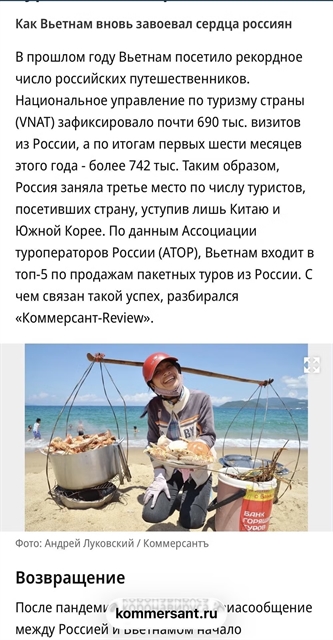
Kommersant-Review, an economic and trade publication, pointed to several factors behind the boom.
First, air connectivity soared. For years, travellers faced limited direct flights and had to rely on transit routes to reach Vietnam’s beach resorts. That changed in 2025 when Việt Nam nam Airlines launched direct Moscow-Hà Nội flights, Aeroflot started service to Nha Trang, and tour operators revived charters. Russian carriers also added new routes to resorts.
Intourist, a leading Russian tour operator, reported a tenfold surge in Vietnam tour sales last year, with demand this year up 231 per cent year-on-year.
Russian Express said 2025 bookings jumped 294% from 2024. Summer trips made up 34.5 per cent of its Việt Nam sales. Demand peaks in winter at southern resorts around Lunar New Year and Christmas, then shifts to northern resorts in July and August.
Ostrovok, a lodging booking platform, said Việt Nam bookings nearly doubled, with summer up 85 per cent and September-December reservations up 52 per cent year-on-year.
Elena Shelekhova, press chief at OneTwoTrip, attributed a 25 per cent jump in demand for Việt Nam to the broader flight network, pushing the country’s share to 3.5 per cent.
Second, Việt Nam remains one of Asia’s most affordable getaways, a core competitive edge. Intourist pegs the average holiday cost at around US$1,200 per person. Russian Express offers a seven-night package with airfare for two and a four-star hotel starting at 153,000 RUB ($1,860) in summer, 158,000 RUB in autumn, and 179,000 RUB for New Year holiday. PAC Group prices a similar trip at about 150,000 RUB.
Russian Express cited quality rooms, services, beaches, excursions and solid infrastructure.
On price, Việt Nam’s major rivals are Thailand and China. Ostrovok put Việt Nam’s average nightly rate at 6,300 RUB, well below Thailand’s 8,900 RUB, Indonesia’s 9,000 RUB and Sri Lanka’s 10,000 RUB.
Shelekhova said Việt Nam undercuts its Asian rivals, with OneTwoTrip users staying an average 5.6 days, longer than 5.1 in Thailand and 3.4 in China, meaning more vacation time for less cash.
Yet, Việt Nam still trails Thailand on hotel inventory. Phú Quốc resorts can sell out months before peak winter season, and booking confirmations sometimes lag. Intourist cautioned that popular spots could see shortages during high season, even as the hotel sector expands.
|
| An article on Kommersant-Review. Photo screenshot |
Another trend is that travellers across Southeast Asia are booking earlier than ever, up to seven or eight months ahead, to snag early-bird deals. This is evident for Đà Nẵng summers and Phú Quốc’s 2026-27 season. Intourist began taking Lunar New Year bookings in late April.
Experts said Russian families make up the core tourist group, staying an average of 10 nights. Interest is broadening beyond beach stays to sightseeing combos, with strong appetite for Vietnamese culture, cuisine and natural attractions.
Nha Trang tops the list for its infrastructure and accommodation range. Cam Ranh, Phú Quốc, Mũi Né and Đà Nẵng are in high demand. Hà Nội and HCM City draw independent travellers.
The Association of Tour Operators of Russia (ATOR) expects Russian demand to keep surging in the second half. Russian Express sees a highly positive outlook, citing easy transport, a variety of resorts and limited seasonality.
Intourist estimated that Russian visitors could hit around 1 million this year, potentially setting an all-time record. VNA/VNS
Life & Style
 Life & Style
 Life & Style
 Life & Style
 Life & Style
 Life & Style
 Life & Style
 Life & Style
 Life & Style
 Life & Style
 Life & Style
 Life & Style
 Life & Style
 Life & Style
 Life & Style