 Life & Style

ECO Expo Asia opens at Hong Kong AsiaWorld-Expo in late October
1.
|
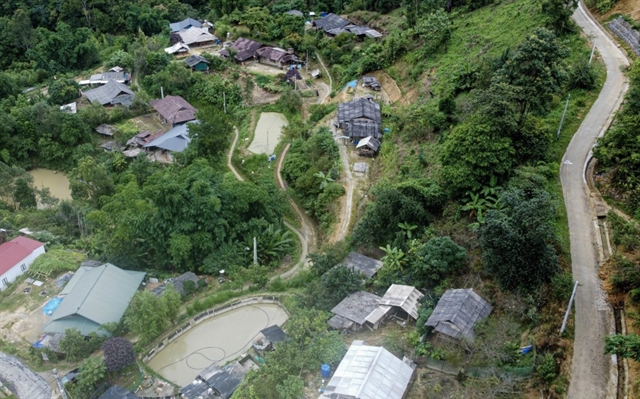
| The aerial view of Lồng Village. — Photo dienbientv.vn |
ĐIỆN BIÊN — Perched atop of the legendary Pha Din Pass, Lồng Village in Quài Tở Commune, Điện Biên Province, is emerging as a promising tourism destination, offering visitors a chance to discover its unique cultural heritage.
Surrounded by lush green mountains and shrouded in clouds all year round, the village boasts not only pristine natural landscapes but also a rich trove of traditional cultural values preserved by the local Mông community.
In recent years, Lồng villagers have chosen to retain what they already have, creating a distinctive appeal of their own. It is this simplicity, authenticity and unspoilt beauty that is helping put the village on Điện Biên’s emerging tourism map.
Peaceful land
The road to Lồng Village winds through the famed bends of Pha Đin Pass. As the road climbs higher, the landscape opens up, revealing lush coffee and macadamia-covered hills stretching into the distance.
Wisps of white cloud drift across the mountainsides, creating a scene that is both majestic and dreamlike.
Nestled amid this poetic setting are the wooden houses of the Mông people, barely visible through the early morning mist. As the sun begins to rise, cooking smoke drifts across the village.
The crowing of roosters, children’s lively chatter and the steady sound of corn being ground blend together create the simple rhythm of life in this highland village.
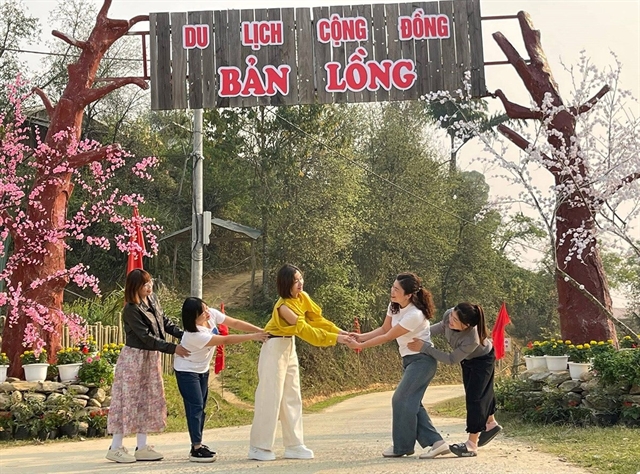
|
| Tourists take photos at the entrance of Lồng Village. — Photo baovanhoa.vn |
Before reaching the heart of the village, visitors will come across Lồng Waterfall, just over 100m from the main road. Crystal-clear water winds through the canopy of an old-growth forest before cascading over tiers of dark rock, sending white spray into the air.
The sound of rushing water mingles with birdsong to create a natural symphony, offering a sense of calm and relaxation to all who visit.
Besides the waterfall, Lồng Village is home to a number of other attractions, including Hàm Rồng Cliff or Tiger Cave.
Its cool climate year-round, together with successive seasons of apricot, plum, pear, peach and wild apple blossoms, gives the village a distinctive beauty in every season.
Preserving Mông culture
Lồng Village is home to 116 households with a population of 552, all of them Mông people.
While living conditions are gradually improving, residents have preserved almost intact their traditional cultural values, from house architecture, clothing and language to festivals and long-established handicrafts.
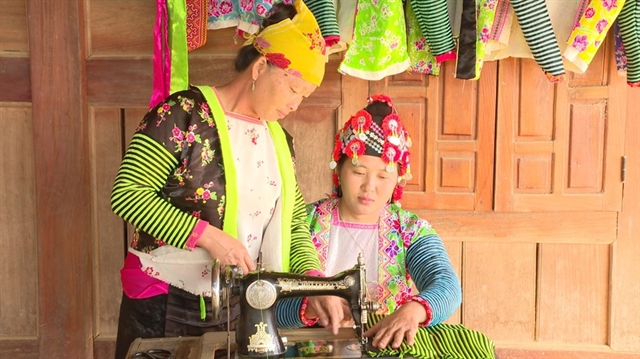
|
| Mông women in Lồng Village sew tradition costumes. — Photo vietnamtourism.gov.vn |
In the mornings, many families still maintain the tradition of grinding maize with stone mortars as they prepare meals for a full day of work. Mông women sit on their house porches, painstakingly embroidering intricate patterns onto hemp fabric. Each brocade piece is a testament to their skilful hands, patience and a wealth of cultural knowledge passed down through generations.
Visitors can also explore traditional wooden houses, learn about local customs and traditions, sample distinctive Mông dishes, and immerse themselves in the community’s vibrant cultural life.
As night falls, the sound of the Mông flute echoes through the mountains and forests. Traditional dances and folk activities such as pao ball throwing and making bánh dày (round glutinous rice cakes), along with folk singing and dancing performances by the village’s cultural troupe, offer visitors an authentic glimpse into local life and culture.
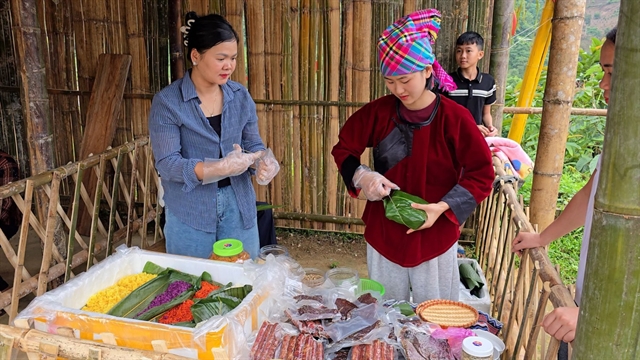
|
| Cuisine is one of Lồng Village’s distinctive appeals. — Photo quaito.dienbien.gov.vn |
Cuisine is another part of Lồng Village’s distinctive appeal. Simple dishes prepared with locally sourced ingredients capture the characteristic flavours of the highlands, combining rustic simplicity with rich taste.
Awakening community-based tourism
Lồng Village was officially recognised as a community-based cultural tourism destination of Điện Biên Province on March 28 and has opened to tourists since then.
This was not only a source of joy for more than 500 residents of the village, but also opened up a new development path for the locality.
Once a highland village whose residents relied mainly on agriculture, Lồng Village is now gradually building livelihoods around its existing cultural values and natural landscapes.
To realise this goal, the Centre for Financial Resource Development Support (CFRC) has partnered with the local authorities through a project to build capacity and promote digital technology applications among mountainous-area businesses, funded by The Asia Foundation.
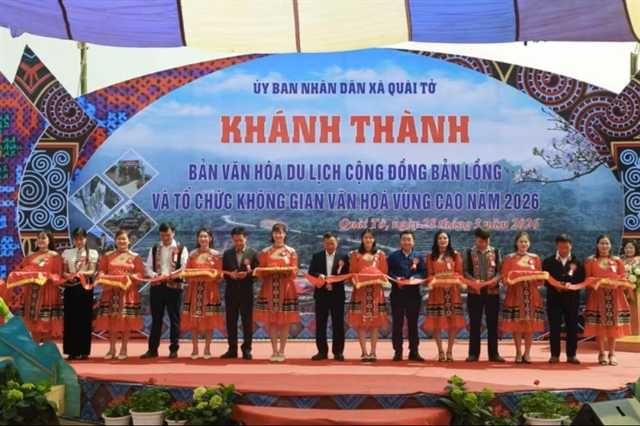
|
| The inauguration ceremony of Lồng community-based cultural tourism village. — VNA/VNS Xuân Tư |
Residents have received training in community-based tourism, homestay management, food preparation, receiving visitors, promoting their local image on digital platforms, and improving service quality.
Lồng Village now has several households operating homestays to meet visitors’ accommodation needs. The households work together to welcome and serve guests and introduce them to local cultural experiences, creating a relatively well-coordinated chain of tourism services.
In addition, the local arts troupe is always ready to perform for visitors, enriching the village’s tourism offerings.
Alongside efforts to improve service quality, infrastructure is also being upgraded step by step. The road connecting National Highway 6 to the village has been widened, while internal roads have been improved and signposts installed, making it easier for visitors to reach local attractions.
|
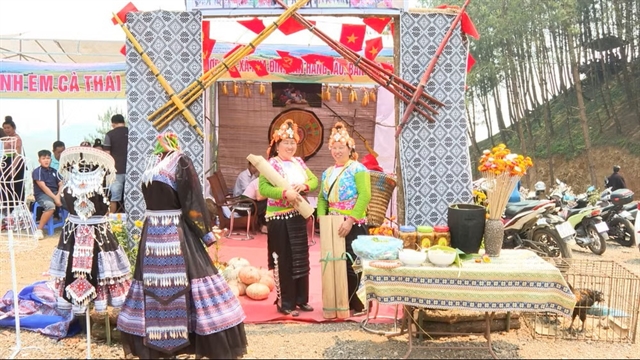
| Many villagers are involved in tourism activities. — Photo quaito.dienbien.gov.vn |
Notably, in its development, Lồng Village has not traded its cultural identity for growth. Traditional cultural values continue to be preserved and have become the 'soul' of its tourism products. Local residents understand that what keeps visitors coming back is not only the scenery, but also authentic experiences of Mông community life amid the majestic mountains.
Giàng A Dế, Secretary of the Quài Tở Commune Party Committee and Chairman of the Commune People’s Council, said: “Since opening to visitors, Bản Lồng has welcomed more than 100 groups, with over 1,000 visitors coming to explore and experience the village. This is a positive sign, affirming that community-based tourism is well suited to the locality’s strengths.
"The commune will continue developing Lồng into a model community-based tourism destination, creating sustainable livelihoods for local residents and gradually replicating the model in other villages with tourism potential.” — VNS
Life & Style
 Life & Style
 Life & Style
 Life & Style
 Life & Style
 Life & Style
 Life & Style
 Life & Style
 Life & Style
.png) Life & Style
Life & Style
 Life & Style
 Life & Style
 Life & Style
 Life & Style
 Life & Style