 Society

World Health Summit 2026: Berlin Becomes Global Meeting Point for the Future of Health
1.
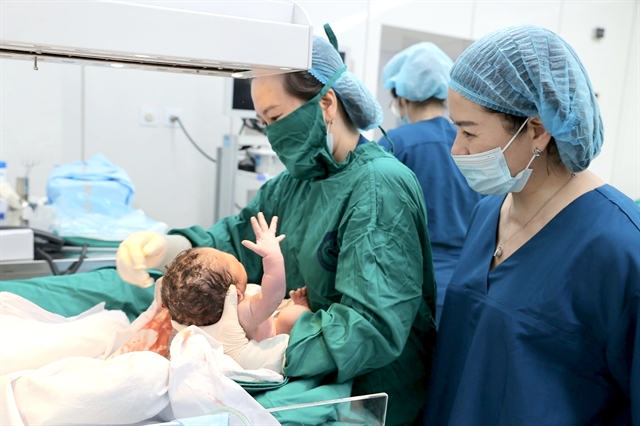 |
| A second facility of the National Hospital of Obstetrics and Gynaecology becoming operational not only helps ease the pressure on Facility 1 but also enables the hospital to introduce more specialised techniques and high-quality services. — VNA/VNS Photo Minh Quyết |
HÀ NỘI — Solutions ranging from vaccinations, screenings and early healthcare to the development of specialised techniques and emergency networks are gradually bringing high-quality medical services closer to the people.
In realising Politburo Resolution No. 72-NQ/TW, local health sectors are shifting decisively from treating diseases to proactively preventing them, while investing in and completing healthcare infrastructure and enhancing treatment capacity.
Breast cancer is currently the most commonly diagnosed cancer among Vietnamese women, with more than 24,500 new cases and approximately 10,000 deaths each year.
Notably, more than 60 per cent of cases are detected at an advanced stage – stages three and four – resulting in a five-year survival rate of only about 74 per cent, considerably lower than that in developed countries.
Cervical cancer also poses a challenge, as the proportion of women undergoing screening remains low, reaching only around 28 per cent among women aged 30–49.
There are also significant disparities between regions and population groups. The rate of HPV vaccination among young women is likewise only about 12 per cent.
The main reason is that Việt Nam does not yet have a unified national screening programme, while the proportion of women receiving regular screenings remains low.
Strengthening prevention
The National Action Plan on the Prevention and Control of Breast and Cervical Cancer for the 2026–2035 period aims to reduce the breast cancer mortality rate, gradually control cervical cancer and work towards its elimination.
From this year, the plan aims for 90 per cent of girls aged nine to 15 to receive the full course of HPV vaccination; 70 per cent of women aged 40–70 to undergo breast cancer screening; and 70 per cent of women aged 30–49 to undergo cervical cancer screening.
All provinces and cities are to develop their own action plans and gradually include screening services among those covered by health insurance.
To achieve these targets, the Ministry of Health is focusing on communication campaigns on screening and early detection; improving policies; strengthening inter-sectoral coordination; providing training and transferring technical expertise; and expanding remote consultation, examination and treatment.
These measures will improve access to cancer prevention and control services.
In addition to proactively preventing serious diseases, healthcare services must also respond to health problems that are becoming more prevalent in modern life, including refractive errors among children.
At the seminar “Solutions to improve vision in the modern era”, experts said that the increasing use of electronic devices for study, work and entertainment was causing myopia that affects children at younger ages and spreads rapidly.
Nguyễn Văn Huy, deputy director in charge of professional matters at the Việt Nam National Eye Hospital, said that myopia had become a major global public health concern.
In Việt Nam, the prevalence of refractive errors among children is approximately 51 per cent in Hà Nội and 75.6 per cent in HCM City. Nationwide, an estimated 3–5 million children aged five to 15 have refractive errors.
Experts recommend strengthening vision examinations and screening for schoolchildren; improving learning conditions; increasing the amount of time children spend outdoors; and instructing them to use electronic devices appropriately.
At the same time, coordination among the health and education sectors, schools and families is crucial for prevention, early detection and managing refractive errors.
In addition, a balanced diet, increased consumption of foods rich in vitamins A, C and E and omega-3 fatty acids, as well as regular eye examinations, are effective measures for the timely detection and correction of vision abnormalities.
Healthcare infrastructure
If disease prevention is the foundation for reducing the burden of illness, investment in infrastructure and medical equipment, together with the development of specialised techniques, is essential to enhancing treatment capacity and bringing high-quality medical services closer to the people.
On August 4, the second facility of the National Hospital of Obstetrics and Gynaecology officially began operations in Kiều Phú Commune, Hà Nội, helping expand examination and treatment capacity, reduce the workload at the first facility and create favourable conditions for developing specialised techniques.
The new facility is equipped with modern medical equipment and staffed by experienced doctors.
Initially, 300 beds have been put into use, with the facility expected to receive approximately 500 patients each day.
The 300-bed project has a total investment of nearly VNĐ1 trillion (US$38.2 million) from the State budget, together with approximately VNĐ200 billion ($7.6 million) in the hospital’s funding.
The second facility will gradually introduce techniques including the treatment of gynaecological cancers, foetal medicine, genetic and hereditary testing, and prenatal screening.
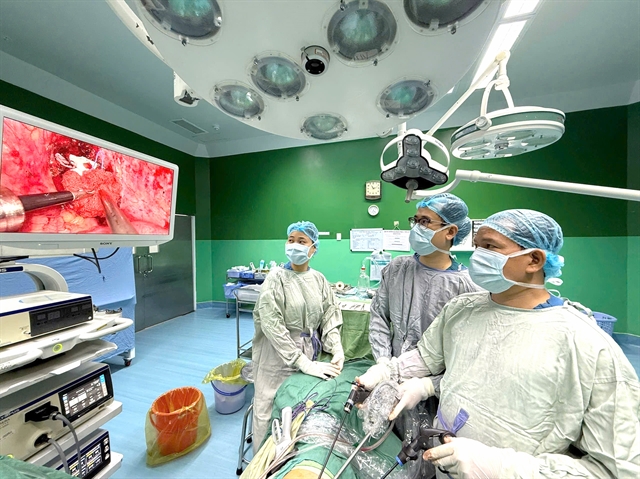 |
| Đà Nẵng Hospital successfully performs laparoscopic surgery to remove a rare nerve sheath tumour. — VNA/VNS Photo |
In Đà Nẵng, municipal authorities have identified the development of specialised healthcare as one of the key directions for turning the city into the hub of a regional medical centre serving the central and Central Highlands regions.
Under the project to develop Đà Nẵng into a hub of a specialised regional medical centre for the 2025–2030 period, with a vision to 2050, the city aims to have at least two specialist hospitals meeting regional-level standards by 2030, while also enhancing its capacity to provide specialised medical services.
Đà Nẵng Hospital has mastered numerous advanced techniques in neurosurgery, oncology, thoracic surgery and urology. It is also the first provincial-level hospital in the country to be licensed to perform liver retrieval and transplantation procedures.
The city has also instructed major hospitals to strengthen cooperation with leading specialised hospitals in order to receive technical transfers. This will help reduce the need for patients to be referred elsewhere and gradually meet the demand for high-quality medical examinations and treatment locally.
Alongside investment in facilities and specialised techniques, localities are also paying greater attention to reorganising emergency care networks.
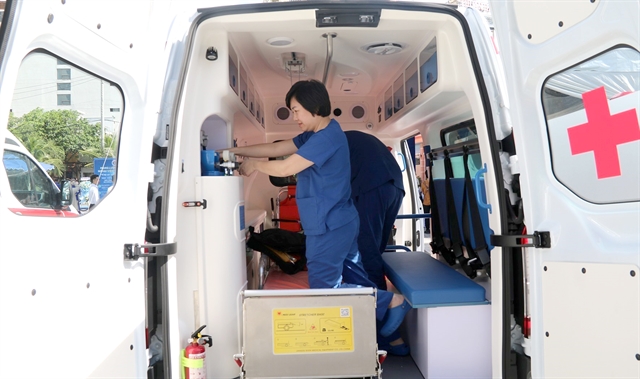
In HCM City, the second facility of Gia Định People’s Hospital has been working with the 115 Emergency Centre to gradually develop a “Specialised emergency station” model. After six months, the unit had provided pre-hospital emergency care to more than 520 patients, with an average scene arrival time of 15.9 minutes.
According to Tăng Chí Thượng, director of the HCM City Department of Health, the model helps shorten response times, reduce transport times and begin resuscitation within the first few minutes.
When the 115 emergency hotline receives a call, an emergency team is dispatched to the scene, while the hospital activates its specialist personnel to prepare for the patient’s admission and treatment.
From strengthening disease prevention and enhancing grassroots healthcare capacity to investing in infrastructure and developing specialised medical services, each locality is proactively implementing solutions suited to its actual conditions.
The approaches may differ, they share the common goal set out in Politburo Resolution No. 72-NQ/TW: bringing quality healthcare services closer to the people, providing proactive care from an early stage and at a distance, and gradually building a modern, equitable and effective healthcare system. — VNS
Society
 Society
 Society
 Society
 Society
 Society
 Society
 Society
 Society
 Society
 Society
 Society
 Society
 Society
 Society
 Rikkeisoft ký kết MOU với LAC.Co, LTD - thúc đẩy hợp tác kinh doanh toàn diện trong lĩnh vực an ninh mạng.jpg)