 Life & Style

Lotte, Phát Đạt combine strengths in Thu Thiem project
1.
|
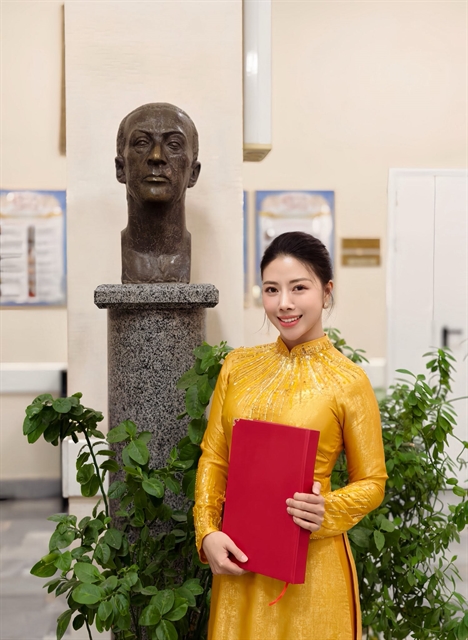
| Soprano Nguyễn Bảo Yến has become the first Vietnamese singer to successfully earn a doctoral degree in music abroad. — Photos courtesy of the artist |
Soprano Nguyễn Bảo Yến has successfully defended her doctoral thesis in musicology at the S. V. Rachmaninoff National Conservatory in Russia, becoming the first Vietnamese female singer to earn a doctoral degree in music abroad. She talks about her enduring journey and her upcoming musical plans.
You have just successfully defended your doctoral thesis in music in Russia after a 13-year journey. Looking back on that path, what has left the deepest impression on you?
On April 23, at the S. V. Rachmaninoff National Conservatory in Russia, when I heard the council announce the results and confer the doctoral degree, I was truly overwhelmed with emotion. It is a feeling hard to put into words, because behind that moment lies a long journey filled with challenges that I had to overcome.
I was the only student from the Vocal Department of the Việt Nam National Academy of Music to be sent to Russia on a full scholarship under a governmental agreement in 2013. From the very first days of learning the Russian alphabet to studying the language, adapting to a new environment, completing the specialist programme in opera vocal performance and then pursuing doctoral research, none of it was easy.
You are the first Vietnamese singer to successfully defend a doctoral thesis in music abroad. What does this achievement mean to you?
This is a tremendous source of pride for me. Looking back on the entire journey, I feel fulfilled and happy knowing that I gave it my all. Throughout those 13 years, despite facing the COVID-19 pandemic, social upheavals and personal challenges, I remained persistent and determined to see my academic goals through to the end.
I have always been someone with strong willpower and a high sense of self-discipline. When I received the opportunity to study in Russia on a scholarship, I considered it a great fortune, cherished every chance I was given and never once allowed myself to give up halfway.
After many years of studying and living in Russia, you must have had opportunities to develop your career abroad. Why did you decide to return to Việt Nam?
I have a deep love for Russia. It is where I grew professionally, and I became familiar with its culture, people and even its cuisine. However, the longer I stayed, the more I missed my homeland. Việt Nam is truly a wonderful place to live – peaceful and full of potential for development.
I have also observed that classical music in Việt Nam is making encouraging progress and needs well-trained professionals who have studied abroad to return and contribute. The State has invested significant resources in developing high-quality talent. So I wanted to come back and make my own small contribution to the growth of classical music in the country, both in performance and in education.
|
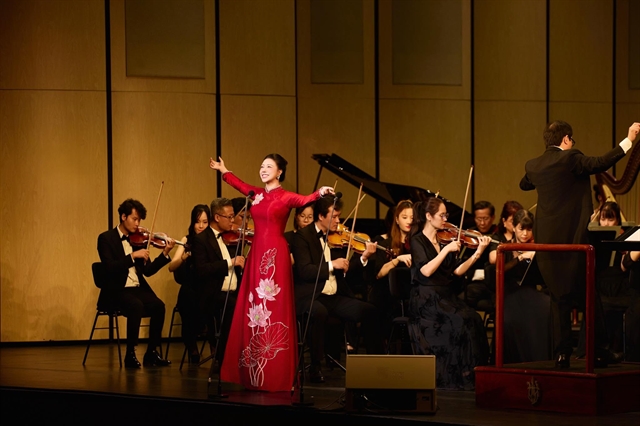
| Soprano Nguyễn Bảo Yến hopes to bridge classical music and the public. — Photos courtesy of the artist |
Since returning to Việt Nam in 2023 and taking part in many major artistic programmes, what positive developments have you observed in Vietnamese classical music?
I feel very fortunate to have returned at a time when the classical music scene in Việt Nam is showing many positive signs.
First of all, there is growing attention from the State toward culture and the arts. Newly built theatres have created more high-quality performance spaces for artists. I am also deeply grateful for the policy of investing in arts training abroad and creating favourable conditions for those who study overseas to return and contribute. This reflects a recognition of culture as an important resource in the country’s development strategy.
Most encouraging of all is the increasing interest from domestic audiences in classical music. Today, classical and symphonic concerts attract larger audiences than before. Many young people actively explore musical works and follow artists, and attend performances regularly. Some classical musicians even have their own fan base. This shift brings promising prospects for the future of classical music in Việt Nam.
More than a decade after winning the top prize at the 2015 Sao Mai singing contest, how do you see yourself evolving as a performing artist?
When I took part in the Sao Mai singing contest in 2015, I was still quite young and, in many ways, inexperienced. At that time, I wasn’t truly confident about immediately pursuing a professional career. That realisation motivated me to continue studying and researching more deeply.
After more than a decade, my vocal technique has matured significantly. More importantly, my emotional depth and ability to convey music have also evolved. The experiences I’ve gained through study, research, performance and life have helped me understand musical works more profoundly and connect with audiences more effectively.
What are your plans for the journey ahead?
I have returned to Việt Nam and joined a professional arts organisation. At the same time, I hope to become more involved in teaching, accompanying and supporting young people who are passionate about vocal music in a structured and professional training environment.
I am also working on an album of revolutionary songs arranged in a symphonic and chamber style. Over the past two to three years, I have had many opportunities to perform this repertoire and realised that it suits me very well.
I believe that when revolutionary songs are presented in a symphonic style, they can take on a refined, modern character while still preserving their original spirit and values. This is also my way of bringing classical music closer to the public. — OVN/VNS
Life & Style
 Life & Style
 Life & Style
 Life & Style
 Life & Style
 Life & Style
 Life & Style
 Life & Style
 Life & Style
 Life & Style
 Life & Style
 Life & Style
 Life & Style
 Life & Style
 Life & Style