 Life & Style
PM orders urgent completion of decree on petroleum trading by November 10
1.
|
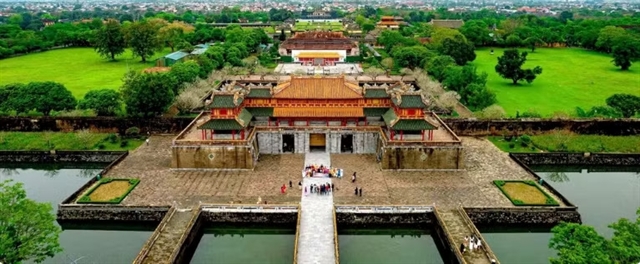
| An aerial view of the Huế Imperial Citadel. — Photo nhandan.vn |
HUẾ — As Huế enters a new phase of development as a centrally governed city, local authorities are seeking to transform its centuries-old cultural heritage into a new growth engine, with tourism expected to unlock the economic value of culture and support the city’s ambition of achieving double-digit growth.
Heritage assets drive tourism growth
After experiencing the “Imperial Citadel by Night” programme, French visitor Marie Laurent said Hue stood out from other heritage destinations she had visited around the world. It is not just a collection of ancient monuments; it is a living cultural space, she said.
Few localities in Vietnam possess such a rich combination of tangible and intangible heritage. Huế is home to the Complex of Huế Monuments, Royal Court Music, the Nguyễn Dynasty Woodblocks and Imperial Archives, alongside living traditions such as Huế folk singing, royal cuisine, craft villages, traditional festivals and the iconic Huế áo dài. These cultural assets are complemented by diverse landscapes stretching from Chân Mây–Lăng Cô Bay and the Tam Giang–Cầu Hai Lagoon to the forests of western Huế.
According to Dr. Cung Trọng Cương of the Huế City Institute for Development Studies, the city’s advantage lies not only in the number of heritage sites but also in their cultural depth. Visitors can experience history through architecture, music, cuisine and community life, a combination rarely found in other heritage cities in the region, he said.
In recent years, the Huế Festival, night tours of the Imperial Citadel, the Hương (Perfume) river pedestrian zone, craft village experiences and community-based tourism have helped revitalise the city’s tourism sector. Huế welcomed around 4 million visitors in 2024, generating nearly VNĐ8 trillion (US$304 million) in tourism revenue. In the first five months of 2026 alone, the city received nearly 3.6 million visitors and earned about VNĐ8.3 trillion, up almost 70 per cent year-on-year.
Despite these gains, experts believe Huế has yet to fully capitalise on its heritage advantages. Average visitor stays remain relatively short and spending levels modest, while tourism products, though culturally rich, are not yet diverse enough to encourage longer stays.
The city also faces challenges related to tourism infrastructure, a shortage of high-quality entertainment and service facilities, limited international-standard human resources and weak regional connectivity. At the same time, growing demands for heritage preservation and restoration require substantial investment.
Turning heritage into an economic engine
Huế is now moving beyond a preservation-focused approach and placing greater emphasis on leveraging heritage for economic development.
Chairman of the Huế People's Committee Nguyễn Khắc Toàn has identified tourism and services as key drivers of growth in the city’s new development phase. The objective is not only to attract more visitors but also to increase the economic value generated from cultural products, destinations and tourism experiences.
According to Hoàng Việt Trung, Director of the Huế Monuments Conservation Centre, the long-term vision is to transform heritage sites into living cultural spaces. Programmes such as “Imperial Citadel by Night”, royal guard-changing performances, court ceremony reenactments and the application of digital technologies are helping bring heritage closer to visitors while creating new economic opportunities.
The city is also expanding tourism development beyond its historic core. Vice Chairman of the Huế People's Committee Trần Hữu Thuỳ Giang said plans focus on four strategic areas: the central heritage urban zone, the Tam Giang–Cầu Hai Lagoon, the Chân Mây–Lăng Cô coastal area and the western ecological region. Together, these areas are expected to form a more diverse and sustainable tourism ecosystem.
Huế is simultaneously stepping up efforts to attract investment into tourism, services and cultural industries. In the first five months of 2026, the city secured more than VNĐ19 trillion in newly registered investment capital, with projects planned in coastal tourism, lagoon-based ecotourism, cultural spaces along the Perfume River, convention and exhibition centres, night-time economy projects and cultural innovation hubs.
According to Director of the Huế Department of Tourism Trần Thị Hoài Trâm, the sector is prioritising improvements in destination quality, longer visitor stays and higher tourist spending. Heritage tourism, green tourism, community-based tourism and experiential travel are expected to be the key growth segments supporting Huế’s next stage of development. — VNA/VNS
Life & Style
 Life & Style
 Life & Style
 Life & Style
 Life & Style
 Life & Style
.jpg) Life & Style
Life & Style
 Life & Style
 Life & Style
 Life & Style
 Life & Style
 Life & Style
 Life & Style
 Life & Style
 Life & Style